What's inside
As an Amazon Associate I earn from qualifying purchases. This post may contain affiliate links at no extra cost to you.
Sections
Our Top Picks
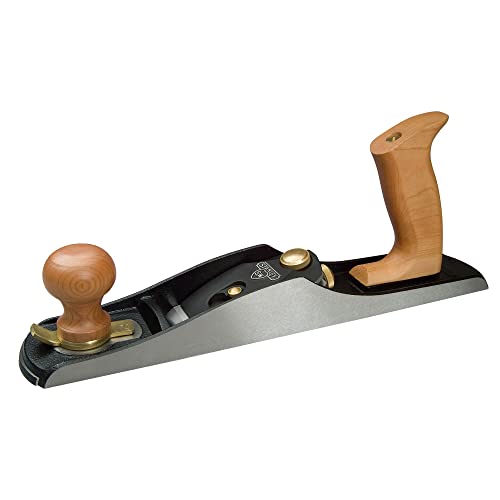
 Taytools #5 Premium Bedrock Style Flattop Jack PlaneOne Size Fits All0 x 0 x 0 Inches6.5 PoundsCheck on Amazon

Choosing a plane for panel edges
Beveling a timber panel edge is a small job with an easy-to-see result. The right hand plane can produce a clean, even chamfer without the dust and setup of a powered tool. For most panels, a sharp block plane is the practical first choice; a bench plane is more useful when the edge is long or needs truing before you bevel it.
Decide how large the bevel should be before you start. A light arris—just enough to remove the sharp corner—may be only 1–2 mm wide. A deliberate chamfer might be 3–6 mm, or a specified width on a drawing. Mark the width on both faces with a marking gauge or pencil, then plane to the lines. Freehanding the width is possible, but it is harder to keep consistent along a long edge.
As an Amazon Associate we earn from qualifying purchases at no extra cost to you.


Which plane suits the job?
| Plane type | Best use | Trade-off |
|---|---|---|
| Block plane | Small panels, short edges, and light arrises | Compact and easy to control, but less comfortable over long edges |
| Bench plane, roughly No. 4 length | General-purpose edge work and medium panels | More stable than a block plane, but heavier and slower to steer on a narrow chamfer |
| Long bench plane, roughly No. 5 or longer | Straightening a long panel edge before beveling | Bridges hollows well, but is bulky for a small beveling task |
| Spokeshave | Shaping a curved edge or easing a changing profile | Good on curves; not the straightforward choice for a straight, uniform bevel |
A low-angle block plane is comfortable for end grain and general trimming, but the plane type matters less than sharpness, adjustment, and control. A basic block plane is enough for occasional panel work if its sole is flat enough for the task and the iron can be sharpened properly. A more substantial No. 4 bench plane is a better all-round buy if you also expect to flatten small faces, smooth boards, or refine edges.
Set up the panel and plane
Clamp the panel securely with the edge slightly overhanging the bench. Keep the work close to the clamp; a long unsupported overhang can vibrate and splinter. Check that the edge is straight and square enough to start from. If it has a high spot, twist, or saw marks, correct those first with a bench plane or a suitable sanding block. A plane will follow an uneven edge if you use it to bevel directly.
Set the iron for a fine cut. The shaving should be thin and continuous, not a thick curl that makes the plane labor or tear the grain. Retract the iron if the plane grabs, chatters, or leaves deep tracks. Check the mouth for packed shavings and make sure the iron is seated evenly. A dull edge is a common cause of crushed fibers, especially in hard or interlocked timber; honing before the job is usually quicker than trying to force a blunt plane through it.
Plane a consistent bevel
For a narrow arris, hold the plane at a steady angle and take a few light passes along the edge. For a wider chamfer, use the marked lines as stops: plane one or two strokes, check the width, and repeat. Keep the plane’s sole supported on the bevel rather than tipping it unpredictably from pass to pass. On a long edge, use full-length strokes where possible and maintain similar pressure through the start and finish.
Grain direction matters. Plane with the grain when you can: fibers should lie down toward the plane’s travel, not lift ahead of the iron. If the surface starts tearing, change the direction, take a thinner cut, or use a sharper iron. Some boards have reversing grain, so no single direction works for the whole edge. In that case, plane from each end toward the middle with very light passes, then remove any meeting mark carefully.
End grain at a panel corner is vulnerable to breakout. Reduce the risk by planing from the outside corner inward, or by beveling the long edge first and approaching the end with short, controlled strokes. A sacrificial block clamped at the far end can support the fibers as the plane exits. Do not keep taking full-length cuts after the bevel reaches its lines; that is how a neat chamfer becomes too wide.
Check the result and choose sensibly
Use a small square or bevel gauge to compare the angle at several points, and measure the bevel width at both ends and in the middle. A consistent bevel need not be mathematically exact for a furniture edge, but visible variation is easy to spot under a finish. Remove the final plane marks with a few light strokes or fine abrasive, taking care not to round over the crisp boundary lines.
For an occasional 1–2 mm arris, a serviceable block plane is often the cheapest sensible option. There is little benefit in buying a premium plane if the iron is dull or the panel is poorly supported. For repeated work, a better-finished plane that adjusts predictably can save time and frustration. If buying used, inspect the sole for obvious bowing, check that the iron has enough material left to sharpen, and confirm the adjuster moves the blade without excessive play. Budget for sharpening supplies if you do not already own them; a plane that cannot be kept sharp is a poor bargain.
Choose a long bench plane only when you need it for the broader job of straightening long edges. It can help prepare a panel, but it is not automatically better at making a small chamfer. Match the tool to the edge, take thin cuts, and let the layout lines—not guesswork—set the final width.