What's inside
As an Amazon Associate I earn from qualifying purchases. This post may contain affiliate links at no extra cost to you.
Sections
SawStop Table Saw Cost: Prices by Model, Features, and Accessories
A SawStop table saw costs roughly $900 to more than $5,000 before tax, depending on whether you choose a compact jobsite saw, a contractor or professional cabinet saw, or an industrial cabinet saw—and the stand, mobile base, brake cartridge, and shop electrical work can add several hundred dollars or more.
These are broad U.S. market price ranges for 2026, not quotes; dealer pricing, included equipment, shipping, and configuration vary. Check what is bundled before comparing prices: a saw advertised with a mobile base or extension table may cost less overall than a lower-priced bare configuration.
As an Amazon Associate we earn from qualifying purchases at no extra cost to you.

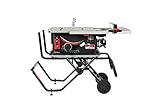
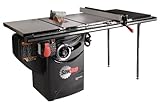

| Saw line | Typical saw price | Typical configuration and capacity | Best fit |
|---|---|---|---|
| Compact Table Saw | $900–$1,300 | Portable 10-inch saw; about 25½ inches of rip capacity to the right of the blade, depending on configuration | Small shops, remodeling, and occasional use |
| Jobsite Saw Pro | $1,400–$1,900 | Portable 10-inch saw; roughly 25½ inches of right-side rip capacity | Frequent site work or users wanting a more capable portable setup |
| Contractor Saw | $2,000–$2,800 | 10-inch saw; typically around 30 inches of right-side rip capacity, configuration dependent | A dedicated shop with limited space or a 120-volt power supply |
| Professional Cabinet Saw (PCS) | $3,000–$4,500 | 10-inch cabinet saw; commonly offered with 30- or 36-inch rip capacity | Furniture and cabinet work, with regular use and room for a stationary saw |
| Industrial Cabinet Saw (ICS) | $4,500–$6,500+ | 10-inch cabinet saw; commonly configured for 36- or 52-inch rip capacity | Production work and shops prioritizing heavy-duty construction and capacity |
Rip capacity is the width of material the fence can position to the right of the blade; it is not the saw’s overall width. Exact dimensions and included accessories vary by model and package, so confirm the manufacturer’s current specification sheet before planning a shop layout.
Which SawStop is worth the cost for your shop?
- Choose the Compact Table Saw if portability and storage matter more than cabinet-saw mass or a wide cutting capacity. Its compact table saw dimensions are designed for a smaller footprint than cabinet models, but allow space for the fence, work support, and material passing through the cut.
- Choose the Jobsite Saw Pro for regular transport or jobsite work. Budget for the stand if it is not included in your chosen package, and verify whether you need extra outfeed support for sheet goods.
- Choose the Contractor Saw if you want a stationary shop saw without moving up to a full cabinet-saw footprint or electrical requirements. Check the specific motor and voltage configuration before purchase.
- Choose the PCS for frequent furniture or cabinet work when you want a substantial stationary saw. A SawStop 3 hp table saw generally refers to a 3-horsepower PCS configuration; verify voltage and circuit requirements for the exact model.
- Choose the ICS when the saw will see demanding, repeated production use and its mass, capacity, and cost make sense for your workload. An industrial table saw is a larger investment, not automatically a better fit for a small shop.
Cabinet models need room around the saw for infeed, outfeed, and ripping long boards. A 52-inch rip fence does not mean the saw itself is only 52 inches wide: the table, rails, base, and clearance for handling stock all add to the required space. Measure the entire working area, not just the machine footprint.
What accessories add to the total?
The brake system is a defining SawStop feature and is built into compatible saws, but the brake cartridge is a replaceable consumable. Confirm whether the selected saw ships with a cartridge, and budget roughly $100–$150 for a replacement cartridge, with pricing varying by type and seller. A blade contacting the brake can trigger activation; depending on the event, both the cartridge and blade may need replacement. Read the manual for the saw’s operating and inspection procedures.
| Common added cost | Planning range | What to check |
|---|---|---|
| Portable saw stand | $150–$350 | Whether it is included; folding, transport, and setup needs |
| Mobile base for a stationary saw | $200–$500 | Weight rating, floor condition, and whether the base fits the saw cabinet |
| Brake cartridge | $100–$150 | Compatibility with the saw and blade; whether a spare is worthwhile |
| Outfeed or support table | $150–$600+ | Table height, stability, and room behind the saw |
| Quality 10-inch blade | $60–$180 | Tooth count and grind suited to ripping, crosscutting, or general use |
Dust collection, a suitable electrical circuit, and delivery or assembly may also affect the real cost. Cabinet saws are heavy; a mobile base helps reposition the machine but does not make unloading or initial placement a one-person job. Ask the dealer about freight, liftgate service, and assembly before ordering.
Worked budget: a 3 hp PCS setup
Suppose a 3 hp PCS configuration is listed at $3,600. Add a $350 mobile base, a $120 blade, and a $130 spare brake cartridge: the equipment subtotal becomes $4,200 before tax, delivery, dust collection, or any electrical work. If you already own a compatible blade and the package includes a mobile base, the same purchase could be about $470 less. This is why comparing complete setups is more useful than comparing saw-only prices.
Ownership costs and buying checks
Blades are the routine wear item: dull or pitch-covered teeth cut poorly and can encourage forcing stock through the saw. Keep blades clean, use the right blade for the cut, and check alignment and fence settings according to the manual. Avoid storing tools or offcuts where they can interfere with the blade guard, riving knife, or brake system. The brake is not a substitute for safe technique, guards, or push sticks.
Before buying, confirm the exact model, motor voltage, rip capacity, included fence and rails, stand or base, blade, and brake cartridge. Also ask whether the configuration fits your available electrical service and dust collector. Those details can make two similarly priced listings very different purchases.
Where to buy SawStop table saws
SawStop table saws are sold through the manufacturer’s dealer network and woodworking-tool retailers. Use SawStop’s dealer locator to find authorized sellers, then request a written quote that lists the saw configuration, included accessories, shipping, and assembly. For a large cabinet saw, compare delivery terms and return or service arrangements as carefully as the sticker price.