What's inside
- Best DeWalt 20 Volt Framing Nailer for Fast, Reliable Framing
- Quick comparison: DeWalt cordless framing nailers
- Which one should you choose?
- Driving power: what matters in framing lumber and sheathing
- Magazine capacity, weight, and work pace
- Battery runtime: estimate it for your job, not by guesswork
- Ownership realities: nails, jams, and upkeep
- Bottom line
- Best DeWalt 20 Volt Framing Nailer for Fast, Reliable Framing
- Quick comparison: DeWalt cordless framing nailers
- Which one should you choose?
- Driving power: what matters in framing lumber and sheathing
- Magazine capacity, weight, and work pace
- Battery runtime: estimate it for your job, not by guesswork
- Ownership realities: nails, jams, and upkeep
- Bottom line
As an Amazon Associate I earn from qualifying purchases. This post may contain affiliate links at no extra cost to you.
Sections
- Best DeWalt 20 Volt Framing Nailer for Fast, Reliable Framing
- Quick comparison: DeWalt cordless framing nailers
- Which one should you choose?
- Driving power: what matters in framing lumber and sheathing
- Magazine capacity, weight, and work pace
- Battery runtime: estimate it for your job, not by guesswork
- Ownership realities: nails, jams, and upkeep
- Bottom line
Best DeWalt 20 Volt Framing Nailer for Fast, Reliable Framing
The DeWalt DCN692 20V MAX dual-speed framing nailer is the best fit for most framing crews that want cordless convenience and the flexibility to work with different nail lengths and materials; choose the DCN21PL if you prioritize a lighter, simpler 21-degree tool, or the DCN21PLM if a metal-connecting nailer suits your framing system.
DeWalt’s cordless framing nailers are not interchangeable: they differ in collation angle, nail range, operating mechanism, and intended work. The right choice depends less on the “20V” label than on the nails your plans specify, how long you work between battery changes, and whether weight or speed matters more on the job.
As an Amazon Associate we earn from qualifying purchases at no extra cost to you.

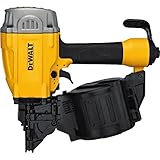
Quick comparison: DeWalt cordless framing nailers
Weights below are approximate tool-only figures; magazine capacity and compatible nail dimensions depend on the specific model and approved fasteners. Check the manual for the exact nail and fastener requirements before buying.
| Model | Collation | Fastener range | Approx. tool weight | Best fit |
|---|---|---|---|---|
| DCN692 | 30–34° paper tape | 2–3½ in. nails | 8.0 lb | General framing; dual-speed selection |
| DCN21PL | 21° plastic collated | 2–3½ in. nails | 8.0 lb | Framing when 21° nails are already standard on site |
| DCN21PLM | 21° plastic collated | Metal connector nails | 8.0 lb | Compatible metal connectors and framing hardware |
These are bare-tool figures and rounded for comparison; battery, fasteners, and accessories add weight. DeWalt has offered multiple generations and kit configurations, so confirm the model number and current manual rather than relying on a retailer’s shortened description.
Which one should you choose?
- Choose the DCN692 for varied framing work, especially if you want two operating speeds to balance drive performance and firing pace. Its 30–34° paper-tape nails can be convenient where that collation is common, but paper strips may be less suitable than plastic-collated nails in wet storage or rough handling.
- Choose the DCN21PL if your crew already stocks 21° plastic-collated nails and you want a straightforward framing tool. Collation is a purchasing constraint: 21° nails won’t feed in a magazine built for another angle.
- Choose the DCN21PLM for compatible metal-connector applications. It is a specialized choice, not a replacement for a general framing nailer; verify that the nail type and tool are approved for the connector manufacturer’s requirements.
- Keep a pneumatic nailer in consideration for sustained, high-volume production. A cordless tool avoids hoses and compressors, but its weight and battery changes can become drawbacks over a full shift.
Driving power: what matters in framing lumber and sheathing
All three models are designed for framing nails up to 3½ inches within their specified fastener ranges. The DCN692’s dual-speed control gives it an advantage when moving between applications: use the lower-speed setting when the work benefits from controlled driving and the higher-speed setting when fastening pace is the priority. A speed setting is not a substitute for checking depth and fastener requirements.
Dense, wet, or knotty lumber can challenge any cordless nailer. If nails sit proud, first confirm the correct fastener, battery charge, depth setting, and operating mode. Then check whether the lumber is unusually hard or the tool needs maintenance. Don’t compensate by repeatedly firing into the same spot; that can damage the work or cause a jam.
For sheathing, consistent flush or slightly recessed nail heads matter more than maximum speed. Test the depth on an offcut of the same panel and framing material, then inspect the first few nails. Adjust for the actual material rather than assuming the setting that worked on a wall stud will suit roof or floor sheathing.
Magazine capacity, weight, and work pace
DeWalt’s cordless framing tools generally use magazines holding roughly 55 nails, though capacity varies with nail length and collation. That is enough for useful stretches of work, but less than some pneumatic framing setups. On a large sheathing run, plan for reloads alongside battery changes rather than expecting uninterrupted production.
At about 8 pounds before adding a battery, these tools are substantial. The weight is noticeable when fastening overhead, working from a ladder, or holding the nailer away from your body. A higher-capacity battery can extend working time but adds mass; a compact pack makes the tool easier to handle but may require more frequent changes. For repetitive overhead work, that tradeoff can matter more than a small difference in firing rate.
Battery runtime: estimate it for your job, not by guesswork
Runtime varies with battery capacity, nail length, wood density, firing pace, temperature, and tool condition. DeWalt does not provide one dependable round-number runtime that applies to every job, so treat advertised shots-per-charge figures as estimates for specific test conditions—not a guarantee for a day’s production.
A practical planning calculation is:
- Count the number of nails you expect to drive in a shift.
- Divide that total by the tool’s published shots-per-charge estimate for the battery you plan to use.
- Add a reserve for difficult lumber, interruptions, and battery aging; carry a charged spare if a dead pack would stop the crew.
For example, if a task calls for 1,200 nails and the applicable tool-and-battery estimate is 500 shots per charge, the arithmetic gives 2.4 charges. Plan for at least three full charges, and consider an extra pack if the lumber is dense or work must continue without a charging break. Use the current DeWalt documentation for the exact estimate for your model and battery.
Ownership realities: nails, jams, and upkeep
Before purchasing, compare the local availability and cost of the correct collation, length, and nail type. A tool that accepts common nails already stocked on site can save more time than a feature you rarely use. Do not assume fasteners from another framing nailer will fit just because they share the same length.
Keep the magazine and nose clear of loose nail strips, wood chips, and debris. Disconnect the battery before clearing a jam, and follow the manual’s procedure; never pry forcefully against the driver blade. Inspect the nose and magazine for damage, and stop using the tool if fasteners feed inconsistently or the driver appears damaged.
Repeated dry firing, using bent or incompatible nails, and ignoring a jam can accelerate wear or cause inconsistent driving. Clean the tool as instructed, store batteries and fasteners appropriately, and use only maintenance procedures approved for that model. Cordless framing nailers do not require a compressor, but they still need periodic attention to the magazine, driver area, and battery contacts.
Bottom line
For one DeWalt 20 volt framing nailer to cover a mix of framing and sheathing, the DCN692 is the strongest all-around pick because its broad framing range and dual-speed operation suit varied work. Pick the DCN21PL when 21° plastic-collated nails are the practical site standard, and the DCN21PLM when your work specifically calls for its compatible metal-connector fasteners. Match the collation to your supply, account for the tool’s bare weight plus battery, and verify drive depth in the actual lumber before production fastening.