What's inside
As an Amazon Associate I earn from qualifying purchases. This post may contain affiliate links at no extra cost to you.
Sections
Our Top Picks
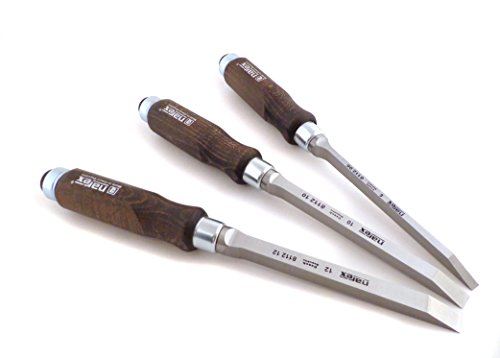
 Narex 4 Piece Richter Mortise Chisel SetOne Size Fits All0 x 0 x 0.1 inches2.2 poundsCheck on Amazon


Choosing the Right Mortising Chisel
Mortising means removing a lot of wood, often from a confined opening, and the chisel takes repeated blows from a mallet. That makes handle construction more important than it is for paring, trimming, or general bench work.
The basic choice is between a mallet-head mortising chisel and a struck-handle chisel. A mallet-head chisel has a broad metal head or striking plate designed to receive direct blows. A struck-handle chisel has a wood, plastic, or composite handle with a smaller end intended for controlled tapping. Both can cut a mortise, but they suit different levels of force, workholding, and expected abuse.
As an Amazon Associate we earn from qualifying purchases at no extra cost to you.



What Mallet-Head Chisels Do Best
Mallet-head chisels are built for force. Their handles usually have a reinforced end, a metal hoop, or a substantial striking cap. The blade is often thicker than a general-purpose bench chisel, giving it more resistance to bending when you drive it into dense timber.
That extra mass is useful when chopping a deep mortise. A typical furniture mortise might be 6 to 12 mm wide and 40 to 75 mm deep. In hardwood, reaching the bottom can require dozens of firm blows. A proper mallet-head tool lets you hit hard without worrying that the handle will split after a few sessions.
The trade-off is weight and finesse. A heavy mortising chisel is tiring for cleaning corners or taking thin paring cuts. It also encourages users to remove too much wood at once. That can crush the mortise walls, especially in softwood or when the bevel is forced against the side of the opening.
If you regularly cut traditional mortise-and-tenon joints, a set of heavy-duty mortising chisels is the safer long-term purchase. Look for straight, thick blades, comfortable handles, and a striking end that cannot mushroom or loosen.
Where Struck-Handle Chisels Fit
Struck-handle chisels are more versatile. They are commonly used for chopping shallow waste, cleaning hinge gains, paring shoulders, and tapping a mortise to final size. The handle is generally slimmer and better balanced, so the chisel feels quicker when you change direction or work close to a layout line.
A good struck-handle chisel can handle moderate mortising if you use a wooden or soft-faced mallet and remove waste sensibly. Bore or drill most of the waste first, then chop the remaining material in controlled stages. Do not try to drive a 12 mm chisel through a full-depth solid block in one session of violent blows.
The failure mode is usually the handle, not the blade. Repeated heavy striking can split a timber handle, loosen the ferrule, deform a plastic cap, or drive the handle farther onto the blade until it becomes unstable. A metal claw hammer is particularly hard on these chisels and can quickly damage the striking end.
For occasional home repairs, softwood joinery, and light furniture work, a cheaper bevel-edge chisel set is often enough. You do not need specialist mortising chisels to cut two or three door hinges or a small gate joint.
Mallet-Head vs Struck-Handle Chisels
| Feature | Mallet-head mortising chisel | Struck-handle chisel |
|---|---|---|
| Best use | Deep, repeated chopping in hardwood | Light chopping, paring, and general joinery |
| Striking force | Firm to heavy blows with a wooden mallet | Light to moderate taps |
| Handle durability | Designed to tolerate regular striking | Can split or loosen under heavy use |
| Control and balance | More forceful, usually heavier | Lighter and easier for trimming |
| Typical cost | Higher, especially for thick forged blades | Lower for basic sets |
| Best buyer | Frequent joinery or site work | Occasional repairs and mixed bench work |
How to Mortise Without Damaging the Tool
Mark the mortise clearly and clamp the work so it cannot move. Start about 3 mm inside the layout line, with the bevel facing the waste. Make a series of vertical cuts across the mortise rather than levering aggressively from one end. Remove the chips, then deepen the cuts in stages.
For a mortise 50 mm deep, work down roughly 10 to 15 mm at a time. Once the waste is loose, use the chisel to lift it out, but do not twist the blade sideways. Side loading is a common cause of chipped edges and bent blades. Leave the last 1 to 2 mm at each end until the middle is removed; chopping directly into the end grain of a layout line can split the shoulder.
Use a wooden mallet, not a steel hammer. A 450 to 650 gram mallet is suitable for most furniture mortising. Use lighter blows near the final depth and when cleaning the corners. If the chisel stops moving, sharpen it or remove more waste—do not simply swing harder.
What to Buy for Your Work
Choose mallet-head chisels if you cut several deep mortises each month, work mainly in oak, ash, beech, or similar hardwoods, or need tools that can tolerate jobsite handling. A 6 mm, 10 mm, and 12 mm selection covers many furniture and light construction joints. Add a wider chisel only when your mortise dimensions justify it.
Choose struck-handle chisels if your work includes paring, hinge recesses, dovetail cleanup, and only occasional mortising. Spend more on steel quality and edge retention rather than buying a large set. Three useful sizes are often better than twelve rarely used ones.
For heavy construction work, an registered mortise chisel offers maximum durability, but it is overkill for a few pine joints. Conversely, using a delicate bench chisel for daily hardwood mortising is false economy: replacing a split handle or badly damaged blade soon cancels the initial saving.
Whichever style you choose, keep the edge sharp, protect it in storage, and inspect the handle before striking. A sound general-purpose chisel used carefully will outperform a specialist tool abused with the wrong hammer.