What's inside
As an Amazon Associate I earn from qualifying purchases. This post may contain affiliate links at no extra cost to you.
Sections
Our Top Picks
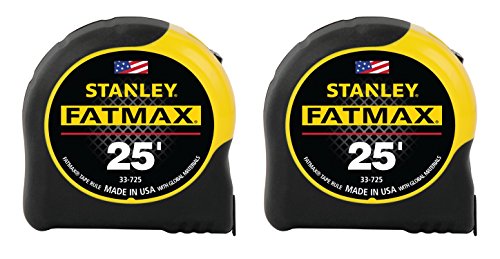 Stanley FMHT74038A FatMax 25 Foot Tape Measure 2PK7.6 m5.13 x 3.38 x 3.63 Inches1.2 PoundsCheck on Amazon
 Stanley 33-735-25 35ft. and 25ft. Fatmax Tape Measure25 feet300 x 1.25 x 0 inches2.8 PoundsCheck on Amazon


What matters when measuring timber frames alone
Measuring timber framing by yourself is harder than ordinary stud work. The timber may be 8, 10, or 12 feet long, the reference mark may be on an awkward face, and there may be no spare hand to hold the tape case. A good tape measure reduces those problems with a stiff blade, a reliable hook, and markings you can read quickly.
For most one-person timber-frame work, buy a 25- or 30-foot tape with a blade at least 1-1/4 inches wide. A wider blade stays readable and reaches farther before it folds. Look for a stated standout of roughly 9 to 11 feet, though real-world performance depends on whether the blade is held level and whether wind or a rough timber edge is catching it.
As an Amazon Associate we earn from qualifying purchases at no extra cost to you.


A strong magnetic hook is useful when working against steel layout tables, saw stands, or metal brackets. It is less useful on wood and can add bulk to the end hook. A large, loose hook is usually more important: it can catch the edge of a timber without needing perfect alignment.
The best tape types for timber framing
| Tape type | Best use | Advantages | Limitations |
|---|---|---|---|
| Wide 25- or 30-foot tape | General layout and checking timber length | Stiff blade, clear markings, good reach | Heavier in a tool belt |
| Compact 16- or 20-foot tape | Joinery, short timbers, and ladder work | Light, inexpensive, easy to carry | Limited reach and more blade sag |
| Magnetic-hook tape | Steel work surfaces and solo reference measurements | Can hold itself to ferrous material | Magnet attracts chips and does little on timber |
| Heavy-duty 30-foot tape | Large timbers and rough site work | Thick blade and durable case | Bulky; tiring for repeated small measurements |
For a general-purpose choice, compare wide-blade 25-foot tape measures. The cheaper options are perfectly adequate if you mostly measure 6- to 8-foot timbers and replace damaged tapes rather than expecting one to survive years of abrasive framing work.
Blade width, markings, and accuracy
Blade width affects more than standout. A 1-1/4-inch blade gives you larger numbers and a flatter surface when transferring a mark. That helps when measuring from a square line, shoulder, or housing. A 1-inch blade is lighter and cheaper, but it tends to twist and collapse sooner when extended across a timber.
Choose markings that suit the way you lay out work. Standard inch-and-sixteenth markings are enough for most timber framing. Fractional markings, such as labeled 1/8-inch or 1/4-inch increments, speed up reading but can make the blade visually busy. Large, high-contrast numbers matter more than decorative markings.
Do not assume a tape is accurate simply because it has a durable case. The end hook should move slightly on its rivets—usually about the thickness of the hook itself. It shifts outward for an outside measurement and inward for an inside measurement. If the hook is bent, loose sideways, or packed with sawdust, your readings can be wrong by 1/16 inch or more.
How to measure a timber alone
When measuring a long timber, hook the tape on a square end and extend the blade along the arris or a marked reference edge. Keep the blade straight and lightly tensioned. If the blade bows, the reading will be short; if it bends around a knot or edge, the reading is unreliable. For lengths beyond the tape’s comfortable standout, make a reference mark, retract the tape, and continue from that mark rather than forcing the blade to reach farther.
For an outside-to-outside measurement, let the hook catch the far edge and read at the near edge. For inside measurements, push the case into the near surface and add the case dimension printed on the tape. Verify that dimension before relying on it. Many cases are about 3 inches long, but they are not identical.
On a wide timber, measure from a face that has already been planed or snapped as a reference. Rough-sawn edges can vary by 1/8 inch or more. If the measurement controls a mortise, tenon, or housing, mark the dimension with a sharp pencil or knife immediately and confirm it with a square. A tape is for finding the position; it is not a substitute for a reliable layout edge.
Features worth paying for
A strong belt clip and a lock that holds without slipping are valuable on a frame. A lock that releases when the case is bumped can let the blade retract across your hand or damage a fresh mark. A rubber case helps with drops, but thick rubber can make the tape awkward to pocket or clip beside a hammer.
Look for a corrosion-resistant blade coating if you work outdoors. Dirt and moisture eventually make the blade sticky, especially near the hook. Wipe the blade before retracting it after wet work. Never pull a dirty blade through the case repeatedly; grit acts like sandpaper on the coating and can clog the return spring.
If you regularly work with steel brackets or a metal layout bench, a magnetic wide-blade tape measure can be worthwhile. For timber-only work, spend the same money on a wider blade and a better hook instead.
What to buy for different workloads
For most carpenters, the sensible setup is a durable 25-foot, 1-1/4-inch tape for layout and a small 16- or 20-foot tape for joinery and tool-belt work. The smaller tape is easier to control when measuring housings and shoulder lengths, while the larger one handles long timbers without constant repositioning.
If you are building one frame or doing occasional repairs, a basic 25-foot, 1-1/4-inch tape measure is enough. Pay attention to blade width, readable markings, and a hook that does not wobble—not a premium-looking case.
For daily timber framing, choose a heavier 30-foot tape only if you genuinely need the extra reach. It weighs more, takes longer to retract, and is easier to knock against finished work. A quality 25-foot tape, used with deliberate reference marks and a framing square, is usually the better one-person tool.