What's inside
As an Amazon Associate I earn from qualifying purchases. This post may contain affiliate links at no extra cost to you.
Preparing a door rebate is one of the jobs where a dedicated plane earns its space in the toolbox. A rabbet plane removes waste right into a corner, leaving a cleaner shoulder and a flatter bottom than a chisel alone. For timber doors, the best choice depends on the rebate size, the length of the workpiece, and whether you need to work across the grain at the end of a stile or rail.
As an Amazon Associate we earn from qualifying purchases at no extra cost to you.


Sections
Our Top Picks
 Irwin Record Rebate Plane Length 8-1/2-inch215mm5.91 x 2.76 x 10.63 inches3.48 PoundsCheck on Amazon
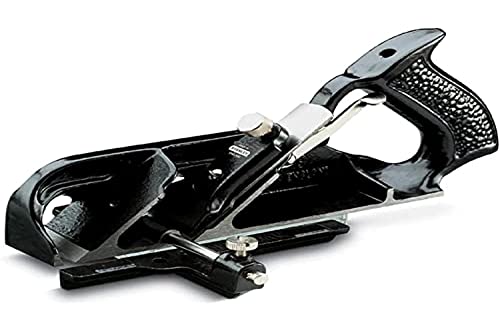


What a rabbet plane does
A rabbet, or rebate, is a step cut along the edge of a board. A typical internal door rebate might be around 12–15 mm deep and 12–15 mm wide, though the required size is set by the frame, door stop, seals, and hardware. A rabbet plane has an iron that reaches the side of the sole, so it can cut into the corner without leaving an uncut strip.
For door work, the plane should have a reliable fence or a sole wide enough to register against an existing edge. An adjustable depth stop is useful but not essential. A plane with a nicker or skewed iron is better when cutting across end grain, because it scores the fibres before the main edge removes them.
Best types of rabbet plane for door rebates
| Plane type | Best use | Main advantage | Main drawback |
|---|---|---|---|
| Wooden skew rabbet plane | Long rebates in softwood or hardwood | Fast cutting and excellent control | Needs careful setup and sharpening |
| Metal moving fillister plane | Repeatable, guided rebates | Adjustable fence and depth stop | Heavier and slower to tune |
| Shoulder plane | Cleaning the shoulder or correcting a short section | Accurate edge-to-edge cutting | Not efficient for removing lots of waste |
| Block or combination plane | Occasional small rebates | Versatile and compact | Less comfortable on a full door length |
Wooden rabbet planes: the best traditional choice
A wooden rabbet plane is often the most pleasant tool for cutting a long door rebate. Its low-friction sole and skewed iron remove material quickly, and the wide body gives useful support on a stile or rail. For a first purchase, look for a plane with a straight, sound sole, a wedge that holds the iron firmly, and an iron wide enough for your intended rebate.
Older wooden planes can be excellent value, but condition matters more than age. Avoid one with a twisted sole, a split mouth, a damaged wedge, or an iron that has been ground too short. Small surface marks are not a problem. A sole that rocks on a flat surface is a problem, especially when the rebate must run consistently for a lock or weather seal.
Search for a wooden rabbet plane if you want the traditional option. A cheaper plane is fine for a single softwood door, provided the iron is sharp and the body is stable. It becomes false economy if you spend an hour correcting a badly made sole before the tool will cut straight.
Moving fillister planes: easier repeatability
A moving fillister is a metal-bodied rabbet plane with an adjustable fence and usually a depth stop. This makes it useful when several doors need the same rebate. Set the fence from the show face, set the depth stop, and test the cut on an offcut before touching the door.
The trade-off is bulk. The fence can catch on clamps or uneven timber, and some examples have more play than you would expect in the adjustment screws. Check that the fence locks squarely and that the depth stop does not move under pressure. A skewed iron is preferable for cross-grain work, but even a straight iron will perform well along the grain with a properly scored layout.
A moving fillister plane is the safer buy for a user who wants built-in guides rather than a traditional plane that must be set by eye. It is also a good choice for repeat production work. For one door, a simple rabbet plane and a marked gauge line may be quicker and cheaper.
Choosing the size and iron
Match the plane to the rebate, not just to the overall size of the door. A 12 mm rebate needs an iron that can cut at least that width, with enough body on either side for stability. A plane that is too narrow forces multiple passes and increases the chance of leaving ridges. One that is much wider can be awkward on a narrow stile.
For softwood, a cutting edge around 25–30 degrees works well on many traditional planes. Hard or abrasive timber may benefit from a slightly higher bevel angle, around 30–35 degrees, at the cost of more pushing effort. Hone a small secondary bevel and maintain it frequently. A dull edge causes bruising, torn grain, and excessive force; it does not merely make the work slower.
How to cut a clean door rebate
Mark the rebate from the correct face and edge using a cutting gauge or marking knife. Scribe both the width and depth lines, then darken them lightly with pencil if needed. Clamp the door securely at a comfortable height, with the reference face uppermost. Do not rely on the plane fence to correct poor marking out.
Begin with a few light passes to establish the shoulder. Keep the plane flat and apply most pressure over the front of the sole at the start of the stroke, then over the rear as the plane exits. Near the end grain, reverse the direction or use a sacrificial block to prevent spelching. If the plane has a nicker, set it only just deep enough to score the fibres.
Stop cutting when the depth stop reaches the line, then check the result with a straightedge and combination square. The bottom should be flat, the shoulder should be square, and the rebate should not wander. Use a shoulder plane or sharp chisel for local corrections rather than taking another heavy pass with a badly supported rabbet plane.
Supporting tools worth buying
A woodworking marking gauge is more important than an elaborate fence because accurate reference lines prevent most errors. Add a reliable combination square, a straightedge at least 600 mm long, and a sharp 25 mm chisel for cleaning corners.
If the rebate is short, interrupted, or needs only a few millimetres removed, a shoulder plane may be the better purchase. It will not replace a rabbet plane for a full-length door rebate, but it excels at fitting hinges, correcting shoulders, and removing the last thin shaving without damaging the surrounding face.
The practical buying decision
Choose a wooden skew rabbet plane for fast hand work and traditional feel, a moving fillister for adjustable repeatability, and a shoulder plane for fitting and correction rather than bulk removal. Whichever type you buy, prioritise a sharp, securely held iron and a sole or fence that stays square. Those details determine whether the plane produces a clean door rebate or simply creates more work for the chisel.