What's inside
As an Amazon Associate I earn from qualifying purchases. This post may contain affiliate links at no extra cost to you.
Softwood looks easy to plane, but it is one of the quickest materials to tear out. Spruce, pine, fir, cedar, and construction-grade boards often have alternating hard and soft bands, resin pockets, loose knots, and grain that changes direction every few inches. A plane that works perfectly on straight-grained hardwood can leave ragged craters in softwood.
The best setup is not necessarily the most expensive plane. You need a plane with a rigid sole, a sharp iron, a mouth opening suited to the cut, and enough adjustment range to take very fine shavings. Technique matters just as much: read the grain, plane with the rising grain where possible, and reduce the cut before a difficult area.
As an Amazon Associate we earn from qualifying purchases at no extra cost to you.

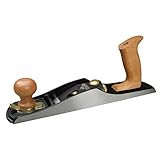

Sections
Our Top Picks
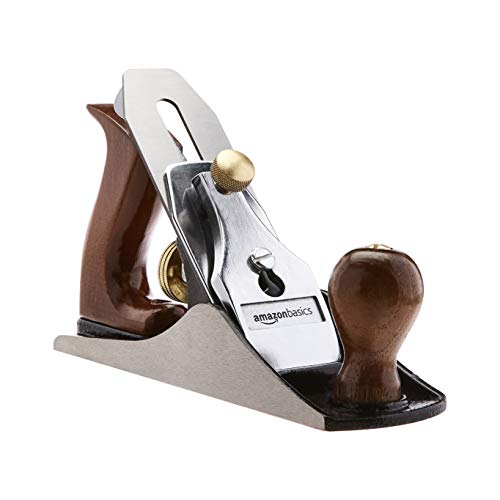 Amazon Basics No.4 Adjustable Precision Smoothing Bench Hand(Pack of 1)10 x 5.5 x 2.6 inches3.82 poundsCheck on Amazon

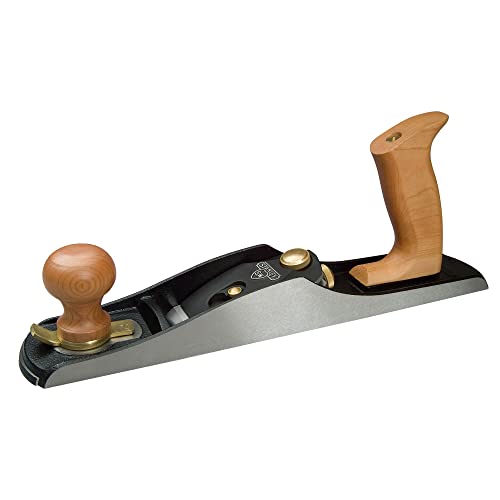
Best plane types for softwood
For general smoothing, a No. 4-size bench plane is the most useful choice. Its roughly 9-inch sole is long enough to bridge minor hollows but still manageable on shelves, doors, and furniture parts. A well-tuned No. 4 bench plane can remove machine marks, level joints, and leave a surface ready for finish.
A No. 3-size plane is lighter and easier to control on narrow work, but it has less sole length and can follow undulations rather than flattening them. A No. 5 jack plane is more versatile if you also need to flatten boards, but its longer body and wider iron are less convenient for final smoothing. A dedicated smoothing plane is excellent for short, difficult areas, although it is not the best first purchase for most carpenters.
For end grain, shoulders, small parts, and trimming doors, a low-angle block plane is valuable. Choose one with an adjustable mouth if possible. It will not replace a bench plane for broad faces, but it handles awkward spots where a long plane is clumsy.
Plane choices compared
| Plane type | Best use | Softwood advantage | Main limitation |
|---|---|---|---|
| No. 3 or No. 4 bench plane | Final smoothing and general carpentry | Good control and fine shaving adjustment | Will tear out if the iron or mouth is poorly set |
| No. 5 jack plane | Flattening and removing machine marks | Fast stock removal before smoothing | Less nimble for small or narrow parts |
| Low-angle block plane | End grain, edges, and small work | Handles short grain effectively | Too short for flattening wide faces |
| Scrub plane | Rapid removal from rough stock | Useful for badly bowed boards | Leaves deep tracks and is not a smoothing tool |
Iron and mouth settings that prevent tearout
Sharpness is the first requirement. On softwood, a dull edge compresses the fibers before cutting them, especially in the softer bands. Hone the primary bevel until it cuts cleanly, then add a small secondary bevel. For ordinary work, a 25- to 30-degree cutting edge is practical. If the edge crumbles around knots, a slightly steeper secondary bevel can improve durability, but it will require more effort to push.
Set the iron for a shaving about 0.05 mm to 0.10 mm thick when smoothing. That is approximately a very thin shaving, not a full curl of waste. Take a lighter cut as the grain becomes wavy. If the plane has a depth-adjustment wheel, advance the blade in tiny increments; a movement that looks insignificant can double the cut.
The mouth should be narrow enough to support the fibers directly in front of the iron. A gap around 0.5 mm is a useful starting point for fine smoothing, though the exact setting depends on the plane and the wood. Open the mouth for heavier cuts and close it for tearout-prone areas. A fixed-mouth plane can still work well, but it gives you less control when grain direction changes.
Make sure the cap iron is fitted closely behind the cutting edge if the plane uses one. A gap or poor fit allows the shaving to lift the fibers before they are cut. Many inexpensive planes are usable after flattening and sharpening, but some arrive with an iron that is uneven, soft, or difficult to adjust. That is where a cheaper purchase can become false economy.
What to buy for different budgets
For a first general-purpose plane, look for a bench plane with an adjustable mouth, lateral adjustment, and a replacement iron readily available. A budget plane is fine if you are willing to flatten the sole, true the back of the iron, sharpen it, and improve the adjustment. Expect setup time rather than perfect performance out of the box.
A better-made bench plane is worth paying for if you use it weekly. Better machining usually means a flatter sole, a more consistent iron, and less time fighting slop in the frog and adjustment mechanism. It does not make tearout impossible, and it still needs sharpening.
If your work is mainly trim, door fitting, and small repairs, a low-angle adjustable-mouth block plane may be the cheaper and more useful option. For wide boards or furniture panels, spend the money on a bench plane instead.
How to plane softwood without tearing it
Test the grain direction before committing to the whole board. Plane a short section from each end and inspect the fibers. The direction that produces a cleaner shaving is the direction to follow. On figured or reversing grain, you may need to work from both ends toward the middle, skew the plane slightly, or take overlapping diagonal passes.
Keep the plane moving before the iron contacts the wood, and maintain pressure over the sole rather than pressing hard on the front or rear. Excess pressure can force the body to rock and create a hollow. Skewing the plane 10 to 20 degrees effectively lowers the cutting angle and often produces a cleaner cut in soft fibers.
Stop before knots, resin, and cross-grain patches. Reduce the blade projection, shorten the stroke, and support the area with a shallow cut. If a knot is particularly hard, a block plane or scraper may be safer than forcing a bench plane through it. Never compensate for a dull edge by pushing harder.
Final checks and maintenance
After sharpening, check that the iron projects evenly across its width. An uneven projection leaves one edge cutting deeply and can cause tracks or sudden tearout. Wax the sole lightly when pushing becomes difficult, but keep wax away from surfaces that will be glued or finished unless you plan to remove the contamination.
Keep a sharpening stone kit for plane irons beside the plane rather than waiting for the edge to fail completely. A few quick honing strokes usually preserve control; repairing a badly rounded edge takes much longer. For most softwood smoothing, a sharp No. 4-style plane with a fine mouth and a nearly invisible cut is the most dependable combination.