What's inside
As an Amazon Associate I earn from qualifying purchases. This post may contain affiliate links at no extra cost to you.
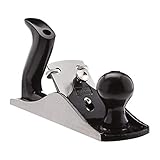
A No. 4 smoothing plane is a useful first bench plane because it can flatten small high spots, refine a board after machine milling, and clean up glue lines. It is not a substitute for a long jointer plane: its roughly 9-inch body follows local bumps more readily than it corrects a long bow or twist.
As an Amazon Associate we earn from qualifying purchases at no extra cost to you.

Sections
Our Top Picks


What “No. 4” means in practice
Most No. 4 planes have a sole about 9 inches long and an iron around 2 inches wide. That size is manageable on a bench and light enough for extended smoothing, yet has more reach than a small block plane. The common trade-off is weight: a heavier cast-iron plane can feel steady in hardwood, while a lighter one is easier to lift and carry but may take more effort to keep tracking smoothly.
For general carpentry, a No. 4 can handle door edges, trim, and modest stock correction, but it is still a bench tool. It needs a stable surface and a sharp iron; it is not ideal for roughing down a badly cupped board or for quick adjustment on a ladder.
Which kind should you buy?
| Type | Best fit | Main trade-off |
|---|---|---|
| Budget cast-iron No. 4 | Occasional carpentry and learning plane setup | Often needs sole checks, iron sharpening, and adjustment before it performs well |
| Better-finished No. 4 | Regular bench work and users who want less initial fettling | Costs more; still needs sharpening and routine setup |
| Used vintage No. 4 | Buyers comfortable inspecting and restoring tools | Condition varies; repairs can erase the savings |
A No. 4 bench hand plane is the straightforward choice if you want one plane for mixed work. A low-priced example can be perfectly serviceable, but do not assume it will be ready to use straight from the box. Check whether the iron is flat enough to sharpen, whether the cap iron seats cleanly, and whether the lateral adjustment moves the blade without sticking.
Checks that matter more than the label
Inspect the sole against a reliable straightedge, especially around the mouth and the toe and heel. A slight hollow may be workable; a pronounced hump near the mouth can make it difficult to take an even shaving. On a used plane, reject a cracked casting, badly damaged mouth, or a sole that rocks on a flat reference surface. Rust on the outside is usually less concerning than pitting on the blade’s cutting edge or a seized adjustment mechanism.
Look for a blade with enough length left for future sharpening and a cap iron that fits without a visible gap at the cutting edge. A poor fit lets shavings catch and clog the mouth. Wood handles should be sound and firmly attached; small cosmetic marks are not a performance issue. Vintage planes can be good value, but compare the price with the time and replacement parts needed to make them usable.
Setup: sharp iron, controlled cut
Before judging a plane, sharpen the iron. A practical starting point is a primary bevel near 25 degrees, honed to about 30 degrees, with a tiny camber across the edge. That camber helps prevent the corners leaving tracks in a smoothing pass. For fine work, the corners may be eased only slightly; for rougher carpentry, a little more curve makes the plane less likely to leave ridges.
Set the blade for a thin, even shaving. Start with the iron retracted, then advance it in small increments and test on scrap. Adjust the lateral lever until the shaving has similar thickness across its width. If the plane tears grain, first reduce the cut and check the direction of the grain; a sharp iron and a fine cut help, but reversing direction may be necessary on reversing grain. A cap iron set close to the edge can also reduce tear-out, though a poor fit can cause clogging.
Where it earns its place—and where it doesn’t
Use a No. 4 to remove pencil marks, even a glue-line ridge, tune a door edge, or take a final pass over a panel that is already close to flat. Work with the grain where possible and overlap strokes by roughly half the plane’s width. For narrow stock, keep the work clamped securely; a board that shifts can cause a gouge or a chipped corner.
For a long edge that must be straight, a longer jointer plane is a better reference. For rapid stock removal, a scrub plane or a machine is faster. A No. 4 can do both jobs in a pinch, but it is slower and easier to steer off course. If your work is mostly site carpentry and you need quick trimming rather than bench smoothing, a block plane may be easier to carry and control one-handed.
Budget for sharpening, not just the plane
A plane that cannot be kept sharp becomes frustrating quickly. Allow for a flat sharpening stone or abrasive setup, a way to hold a consistent honing angle, and a reliable straightedge for checking the sole and iron. A plane sharpening stone and honing guide can make repeatable sharpening easier, though a honing guide is not essential once you can hold an angle consistently.
For an occasional user, a budget plane and basic sharpening kit are usually enough. Pay more when you plane often, value a smoother initial setup, or would rather spend time working than correcting fit and finish. Either way, the blade’s sharpness and your setup will matter more than the price tag after the first few passes.