What's inside
As an Amazon Associate I earn from qualifying purchases. This post may contain affiliate links at no extra cost to you.
A jack plane is the roughing tool in a hand-flattening setup: it removes high spots quickly and gets a board close to flat before a longer plane or sanding takes over. For rough-sawn stock, blade setup and technique matter at least as much as the plane’s price. A well-tuned budget plane can do useful work; a premium one does not compensate for a dull iron or a twisted board.
As an Amazon Associate we earn from qualifying purchases at no extra cost to you.


Sections
Our Top Picks
 Taytools #5 Premium Bedrock Style Flattop Jack PlaneOne Size Fits All0 x 0 x 0 Inches6.5 PoundsCheck on Amazon


What a jack plane does
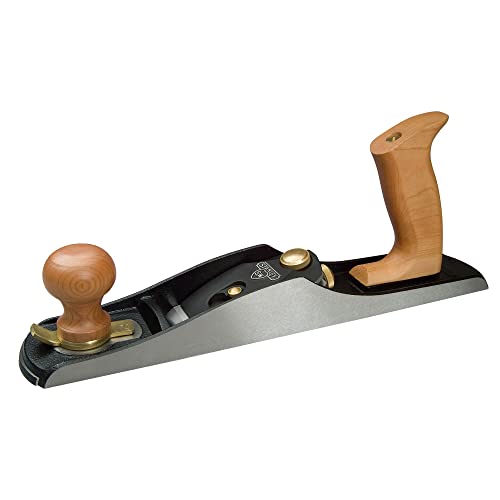
A traditional jack plane is about 14 to 15 inches long, usually with a blade roughly 2 inches wide. Its moderate length makes it easier to steer than a jointer plane while still spanning small hollows that a short block plane would follow. It is a good choice for taking down saw marks, leveling localized high spots, and bringing a board toward flat.
It is not a substitute for checking the board with winding sticks or a straightedge. A jack plane can make a twisted board smooth without making it flat. If the board is wide or badly out of wind, establish which corners are high before removing material, then check often.
Choose the sole and iron for the work
For fast stock removal, use a cambered iron: its cutting edge has a shallow curve, so the corners do not leave tracks. A pronounced camber makes a deep, narrow shaving for rough work; a gentler curve suits general flattening. If you want one plane to do both roughing and finer work, a moderate camber is a practical compromise, but it will not produce the same finish as a straight-edged iron.
Set the cap iron and mouth to match the cut. A wider opening and heavier cut clear thick shavings during roughing. For thinner shavings, close the mouth and reduce the blade projection. If the plane clogs on long, stringy shavings, clear the throat rather than forcing the tool; forcing it can bruise the board or damage the edge.
Plane options compared
| Option | Best for | Trade-off |
|---|---|---|
| Traditional bevel-down jack plane | Most general-purpose flattening and stock removal | Needs setup; factory irons may need sharpening and the sole may need checking |
| Low-angle jack plane | Users who want a simpler blade-adjustment arrangement or plan to swap irons for different cuts | Extra irons add cost; it still needs careful setup and a sharp edge |
| Used or budget bench plane | Learning, occasional work, or a limited tool budget | May need rust removal, a new iron, or time spent correcting the sole and adjustment parts |
A standard bench-plane design is the sensible starting point for most people. Compare size, iron condition, adjustment mechanism, and parts availability before paying extra for a premium finish. For a first plane, browse jack planes and check whether the listing includes a usable iron and an adjustable cap iron.
New or used: where to spend
A new, lower-cost plane can be perfectly adequate if the handles are solid, the frog seats firmly, and the blade adjusts without excessive side play. The likely cost is time: you may need to flatten the back of the iron, sharpen it, and verify the sole. Before buying, look for a blade that can be secured firmly and a mouth that is not damaged.
Used planes can offer good value, but inspect the parts that are expensive or difficult to replace. Check for a cracked casting, missing lever cap, damaged threads, loose handles, and a badly pitted iron near the cutting edge. Surface rust is usually manageable; deep pitting where the edge must be sharpened back to is a more serious problem. A used plane that needs only cleaning and sharpening is often a better buy than a cheap one with a damaged adjustment mechanism.
For new options, compare No. 5 bench planes. Do not choose on brand claims alone: check return terms and whether replacement irons or adjustment parts are available.
Set up before planing
Secure the board so it cannot rock, and mark high areas with pencil or chalk. If the board has bark edges or uneven ends, support it to avoid crushing a corner with the plane. For a board around 1 inch thick, start with a moderate cut; on especially rough stock, take several controlled passes rather than trying to remove a deep shaving in one go.
Fit the iron so it projects evenly across the mouth. Check this by sighting along the sole and taking a test pass on scrap. If one side cuts more, adjust the lateral lever. Sharpen before the plane feels difficult to push: a dull iron tears grain, takes inconsistent shavings, and tempts you to over-project the blade. Keep a honing setup nearby; a quick touch-up can save time compared with struggling through a whole board.
A reliable flattening sequence
First identify winding with winding sticks across the board near each end. Remove the high corners diagonally until the sticks appear parallel, checking frequently. Next work along the grain to reduce humps and saw marks. A cambered blade can take short, overlapping strokes across high areas, but long strokes along the board help reveal and reduce lengthwise ridges.
Use a straightedge across the width and length after a few passes. Pencil marks are a simple guide: plane until the high marks disappear, then recheck rather than chasing every low spot. Stop the roughing cut when the surface is reasonably flat and the shavings become more even. A longer jointer plane can then refine the lengthwise surface; if you do not own one, a straightedge and careful light passes with the jack plane can work on modest boards, though it takes more checking.
Watch for tear-out, especially where grain reverses. Reduce the cut, sharpen the iron, and try planing from the opposite direction. If the board is still rough after repeated passes, check whether the sole is rocking on a hollow or whether you are following the grain poorly. More force is rarely the fix.
When a jack plane is enough
For occasional projects, one jack plane, a sharpening method, winding sticks, and a reliable straightedge are a workable hand-flattening kit. A dedicated jointer plane improves speed and consistency on long boards, but it is not an automatic first purchase. If boards are short, narrow, or only mildly rough, a tuned jack plane can handle the job. If you regularly flatten long tabletops, the longer plane is worth considering once your setup and technique are dependable.