What's inside
As an Amazon Associate I earn from qualifying purchases. This post may contain affiliate links at no extra cost to you.
A good mechanical pencil can make carpentry layout faster and more accurate than a standard carpenter’s pencil, especially when you are marking joinery, cabinet parts, hinge positions, and cut lines. The best choice depends on the surface, the required line width, and whether the pencil will live in a clean workshop or a dusty tool pouch.
For general layout, a 0.5 mm or 0.7 mm mechanical pencil gives a narrow, repeatable line. For rough framing and dirty construction work, a larger lead pencil is usually more practical. The important point is not buying the most expensive pencil. It is matching the pencil to the marking job.
As an Amazon Associate we earn from qualifying purchases at no extra cost to you.


Sections
Our Top Picks
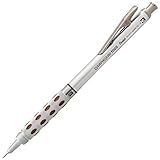
 Pentel GraphGear 1000 Mechanical Pencil1 Count (Pack of 1)0.63 x 6 x 0.63 inches0 poundsCheck on Amazon
 Pentel GraphGear1000 Automatic Drafting Pencil1 Count (Pack of 1)0.63 x 6 x 0.63 inches0 poundsCheck on Amazon
What Makes a Mechanical Pencil Good for Carpentry
Carpentry pencils are exposed to impacts, pocket lint, sawdust, and frequent drops. A suitable mechanical pencil needs more than a fine point. Look for a strong pocket clip, a grip that works with dusty hands, a lead sleeve that does not bend easily, and an eraser that is usable rather than decorative.
A retractable tip is valuable on a jobsite. A fixed sleeve may produce a more consistent line against a straightedge, but it can punch through a tool pouch or bend when the pencil is dropped. If you use a fixed sleeve, carry it in a dedicated pocket or pencil case.
Lead hardness also matters. Standard HB lead is a good starting point for softwood and general layout. H or 2H lead stays sharper and makes a cleaner line on finished lumber, plywood, and painted surfaces, but it can be too light on rough timber. Softer B leads mark more clearly but wear faster and can smear under a hand or ruler.
Choosing the Right Lead Size
| Lead size | Best use | Main advantage | Main drawback |
|---|---|---|---|
| 0.3 mm | Fine cabinet and joinery layout | Very narrow lines | Breaks easily; poor for rough timber |
| 0.5 mm | Accurate general layout | Good balance of precision and control | Can snap if pressed hard |
| 0.7 mm | General carpentry and site work | More durable than 0.5 mm | Line is slightly wider |
| 0.9 mm | Rough lumber and repeated marking | Resists breaking under pressure | Less precise for tight joinery |
| 2 mm and larger | Framing, masonry, and irregular surfaces | Strong, visible marks | Needs sharpening and produces a wider line |
For one pencil that covers most indoor carpentry, choose a 0.7 mm mechanical pencil with HB or H leads. For cabinetmaking, a 0.5 mm pencil is more useful. If your work includes framing, roof sheathing, or rough sawn stock, consider a 2 mm mechanical carpenter pencil instead of forcing a fine pencil to do a rough job.
Best Pencil Types by Work Environment
Fine drafting-style mechanical pencils are best for clean workshop work. Their fixed lead sleeves and metal tips make it easy to run a line against a combination square or marking gauge. They are excellent for mortises, hinge leaves, dowel centers, and fitting notes. Their weakness is durability: a 0.5 mm lead can break repeatedly on rough pine if you use heavy pressure.
Rugged retractable mechanical pencils are the most versatile choice for a mixed workshop and jobsite. They usually accept 0.5 mm or 0.7 mm leads, protect the tip when retracted, and survive being clipped to a tool belt. A cushioned grip can reduce hand fatigue during repeated layout, though soft rubber attracts sawdust and can become slippery when coated with dust.
Thick-lead carpenter pencils suit framing and general construction. The 2 mm lead is less likely to snap when marking across textured lumber, and it can be sharpened to a chisel or round point. A chisel point gives a useful narrow edge for layout, while a round point lasts longer but makes a wider mark. These pencils are usually cheaper to run and easier to see in bright outdoor light.
Multi-surface pencils are useful for marking dark wood, tile, plastic, or metal, but they are not a replacement for ordinary graphite in fine joinery. Colored or wax-like leads may be more visible, yet they can smear, resist erasing, or contaminate a surface that will later receive finish. Use them only when visibility matters more than a clean removable line.
Features Worth Paying For
A metal lead sleeve is worthwhile if you routinely use a straightedge. It keeps the tip aligned and allows the pencil to reach into narrow corners. However, a sleeve only a few millimeters long is less exposed and less likely to bend than a long drafting sleeve.
A strong clip matters more than a fancy barrel. If the clip loosens after a few weeks, the pencil will disappear into offcuts or fall from a ladder. A retract button that does not activate accidentally is another useful detail. Some pencils have a rotating lead-grade indicator; this is convenient in a drafting kit but not important for ordinary carpentry.
Check the eraser before buying. Many mechanical pencils use a small eraser hidden under the cap, and replacement erasers may be difficult to find. If you erase often, buy replacement mechanical pencil erasers in the same size as the pencil’s original parts. For removing layout lines from finished wood, a separate soft vinyl eraser is usually more effective.
Lead Management and Common Failure Modes
Most broken-lead problems come from using too much lead extension. Keep only 2 to 3 mm exposed for a 0.5 mm or 0.7 mm pencil. More than that increases leverage at the tip and causes snapping. If the lead breaks inside the mechanism, retract the pencil, remove the eraser, and clear the channel with the supplied cleaning rod or a spare lead inserted gently from the rear.
Sawdust can clog the clutch and prevent the lead from advancing. Do not oil the mechanism; oil holds dust and can make the problem worse. Tap the pencil tip-down over a waste bin, then use compressed air sparingly. Store the pencil in a pouch rather than loose beside a sander or router.
Fine leads also fail when marking across end grain or a knot. Switch to 0.7 mm, reduce pressure, or make the line in two light passes. A visible line is not automatically an accurate line: keep the pencil close to vertical and mark from the same reference edge every time.
A Practical Buying Recommendation
For cabinet and furniture work, buy a durable 0.5 mm mechanical pencil with a metal sleeve, plus HB and H leads. For general carpentry, choose a 0.7 mm retractable mechanical pencil with a sturdy clip and keep spare leads in a sealed tube. For framing, outdoor work, and rough lumber, the cheaper thick-lead option is often the better tool.
You do not need a premium drafting pencil to lay out accurate cuts. A modest pencil, the correct lead hardness, and a consistent reference edge will outperform an expensive pencil used with a worn or overextended lead. Keep one fine pencil for precise work and one thick pencil for rough work, and you will cover nearly every carpentry layout task without asking either pencil to do the wrong job.