What's inside
As an Amazon Associate I earn from qualifying purchases. This post may contain affiliate links at no extra cost to you.
Steel framing punishes a weak tape measure. The edge catches on studs, the hook gets dragged across sharp track, and the tape is often used one-handed while the other hand holds material in place. A magnetic end hook can make layout faster, but only if the tape has enough blade strength, a readable scale, and a hook that does not pull loose after a few days on site.
The best choice is usually a 25-foot magnetic tape with a wide blade, a strong two- or three-rivet hook, and a case that tolerates drops. Longer tapes are useful for laying out walls and openings, but they are heavier and more prone to kinking. For most carpenters, a good 25-footer is the practical starting point. Here is what matters before buying a magnetic 25-foot tape measure.
As an Amazon Associate we earn from qualifying purchases at no extra cost to you.



Sections
Our Top Picks
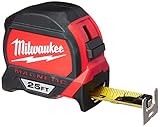
 Milwaukee 48-22-0325 Compact Wide Blade Magnetic Tape Measures7.6 m300 x 1 x 0 inches1 poundsCheck on Amazon
 Milwaukee Tool 48-22-7125 Magnetic Tape Measure 25 ft7.6 m4.75 x 2.75 x 7 inches1 poundsCheck on Amazon
 Crescent Lufkin 25' SHOCKFORCE NITE EYE Magnetic Tape25' Magnetic2.25 x 3.88 x 5.88 inchesCheck on Amazon

What Makes a Tape Good for Steel Framing
A magnetic hook is useful when measuring from a steel stud, track, door frame, or metal duct. It lets the blade stay attached while you mark with your free hand. This is especially helpful for repeated stud layouts, where holding the hook in place for every 16-inch or 24-inch mark becomes tiring.
Magnet strength is not the only issue. The magnet should sit securely in the hook and should not be so bulky that it catches on the edge of track. A hook with magnets on both the front and underside can attach to flat steel in different orientations. The best hooks also retain the normal sliding action found on a standard tape. That movement compensates for the thickness of the hook when measuring inside and outside dimensions.
Blade width affects reach. A 1-1/4-inch blade generally stands out farther than a narrow 1-inch blade, but it also makes the case larger. For steel framing and general site work, a blade that can stand out 8 feet or more is useful. Treat advertised standout figures as best-case numbers: a dirty, bent, or wind-loaded blade will fail earlier.
Key Buying Specifications
| Feature | What to look for | Why it matters |
|---|---|---|
| Length | 25 feet for general work; 30 feet for larger layouts | Balances reach, weight, and control |
| Blade width | About 1-1/4 inches | Improves readability and standout |
| Magnetic hook | Front or dual-position magnets | Attaches to studs, track, and steel frames |
| Hook attachment | Two or more rivets, with a sturdy plate | Reduces loosening and inaccurate readings |
| Markings | Clear fractional graduations and bold foot numbers | Speeds layout and reduces reading errors |
| Case and lock | Rubber overmold and a positive blade lock | Handles drops and prevents blade creep |
Look closely at the markings. Sixteenths are enough for most framing, while eighths are faster to read at a glance. Some tapes print dense architectural or center markings that help with stud spacing but can clutter the blade. If you regularly lay out 16-inch centers, a tape with prominent stud-spacing marks can save time. Do not rely on them blindly around openings or when working from an existing reference; confirm the actual dimension.
The Best Types for Site Work
A standard magnetic 25-footer is the best all-rounder. It handles stud lengths, sheet goods, rough openings, and general carpentry without becoming an annoyance on a tool belt. Choose this type if you also measure for a carpenter tool belt and tape holder.
A 30-foot model is worthwhile for wall runs, floor layouts, and exterior work. The extra 5 feet can prevent a second measurement, but the case is usually heavier and the blade can be harder to control indoors. If most of your work is short stud cuts and cabinet installation, the 30-footer offers little benefit.
A compact 16- or 20-foot magnetic tape is convenient for interior punch work and trim. It fits better in a pouch and is less tiring to carry. The trade-off is limited reach and usually a narrower blade. It is a reasonable cheap option for a second tape, not the only tape on a steel-framing crew.
Failure Modes to Watch
The most common failure is a hook that shifts or bends. Even a 1/16-inch change at the hook creates a wrong measurement that gets worse across repeated cuts. Check that the hook moves slightly but returns squarely, and replace a tape when the hook is visibly bent or the rivets are loose.
Magnets collect metal filings, drywall screws, and abrasive grit. This can stop the hook from sitting flat and can scratch finished steel. Wipe the magnets regularly and keep the tape away from grinding dust when possible. A magnetic hook is not a substitute for cleaning the contact surface.
Blade damage is another problem. Never force a kinked blade back into the case. A crease can snap during extension, and the sharp edge can cut fingers. Avoid letting the blade slam back at full speed; control the return with the lock or your thumb. This also protects the hook from striking the case.
Cheap tapes are fine for rough, low-consequence work if the blade is straight and the markings are readable. They become false economy when a loose hook or damaged blade causes repeated bad cuts. Spend more for daily site use, especially if the tape will be dropped, exposed to rain, or shared by several workers. For occasional home framing, a basic wide-blade magnetic tape is usually sufficient.
Using a Magnetic Tape Accurately
Before measuring, seat the magnet fully against clean steel and keep the blade aligned with the edge of the stud or track. Do not measure diagonally across a flange unless the drawing calls for that dimension. For inside measurements, use the case’s printed offset only if it is clearly marked and still accurate; otherwise hook the tape around an edge or use a steel rule for short dimensions.
For repeated steel-stud layout, mark a baseline first, then transfer centers using the same reference direction. Confirm the first and last stud positions before filling in the intermediate marks. A tape can make the marks faster, but it cannot correct an incorrect starting point.
If you work around power tools, chisels, or hand planes as well as framing, keep the tape in its own pouch rather than loose with sharp tools. A small amount of care—cleaning the hook, controlling retraction, and checking the zero point—usually matters more than buying the most expensive tape on the rack.