What's inside
- Quick verdict for contractors
- How the SawStop compares on the specifications that matter
- Flesh-sensing safety: the feature that changes the buying decision
- Fence accuracy and cutting performance
- Setup time, portability, and the stand
- Dust collection: good enough for a jobsite, not a workshop extractor
- Ownership realities and maintenance
- Which saw fits your situation?
- Final recommendation
- Quick verdict for contractors
- How the SawStop compares on the specifications that matter
- Flesh-sensing safety: the feature that changes the buying decision
- Fence accuracy and cutting performance
- Setup time, portability, and the stand
- Dust collection: good enough for a jobsite, not a workshop extractor
- Ownership realities and maintenance
- Which saw fits your situation?
- Final recommendation
As an Amazon Associate I earn from qualifying purchases. This post may contain affiliate links at no extra cost to you.
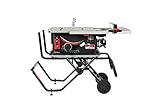
Yes—the SawStop Jobsite Table Saw is worth buying for contractors who value flesh-sensing safety and dependable fence alignment more than the lowest price or maximum rip capacity. Its safety system is unusually valuable on a busy jobsite, while its cutting performance is competitive with premium portable saws. However, a less expensive saw such as the SKIL jobsite table saw offers more capacity per dollar, and a larger rolling saw may be better for frequent cabinet or sheet-goods work.
As an Amazon Associate we earn from qualifying purchases at no extra cost to you.


Sections
- Quick verdict for contractors
- How the SawStop compares on the specifications that matter
- Flesh-sensing safety: the feature that changes the buying decision
- Fence accuracy and cutting performance
- Setup time, portability, and the stand
- Dust collection: good enough for a jobsite, not a workshop extractor
- Ownership realities and maintenance
- Which saw fits your situation?
- Final recommendation
Quick verdict for contractors
- Choose the SawStop Jobsite Saw Pro if accidental blade contact is a major concern, several people use the saw, or you want a portable saw with a substantial fence and wheeled stand.
- Choose a SKIL jobsite table saw if your budget is tight and you mainly cut framing lumber, trim, decking, and occasional plywood.
- Choose a larger rolling jobsite saw if you regularly rip full sheets and need more than roughly 25 inches of right-side capacity.
- Choose a contractor table saw if portability is secondary to a heavier table, quieter operation, and more stable support in a permanent or semi-permanent workshop.
The SawStop carries a general market price in the premium portable-saw range, commonly around $800–$1,000 depending on the package and promotions. That is considerably more than many basic 10-inch portable saws, but the premium pays for more than a brand name: it includes a brake cartridge and blade-sensing system designed to stop the blade when conductive skin contact is detected.
How the SawStop compares on the specifications that matter
The table below compares commonly published specifications for the SawStop Jobsite Saw Pro and two well-known alternatives. Exact package contents can vary, so confirm the model number before ordering.
| Feature | SawStop Jobsite Saw Pro | SKIL TS6307-00 | DeWalt DWE7491RS |
|---|---|---|---|
| Blade | 10 in., carbide-tipped | 10 in., carbide-tipped | 10 in., carbide-tipped |
| Motor | 15 amp, corded | 15 amp, corded | 15 amp, corded |
| Maximum rip, right of blade | About 25.5 in. | About 25.5 in. | About 32.5 in. |
| Maximum depth at 90 degrees | About 3-1/8 in. | About 3-5/8 in. | About 3-1/8 in. |
| Maximum depth at 45 degrees | About 2-1/8 in. | About 2-1/2 in. | About 2-1/4 in. |
| Saw weight | About 90 lb. with jobsite equipment | About 50–55 lb., depending on stand configuration | About 90 lb. with rolling stand |
| Safety brake | Flesh-sensing blade brake | Conventional blade guard and anti-kickback system | Conventional blade guard and anti-kickback system |
| Stand | Integrated wheeled jobsite stand | Folding stand included in common packages | Rolling stand included |
Capacity is the first reason not to buy the SawStop automatically. Its approximately 25.5-inch rip is enough for most flooring, framing, shelving, and trim work, but the DWE7491RS can handle wider panels without a separate outfeed or side-support arrangement. The SKIL offers similar right-side capacity at a much lower general market price.
Flesh-sensing safety: the feature that changes the buying decision
The SawStop system uses a small electrical signal to detect when skin contacts the blade. When the system detects a conductive object, an aluminum brake activates and the blade drops below the table. The motor also stops. The cartridge and blade normally need replacement after activation.
This does not make the saw impossible to misuse. Kickback, flying offcuts, improper support, and contact with the blade before the system is armed remain hazards. The guard, riving knife, push stick, hearing protection, and correct stock support are still essential. The safety system can also be disabled for certain wet or conductive materials, but doing so removes its main advantage.
For a contractor, the practical question is not only “What is the chance of an accident?” It is also “What would one accident cost?” A replacement brake cartridge and blade may cost roughly $100–$150, depending on the parts needed. That is inconvenient; a hand injury can mean medical expenses, lost work, and a disrupted project. If multiple workers, apprentices, or occasional users operate the saw, the premium is easier to justify.
Fence accuracy and cutting performance
The SawStop’s fence is one of its strongest everyday features. It locks from the front and is designed to remain parallel to the blade when properly adjusted. That matters more than a large maximum-rip number when cutting repeated strips: a fence that shifts can produce tapered boards, binding, burning, and kickback.
Out of the box, do not assume any portable saw is perfectly calibrated. Check the fence against the miter slot, verify the blade is parallel to the slot, and confirm the bevel scale with a reliable square. A useful setup target is to keep the blade-to-fence difference within roughly 0.005–0.010 inch across the usable cut length. The exact tolerance depends on the work, but consistency is the objective.
The 15-amp motor has enough power for ordinary dimensional lumber and sheet goods when paired with a sharp blade. Thick hardwood, damp timber, and continuous ripping will slow any corded jobsite saw. Feed steadily rather than forcing the material; a dull blade creates more heat and increases the chance of burning or wandering.
Setup time, portability, and the stand
The wheeled stand is a major advantage over placing a saw on sawhorses. A typical setup involves rolling the saw into position, opening the support, locking the stand, installing the guard or riving knife, and checking the fence. Allow roughly 5–10 minutes for a first setup and about 2–4 minutes once the stand and accessories are familiar.
That convenience has a trade-off: the SawStop is not light. It is portable in the contractor sense—rollable by one person on a reasonably smooth surface—but carrying it upstairs or loading it into a vehicle is a two-person task for many users. Its footprint also needs clearance for the fence, outfeed, and sheet goods.
A jobsite table saw stand is worth treating as part of the cutting system, not an accessory. On uneven ground, level the feet or use a stable platform. Never compensate for a rocking stand by gripping the workpiece harder. For long stock, use a separate roller, outfeed table, or helper positioned so the support does not push the board sideways.
Dust collection: good enough for a jobsite, not a workshop extractor
The SawStop provides enclosed blade-area collection and a dust port that can be connected to a shop vacuum or larger extractor. Collection is generally most effective when the blade is correctly aligned, the guard is installed, and the vacuum has a clean filter and empty container.
Expect a reduction in airborne dust, not a dust-free operation. Ripping plywood and MDF produces substantial fine dust, and the open underside of a portable saw allows some material to escape. Use a suitable dust extractor, keep the hose short and unobstructed, and clean the throat plate and lower cabinet regularly. For indoor remodeling, a vacuum with a fine-particle filter is preferable to relying on a basic household vacuum.
Ownership realities and maintenance
- Brake cartridges are consumables. Keep a spare if the saw is essential to a project, and replace the blade if it is damaged during activation.
- Blades wear before the motor does. A general-purpose 40-tooth blade suits mixed construction work; use a finer blade for cleaner plywood and trim cuts.
- Dust affects adjustment. Brush the fence mechanism, elevation parts, and blade cavity rather than allowing resin and dust to accumulate.
- Moisture can trigger complications. Wet lumber and conductive materials require following the manufacturer’s operating guidance; never defeat the safety system casually.
- Transport can alter calibration. After loading the saw into a truck or moving it over rough ground, recheck the fence and blade alignment before precision work.
- Small offcuts are risky. Use a push stick or push block whenever your hands would approach the blade, even with the brake enabled.
Which saw fits your situation?
| Your situation | Best direction | Reason |
|---|---|---|
| Frequent professional use and several operators | SawStop Jobsite Saw Pro | Flesh-sensing protection, sturdy fence, and rolling setup reduce operational risk and setup friction. |
| Budget under about $500 | SKIL jobsite table saw or similar conventional model | More capacity per dollar, provided you accept standard guard-based safety. |
| Regular full-sheet ripping | Higher-capacity rolling jobsite saw | About 30–32 inches of rip capacity reduces panel repositioning. |
| Permanent workshop use | SawStop contractor table saw | A heavier contractor-style platform offers more stability and workspace than a portable saw. |
| Occasional trim and repair work | Compact portable saw | Lower weight and cost may matter more than advanced safety features. |
Final recommendation
The SawStop Jobsite Table Saw is worth buying when safety, fence reliability, and repeatable setup are more important than minimum weight or maximum rip width. It is especially compelling for contractors who move between sites but want protection closer to a workshop standard. It is not the best value for every buyer: a SKIL jobsite table saw review will usually point to lower cost and lighter handling, while a larger rolling saw wins for wide panels.
Buy the SawStop if its brake system would materially improve who can safely use the saw and how confidently you work. Otherwise, spend the difference on a quality blade, dust extractor, stable support, and proper training—items that remain important regardless of which of the 10-inch jobsite table saw options you choose.