What's inside
As an Amazon Associate I earn from qualifying purchases. This post may contain affiliate links at no extra cost to you.
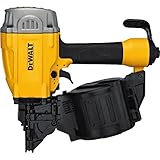
The DeWalt cordless framing nailer can fully replace a pneumatic gun for remodelers, deck builders, and anyone working off-site — but production framers running thousands of nails a day will still find an air setup faster, lighter, and cheaper over the long haul. Here’s how that conclusion shakes out across the scenarios that actually decide it.
As an Amazon Associate we earn from qualifying purchases at no extra cost to you.


Sections
What You’re Actually Buying
DeWalt’s 20V MAX framing nailers (the brushless DCN692 dual-speed and the 21° DCN21PL plastic-collated variant are the current flagships) use a flywheel-and-driver mechanism powered entirely by the battery — no gas cell, no hose. That architecture defines everything below: instant shots without a fuel-cell warmup delay, but a brief flywheel spin-up before each cycle and a heavier tool than any pneumatic framer.
| Spec | DeWalt DCN692 (30–34°) | Typical pneumatic framer (e.g., 21° gun) |
|---|---|---|
| Weight (bare) | ~8.0 lbs | ~7.5–8.5 lbs |
| Nail range | 2″ – 3-1/2″ clipped/offset round head | 2″ – 3-1/2″ |
| Magazine capacity | ~30–34 nails (1 stick) | 2 sticks, ~60–70 nails |
| Firing modes | Sequential + bump (selectable) | Sequential + bump (trigger swap or selector) |
| Power source | 20V MAX battery (no fuel cells) | 70–120 PSI compressor |
| Rate of fire | ~2–3 nails/sec practical | Up to ~8 nails/sec in bump mode |
| Street price range | $300–$400 bare tool | $150–$300 gun, plus compressor/hose |
Toenailing: Where Cordless Earns Its Keep
Toenailing studs is the cordless nailer’s best argument. The nose geometry on the DCN692 is aggressive enough to bite into a stud face at a steep angle, and because the tool fires on demand with consistent energy, driven depth stays uniform — no pressure drop mid-run like a compressor cycling down. Depth adjustment is a thumbwheel, not a hex key, which matters when you’re alternating between toenails through a sole plate and face-nailing sheathing.
The trade-off is weight and balance. An 8-pound head-heavy tool gets fatiguing on overhead or angled work faster than a pneumatic gun on a lightweight coil hose. If your framing day is mostly studs and plates at waist level, you won’t notice. If you’re toenailing rafters all afternoon, you will.
LVL Headers and Engineered Lumber: The Real Stress Test
Engineered lumber is where cordless nailers historically fell down — dense LVL and LSL will stall an underpowered driver. The DCN692’s two-speed selector exists precisely for this: the low-speed/high-power setting drives 3-1/2″ nails into LVL headers reliably, at the cost of a slower cycle. Realistically, expect full sinking in LVL at low speed and occasional proud heads (1/8″ or so) in the densest material at high speed — a finish hammer pass fixes the stragglers.
A pneumatic gun at 110–120 PSI sinks into LVL without thinking about it and doesn’t care about nail rate. If your work is header-heavy production framing, pneumatic still has the raw-edge. For the remodeler boxing two or three LVL beams a month, cordless is entirely adequate.
Sequential vs. Bump Firing in Practice
Both modes are selectable on the tool, and both work — with caveats:
- Sequential: Effectively identical to a pneumatic. One trigger pull, one nail, consistent depth. This is where the DeWalt feels indistinguishable from air.
- Bump: Functional but slower. The flywheel needs a moment to return to speed between cycles, so sustained bump firing runs roughly 2–3 nails per second versus a pneumatic’s rhythmic rattle. For sheathing and decking it’s acceptable; for someone who makes their living at bump-fire speed, it costs real time over an eight-hour day.
Nails Per Charge: Realistic Numbers
Per-charge output is the spec everyone wants and listings understate. Based on the tool’s published ratings scaled against real-world driving conditions (full-depth 3″ and 3-1/2″ nails into SPF and engineered lumber):
| Battery | Published rating | Realistic mixed framing | Dense lumber / cold weather |
|---|---|---|---|
| 20V MAX 4.0Ah | ~500–700 nails | ~400–550 nails | ~300–400 nails |
| 20V MAX 5.0Ah | ~700+ nails | ~500–700 nails | ~400–550 nails |
| POWERSTACK / FlexVolt-style packs | Higher still | ~700–900 nails | ~550–700 nails |
For context: a 200-square-foot deck frame runs roughly 800–1,200 fasteners, so one 5Ah pack plus a spare covers a full day for a two-person crew’s single gun. A pneumatic setup has no such ceiling — the compressor refills itself. But it also means hauling a compressor, a 50-foot hose, and a power source for the compressor, which is its own logistics problem on remodel sites.
The Ownership Math
A quick cost-per-use comparison over a realistic three-year span for a serious DIYer or small contractor framing ~25 working days a year:
- Cordless path: ~$350 bare tool + two 5Ah batteries (~$150–200 if not already on the 20V MAX platform) = ~$500–550. Consumables: nails only. Cost per framing day ≈ $7.
- Pneumatic path: ~$250 gun + ~$200 pancake/wheelbarrow compressor + hose and fittings (~$60) = ~$510. Consumables: nails plus occasional oil/o-rings and hose repairs. Cost per framing day ≈ $7–9 once wear items are counted.
The upfront numbers are nearly a wash. The real divergence is in workflow: cordless wins on setup time (zero), mobility (total), and noise; pneumatic wins on sustained speed, weight over long sessions, and magazine capacity (two sticks vs. one means half the reloads).
What Wears First and What to Watch
- Driver blade and return bumper are the consumable internals — expect them as a service item somewhere past 30,000–50,000 shots on heavy use, same as a pneumatic’s piston ring.
- Nail collation matters. The DCN692 runs paper-tape 30–34° nails; cheap, humid-swollen paper collations are the leading cause of jams. Buy decent strips and keep them dry.
- Cold weather cuts battery output noticeably — figure a 20–30% drop below freezing, and keep a spare pack in a warm pocket.
- Common mistake: leaving the tool in high-speed mode for LVL, then blaming the nailer for proud heads. The two-speed switch exists for a reason.
- Cleaning is minimal: keep the magazine clear of collation debris and don’t oil it — unlike a pneumatic, it doesn’t want it.
Decision Matrix
| Your situation | Recommendation |
|---|---|
| Remodeler / punch-list carpenter, varied sites | Cordless — setup time savings alone pay for it |
| Deck builder or DIYer doing 2–6 projects a year | Cordless, especially if you own 20V MAX batteries |
| Full-time framing crew, sheathing at bump-fire pace | Pneumatic — speed and magazine capacity win |
| Heavy LVL/engineered lumber schedule | Pneumatic, or cordless accepted with occasional hammer taps |
| Remote site, no generator | Cordless, no contest |
| Overhead/rafter work all day | Pneumatic — lighter in hand over hours |
Verdict
The DeWalt cordless framing nailer replaces an air gun for roughly 80% of framing work — everything except sustained bump-fire production and back-to-back LVL days. Its genuine advantages are zero setup, no fuel cells, and honest depth consistency; its genuine limits are weight, single-stick capacity, and a slower bump cadence. If you’re already carrying 20V MAX batteries, it’s one of the easier tool purchases to justify on this platform. If you’re a production framer, keep the compressor.