What's inside
As an Amazon Associate I earn from qualifying purchases. This post may contain affiliate links at no extra cost to you.
Sections
Our Top Picks
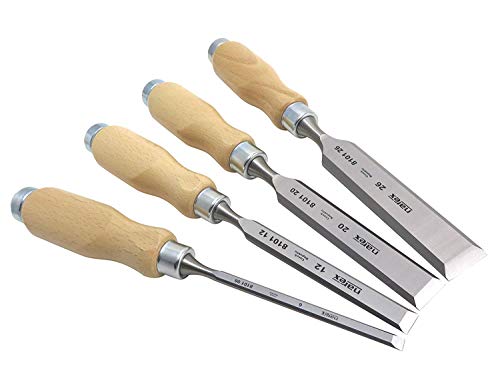
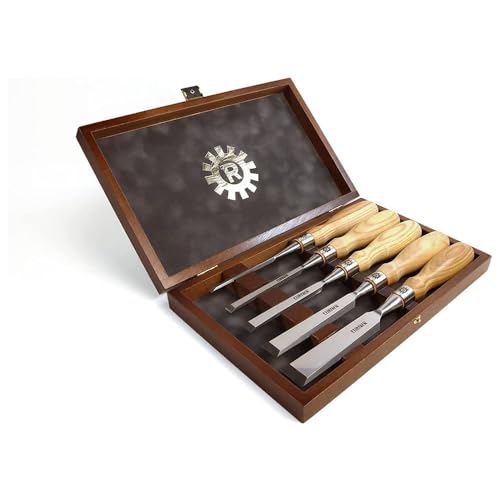


Thin-Back Chisels vs Thick-Back Chisels for Tight Joinery
For tight joinery, the difference between a thin-back and thick-back chisel is less about brand and more about control. A thin-back chisel is easier to register against a knife line, pare a shoulder, or clean the floor of a shallow mortise. A thick-back chisel is stronger, more stable under mallet blows, and usually the better choice when you need to remove a lot of wood.
Neither type replaces the other. A practical joinery set normally uses thin blades for fitting and paring, with thicker chisels handling chopping and waste removal.
As an Amazon Associate we earn from qualifying purchases at no extra cost to you.


What “thin-back” means
Thin-back chisels have relatively slim blades behind the bevel. The sides are often narrow or lightly tapered, and the blade does not carry as much steel into the handle. This reduces weight and lets the tool enter narrow recesses without bruising the surrounding timber.
The main advantage appears during paring. Hold the chisel bevel-down or bevel-up, depending on the cut, and a thin blade gives you a more direct feel for the edge. You can remove a shaving only 0.2 to 0.5 mm thick and make small corrections without fighting the tool.
Thin backs are especially useful for:
- Fitting door hinges and strike plates
- Trimming tenon shoulders
- Cleaning dovetail sockets
- Paring the sides of housing dados
- Removing glue squeeze-out from a joint
The limitation is stiffness. A thin blade can flex if you lever aggressively, particularly in a wide size such as 25 or 32 mm. It can also bend if struck hard while partly buried in a mortise. The edge is not necessarily weaker, but the blade gives you less support behind it.
What “thick-back” means
Thick-back chisels have deeper blades and more steel behind the cutting edge. Many bench chisels fall into this category. The extra thickness resists bending and makes the tool feel planted when chopping across end grain or driving into a mortise.
That stiffness matters when removing waste. A 10 mm mortise chisel, for example, can take repeated mallet blows without springing sideways. A thick bench chisel can also clear waste quickly by taking cuts around 1 to 2 mm deep, provided the timber is cooperative and the edge is sharp.
The trade-off is bulk. A thick blade may not fit into a narrow dovetail corner or a housing joint with limited clearance. It can also make delicate paring feel clumsy. If you force a large, thick chisel into a tight joint, the blade may crush the arris before it cuts it.
Key differences at the bench
| Feature | Thin-back chisel | Thick-back chisel |
|---|---|---|
| Best use | Fine paring and joint fitting | Waste removal and chopping |
| Blade feel | Light, responsive, easy to steer | Solid, stable, resistant to flex |
| Typical cut | About 0.2–0.5 mm per shaving | About 1–2 mm when chopping waste |
| Strength | More vulnerable to levering and hard impacts | Handles mallet work and hard grain better |
| Access | Gets into narrow corners and shallow joints | Can be too bulky for confined recesses |
| Ideal buyer | Furniture maker or joiner refining fit | General carpenter cutting joints and removing waste |
How to use both types on one joint
Use the thick chisel first, but keep it inside the waste area. On a mortise, chop down to within roughly 1 mm of the scribe lines, then switch to a thinner chisel for the final walls and ends. Do not use the finish chisel to excavate the whole cavity; that wastes time and increases the chance of mushrooming the handle or rolling the edge.
For a tenon, a thick chisel can remove the bulk from the cheeks, but a thin chisel is better for paring the shoulder line. Work from the waste side toward the knife mark. Cutting directly into the finished arris is a common failure mode: even a sharp edge can lift fibers beyond the line, leaving a ragged shoulder.
When cleaning a stopped housing dado, a thin-back chisel usually wins. Keep the back flat against the bottom and take short cuts, working across the grain where possible. A thick chisel may bridge over small ridges, especially if the recess is narrower than the blade.
What to buy first
If you are buying one small set for general carpentry, choose conventional bench chisels with moderate blade thickness rather than an extreme thin-back or heavy mortise pattern. Sizes of 6, 10, 12, be corrected 18, and 25 mm cover many furniture and site repairs. A 12 mm chisel is a useful starting size for mortises, hinges, and general fitting.
For a dedicated joinery bench, add a set of thin-back bench chisels in the sizes you use most. A 6 mm and 12 mm pair will handle many dovetail and housing jobs. If you regularly cut mortises, spend the money on bevel-edge mortise chisels, especially in 6, 8, or 10 mm widths.
The cheaper option is fine when the chisels are for occasional hinge work, rough carpentry, or jobs where small cosmetic marks will be hidden. Spend more when you need an edge to hold through several joints, when blade backs arrive reasonably flat, or when handle balance affects hours of paring. A premium thin chisel will not compensate for poor sharpening, but it can make controlled fitting noticeably easier.
Sharpening and failure points
Keep the primary bevel around 25 degrees for general use, with a small secondary bevel near 30 degrees if the edge needs extra durability. Thin chisels benefit from a keen, lightly honed edge; thick chopping chisels can tolerate a slightly stronger micro-bevel.
Never pry sideways with a thin chisel. If a shaving will not lift, retract the tool, pare from the opposite direction, or remove more waste with a thicker blade. Check the edge after striking knots or end grain. A small chip can turn a clean shoulder into a series of dents within a few cuts.
For most buyers, the sensible answer is not thin versus thick. Use a thick-back chisel to remove wood safely and quickly, then use a thin-back chisel to make the joint fit. That combination gives you speed during roughing and the control needed for a crisp final line.