What's inside
As an Amazon Associate I earn from qualifying purchases. This post may contain affiliate links at no extra cost to you.
Sections
Our Top Picks
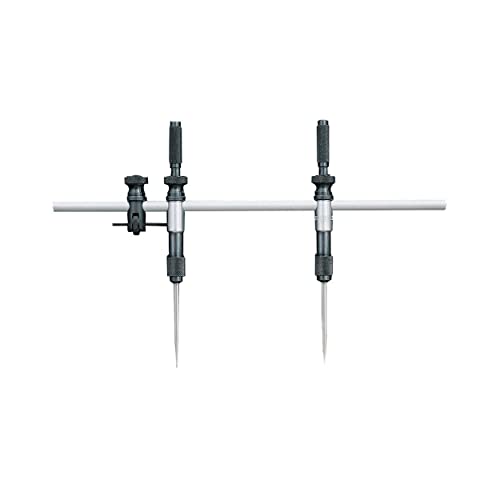

What Each Tool Actually Is
Both tools do the same job: they hold two points at a fixed distance and swing an arc. The difference is how they hold that distance and what they scribe with.
Trammel points are a pair of steel clamps — one with a sharp divider point, one with a pencil holder or a second point — that clamp onto a separate beam you supply. Usually that’s a length of 1×2 hardwood, aluminum flat bar, or even a straight stick of plywood. The beam is not included. You buy the heads and make or buy the beam. A decent set clamps with a thumbscrew and a small machined shoe that bites into the wood without crushing it. The better ones have a micro-adjust screw for fine tuning.
As an Amazon Associate we earn from qualifying purchases at no extra cost to you.


A beam compass is a single integrated tool. It has its own rigid beam, typically steel or heavy aluminum, with one fixed point and one sliding head that locks with a thumbscrew and fine-adjust wheel. Most woodworking models carry a hardened point on one end and a pencil or pen holder on the other, and some include interchangeable needle points so you can use it as a large divider. The beam is usually graduated in inches or millimeters, and the whole thing stores as one piece.
In practice, trammels are an adapter system. A beam compass is a dedicated instrument. That distinction drives everything else.
Capacity, Accuracy, and Real Numbers
For timber layout — arches, curved braces, round table tops, arched door heads, stair stringers — you are often swinging arcs from 12 inches to 72 inches in radius. Both tools can do it, but not equally well.
Trammel points win on capacity. Since you supply the beam, your radius is limited only by how long and stiff a beam you can manage. A 48-inch hardwood batten is easy to handle on a sheet of plywood. An 8-foot batten will swing a 96-inch radius, but it will flex if you use softwood. With a straight 3/4″ x 1-1/2″ hard maple batten, flex is under 1/32″ at 48 inches if you keep light pressure. With a 1×2 pine batten at 72 inches, you can see 1/16″ to 1/8″ of deflection just from the weight of the beam and your hand pressure. That shows up as a wobbly or flattened arc.
Beam compasses are stiffer per inch because the beam is metal and the sliding head has less play, but they are limited to the beam length you bought. Most common woodworking models are 24, 36, or 48 inches. A 48-inch beam compass gives you roughly a 46-inch usable radius after the heads. Beyond 48 inches, options get expensive and heavy, and the tool becomes awkward to store in a site kit. Accuracy on a good beam compass is typically within 1/64″ over its full length if you lock it properly and use the fine-adjust. Cheaper extruded-aluminum versions can have 1/32″ of slop in the sliding head if the lock shoe is soft.
If you need one perfect 60-inch arch once a year, trammels with a hardwood beam are more accurate than a cheap long beam compass that flexes under its own weight.
How They Handle on Real Timber
On rough-sawn oak, Douglas fir, or construction lumber, the point has to stay put. This is where trammels often disappoint beginners.
Most trammel sets use a simple conical steel point. On softwood, it digs in and holds. On hard maple or white oak end grain, it skates unless you prick the center with an awl first. And because the beam is wood, vibration from dragging the pencil can walk the point out of the starting dimple, especially if the thumbscrew isn’t tight enough or the beam is varnished. The fix is to drill a tiny 1/16″ pilot dimple and to wax the beam so the slider moves smoothly but locks hard.
Beam compasses usually have a sharper, harder needle point with a 30-degree included angle. It seats better and the heavier beam damps vibration. The pencil holder is also more rigid. On trammels, the pencil holder is often a split collet that can allow a standard carpenters pencil to twist. On a beam compass, the holder is usually a machined clamp with a knurled screw, which holds a 2mm lead or pencil with less wobble. That matters when you are scribing across a 40-inch arc on a timber where a 1/32″ pencil wobble ruins a joint line.
Failure modes to know: trammels slip at the clamp. If sawdust gets under the shoe, the head can creep 1/16″ mid-swing without you noticing. Beam compasses fail at the lock. If you overtighten the fine-adjust screw to compensate for a loose main lock, you bend the beam slightly and the radius changes as you swing. Both tools fail if you press hard. Light, consistent pressure with two hands — one anchoring the pivot, one guiding the pencil — gives the cleanest arc.
Head-to-Head Comparison
| Feature | Trammel Points | Beam Compass |
|---|---|---|
| Radius range | Unlimited, depends on beam you make; practical to 96″ | Fixed by beam length; 24″ to 48″ most common |
| Stiffness | Depends on beam; hardwood batten is good to ~48″, aluminum bar is better | Steel beam very stiff to 36″; aluminum flexes slightly beyond 48″ |
| Accuracy out of the box | +/- 1/32″ unless you tune the beam and heads | +/- 1/64″ on a decent model with fine-adjust |
| Weight and site carry | Heads fit in apron; beam can be job-site scrap | One-piece, heavy, needs case; awkward in a tool belt |
| Best use on timber | Large, one-off arcs on sheets and big timbers | Repeated, precise arcs under 48″ (furniture, joinery) |
| Price | $15 to $45 for heads alone | $35 to $120 for complete tool |
| Common failure | Head slips on dusty/waxy beam, point walks | Slider slop, bent beam from over-tightening |
Which One to Buy for Carpentry Work
Buy trammel points if you lay out large stuff infrequently and value versatility. For a carpenter who needs to scribe a 54-inch arch for a gate, mark a 72-inch radius on a plywood sub-top, or step off equal divisions on a timber frame bent, a set of trammel points for woodworking plus a straight hardwood batten covers more jobs for less money. Make two beams: a 36-inch hard maple batten for everyday use and a 72-inch aluminum flat bar (1/8″ x 1-1/2″) for big swings. The aluminum bar does not flex like pine and costs a few dollars from a metals supplier. File a small flat where the clamp bites so it does not slip.
Buy a beam compass if you do a lot of precise, repeatable work under 48 inches and want speed. For furniture-scale arcs, elliptical table tops, or laying out multiple identical curved brackets, a dedicated beam compass woodworking tool is faster to set, holds its setting when you bump it, and the graduated beam saves you from measuring with a separate tape. Look for one with a micro-adjust wheel and interchangeable point/pencil holders. Avoid the lightest extruded models if you work on hardwoods — the point will chatter.
Many site carpenters end up with both. Keep trammel heads in the site box with a 48-inch batten, and keep a 24-inch beam compass in the shop for cleaner joinery layout. If you have to pick one and you own only hand tools and work mostly on timber and sheet goods, start with trammels. They are cheaper, they store smaller, and you can replace a damaged beam in five minutes on site. If you build cabinets, chairs, or anything where a 1/32″ error shows at the joint line, the beam compass earns its price.
Tips for Clean Large Arcs on Timber
Whichever tool you use, the technique matters more than the brand. First, always set the radius with a steel tape or rule measured point-to-point, not by reading the graduation on the beam alone. Check both ends with calipers if you need better than 1/32″. Second, anchor the pivot point properly. A small brad nailed as a pivot and the trammel point seated against it will not walk. For a beam compass, press the point into a pre-punched dimple and keep your palm flat over the pivot with light downward pressure while your other hand sweeps.
Third, use the right lead. A hard 2H pencil or 2mm lead holds a sharper line over a long swing than a soft carpenters pencil, which dulls in 12 inches and fattens the line by 1/64″ or more. On dark timber, a white or yellow pencil or a marking knife in the trammel holder gives a crisper line. Fourth, make the swing in one continuous pass. Stopping mid-arc and restarting leaves a flat spot.
Finally, consider a large divider caliper if you also need to step off equal distances along that arc, such as for dividing a curved stretcher into equal segments. Trammels and beam compasses are great at swinging, poor at walking. A dedicated large divider is safer for stepping without losing your center.