What's inside
As an Amazon Associate I earn from qualifying purchases. This post may contain affiliate links at no extra cost to you.
The bevel on a chisel is more than a sharpening detail. It affects how the edge enters a cut, how much metal supports it, and whether the tool can reach into a corner. For ordinary carpentry, most chisels have a bevel on both faces near the cutting edge and a flat back; “bevel-edge” chisels also have narrow, tapered sides that help them fit into dovetails and other tight spaces.
There is no single best bevel angle for every job. Softwood usually rewards a keen edge that cuts easily, while hard or abrasive stock benefits from more support behind the edge. The useful choice depends on the wood, the task, and how often you are willing to sharpen.
As an Amazon Associate we earn from qualifying purchases at no extra cost to you.


Sections
Our Top Picks
 HURRICANE 4 Piece Wood Chisel Set for Woodworking.Regular Grip7.87 x 4.72 x 1.38 inchesCheck on Amazon
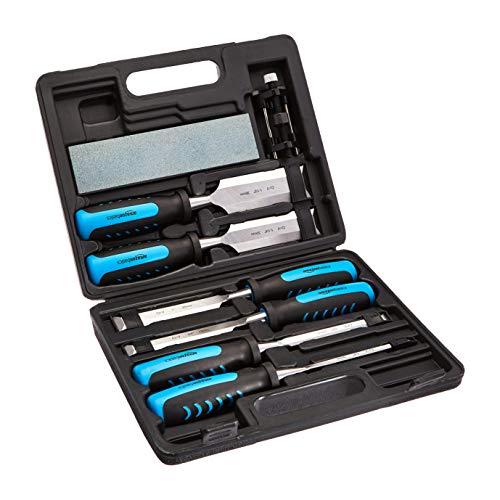 Amazon Basics 8-Piece Wood Chisel Set for Woodworking1/4" - 1-1/2"11.4 x 9.25 x 2.8 inches5.4 poundsCheck on Amazon


What the bevel angle means
The primary bevel is the main ground face that meets the flat back at the cutting edge. A lower angle makes a sharper wedge, so the chisel needs less force to enter the wood. The trade-off is a thinner edge that can roll, chip, or wear sooner. A steeper bevel puts more steel behind the edge, increasing durability but also increasing cutting resistance.
Many bench chisels arrive ground around 25 degrees. That is a useful starting point, not a rule. A common approach is to keep a primary bevel near 25 degrees and hone a small secondary bevel at roughly 30 degrees. The narrow secondary bevel is quick to refresh and gives the edge added support. Angle numbers are approximate in practice; consistent contact on the honing stone matters more than chasing an exact reading.
Choosing a bevel for softwood
For pine, spruce, cedar, and other softwoods, a 25-degree primary bevel with a 25- to 30-degree honing bevel is a sensible general setup. The lower end cuts readily for paring and fine fitting. Use the more durable 30-degree edge if you expect to chop mortises, work near knots, or strike the chisel with a mallet.
Softwood is not always easy on an edge. Long-grain cuts can be smooth, but knots and resin can catch the edge, and crushed fibers can make a cut look rough even when the chisel is sharp. If the edge rolls during ordinary chopping, raise the honing angle a few degrees rather than repeatedly grinding away the whole bevel. If the chisel tears fibers, check sharpness and cut direction before assuming the bevel is too steep.
For delicate trimming, a very low bevel can feel effortless, but it is easy to damage if the chisel is used as a lever. A chisel is a cutting tool, not a pry bar. Keep levering forces modest, especially with a thin edge and a narrow bevel-edge pattern.
Choosing a bevel for hardwood
Dense hardwoods such as maple, oak, and beech generally benefit from a more durable edge. A 25-degree primary bevel with a 30-degree secondary bevel is a practical all-round arrangement. For heavy chopping or abrasive stock, a 30- to 35-degree cutting bevel can last longer, though it takes more force to push and may leave a less clean surface when paring.
Hardness alone does not determine edge life. Grain direction, silica or grit in the wood, and the cut itself all matter. In end grain, a sharp edge and controlled, thin cuts are especially important. If the chisel starts skating or needs noticeably more pressure, hone it; forcing a dull edge is a common way to slip and spoil the work. If a well-honed edge chips, inspect for a damaged edge and consider a slightly steeper honing bevel.
Bevel setups compared
| Setup | Best suited to | Advantage | Trade-off |
|---|---|---|---|
| 25-degree edge | Light paring and softwood fitting | Enters the cut easily | More prone to rolling or chipping under hard use |
| 25-degree primary, 30-degree secondary | General bench work in mixed woods | Good balance; secondary bevel is quick to hone | Needs occasional honing as the bevel grows |
| 30- to 35-degree edge | Heavy chopping and demanding hardwood work | More steel supports the cutting edge | Requires more force for fine paring |
| Low-angle bevel, about 20 degrees | Specialized light paring | Very easy entry into the cut | Fragile for mallet work; not a dependable general setup |
Bevel-edge or square-edge sides?
Bevel-edge bench chisels have tapered sides that make it easier to reach into dovetail corners and narrow recesses. They are a versatile choice for furniture joinery and general bench work. The trade-off is that their slimmer sides offer less support if you twist or lever them sideways.
Square-sided firmer or framing chisels are more robust for rougher work, but their sides cannot enter tight corners as easily. For a first set used around the shop, a set of bevel-edge bench chisels is usually the more flexible option. If most of your work is heavy site carpentry, a set of sturdier framing chisels may suit better; there is little reason to pay for delicate corner access you rarely need.
Sharpening and buying without overthinking it
Before changing a factory bevel, check whether the chisel cuts cleanly. A sharp, properly flattened back and a consistent bevel matter more than a premium steel label for most hand work. If you need a guide to hold a repeatable angle, a basic chisel sharpening guide can help. Freehand sharpening works too, but beginners often end up with rounded bevels or uneven edges.
Hone when the edge stops cutting cleanly, not only when it looks visibly damaged. A quick touch-up on a fine stone can restore the secondary bevel; grinding is for chips, badly rounded bevels, or a major angle change. For a small chip, remove only enough metal to reach clean steel. Grinding too aggressively can overheat the edge and soften it, so use light pressure and cool the tool if it becomes hot.
When buying, prioritize flat backs, consistent edges, and handles suited to the work. A budget chisel is fine for occasional fitting if you are prepared to sharpen it and avoid rough treatment. For daily use, better edge retention and a durable handle can save time, but no chisel stays sharp through every cut. Choose a setup you can maintain: around 25 degrees for easy cutting, a 30-degree secondary bevel for general durability, and a steeper edge when repeated hard use proves the lighter one is failing.