What's inside
As an Amazon Associate I earn from qualifying purchases. This post may contain affiliate links at no extra cost to you.
Bevel-edge chisels are the general-purpose chisels most carpenters reach for first. Their tapered sides help them enter dovetail sockets, clean shoulder corners and pare around joints, while the bevelled back keeps the tool reasonably light and easy to sharpen. A useful set does not need every size. For general joinery and site repairs, four or five well-chosen chisels are more useful than a large box of inconsistent ones.
As an Amazon Associate we earn from qualifying purchases at no extra cost to you.


Sections
Our Top Picks


What to look for in a bevel-edge chisel
The important parts are the steel, edge geometry, handle and back. Most quality woodworking chisels use carbon steel or chrome-manganese steel. Either can work well. Harder steel holds an edge longer but may take more effort to sharpen, and very hard or poorly tempered steel can chip when abused. A chisel intended for site work needs a reasonably tough edge, not just impressive hardness figures.
Look for a flat or nearly flat back, especially on the smaller sizes. The back does not need to be polished like a mirror, but it should not have a hollow that extends to the cutting edge. A hollow back makes initial flattening easier, but a badly ground back creates extra work and can leave the edge unsupported.
The bevels should meet the back cleanly and consistently. Uneven bevels are not automatically a problem, but they make freehand sharpening less predictable. Handles should be comfortable for pushing with the palm and should tolerate light taps from a mallet. A metal striking ring or reinforced end is useful on site, although it adds weight and can damage finished work if you miss.
The sizes that earn their place
A 1/4-inch chisel is useful for hinge recesses, small housings and cleaning tight corners. It is also the easiest size to damage by twisting, so it should not be used as a screwdriver or pry bar. The 3/8-inch or 1/2-inch chisel is the best general joinery size: large enough to remove waste and small enough for most mortises and door hardware. A 3/4-inch chisel handles wider shoulders and general chopping. A 1-inch chisel is valuable for larger mortises and site repairs, but it takes more room in a tool roll.
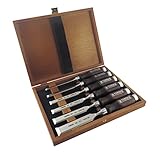
For a first purchase, consider a four-piece bevel-edge woodworking chisel set covering 1/4, 1/2, 3/4 and 1 inch. Add a 1/8-inch or 3/8-inch chisel only when your work regularly demands it. Sets are normally cheaper per tool, but check that the sizes are useful rather than padded with unusually narrow or oversized chisels.
| Size | Typical jobs | Main limitation |
|---|---|---|
| 1/4 inch | Hinges, small sockets, fine paring | Easy to twist or chip |
| 1/2 inch | General joinery, mortises, shoulders | Too wide for tight corners |
| 3/4 inch | Broad shoulders, larger housings | Less controllable in small work |
| 1 inch | Large mortises and site repairs | Heavy and cumbersome for detail |
When to buy a set or individual chisels
A budget set is fine for occasional repairs, hanging doors and learning basic sharpening, provided the blades are straight and the handles are sound. The cheaper option is especially sensible if the chisels will be used around plaster, old paint or construction adhesive, where the first mistake may ruin a cutting edge.
Buy individual chisels when you already know your regular sizes or when you need a better 1/2-inch and 3/4-inch tool than a basic set provides. A quality premium 1/2-inch bevel-edge chisel often improves work more than replacing an entire serviceable set. Premium tools usually have better grinding, more consistent backs and handles that survive years of mallet work. They do not eliminate sharpening or prevent misuse.
For rough site work, a dedicated heavy-duty bevel-edge chisel can be worthwhile. Keep it separate from your fine joinery tools. A thick, robust chisel is less likely to bend or chip when trimming a swollen door or cutting through a painted frame, but its wider bevels and heavier handle make delicate paring less comfortable.
Sharpening and correct use
New chisels often need flattening before they are pleasant to use. Flatten only the area behind the edge that actually contacts the work; polishing the entire back wastes time. Establish a primary bevel around 25 degrees, then add a small secondary bevel around 30 degrees. The exact angle matters less than keeping it repeatable and removing the burr.
Use a mallet for chopping, not a steel hammer. Drive the chisel only as far as needed, then remove waste in stages. On a mortise, chop across the grain near the end lines first, work toward the middle, and lever out small chips. Do not twist a thin chisel to widen a cut. That is a common cause of bent blades and broken handles.
For paring, hold the blade with two hands and push with the bevel facing up when you need a predictable depth, or bevel down when following a surface. Test on scrap before trimming a visible shoulder. A sharp edge should cut cleanly with moderate hand pressure; if it requires force, stop and sharpen rather than compensating with a deeper cut.
Keeping chisels usable on site
Carry chisels in a pouch or roll that protects the edges. A loose chisel in a tool bag will eventually meet a tape measure, drill bit or framing square. Wipe sap and adhesive off before they harden, and apply a thin coat of rust preventive after wet work. Do not leave chisels on concrete, where grit quickly damages the edge.
Keep a small sharpening setup with the kit: a coarse abrasive for repairs, a medium stone or diamond plate for normal sharpening, and a fine surface if you want a cleaner edge. A chisel sharpening stone or diamond plate is more useful on site than an oversized sharpening system. The best chisel is the one you can keep sharp, identify quickly and use without abusing it.