Combination Square vs Sliding Bevel for Marking a Mitre
A combination square and a sliding bevel can both help mark a mitre, but they do different jobs. A combination […]
A combination square and a sliding bevel can both help mark a mitre, but they do different jobs. A combination […]
For a door frame opening, a steel tape is usually the better tool for measuring the overall width and height.
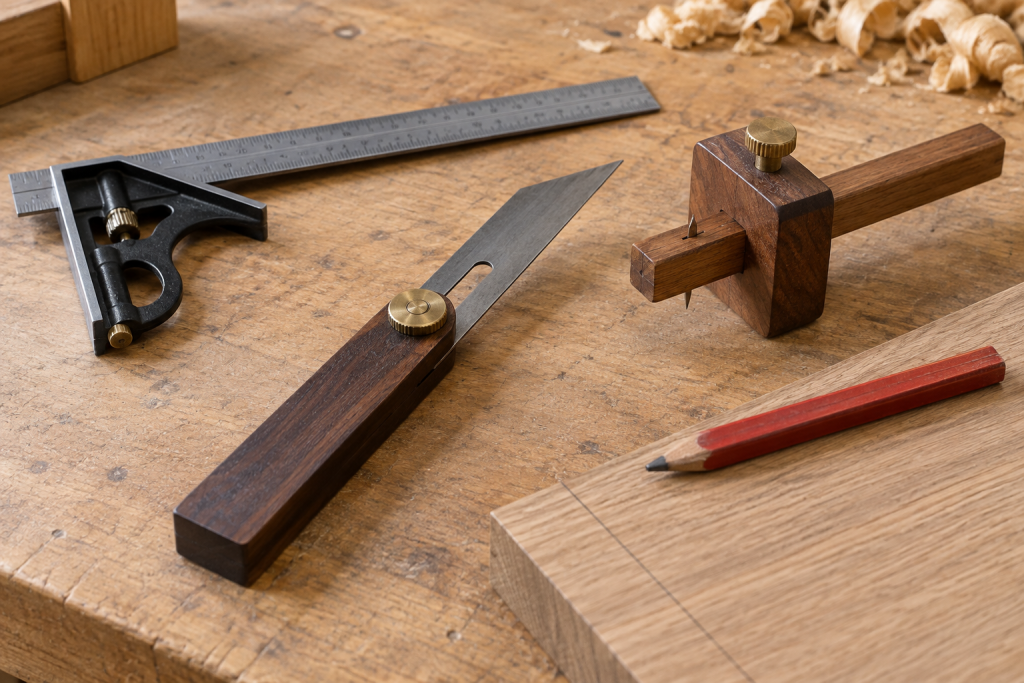
A sliding bevel is one of the simplest ways to copy a roof rafter angle accurately. It does not measure
Dividers transfer a distance without needing you to read it off a ruler. Set the points to a known width,
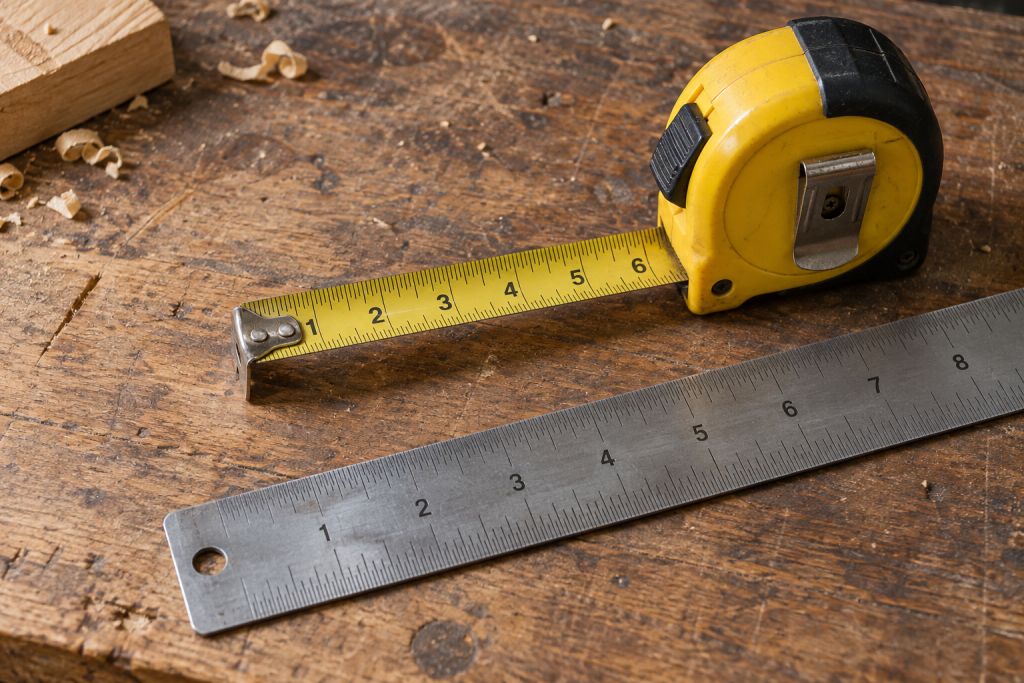
When both ends of a timber component are irregular, there may be no reliable end face to hook a tape
A marking gauge helps when several hinges, latches, or other fittings need the same setback from an edge. Its fence
For most crosscuts in timber, a sharp pencil is the quicker and more forgiving marking tool. A knife line is
What a housing joint is A housing joint, also called a dado, is a straight-sided groove cut across the grain
A combination square is useful for more than marking a 90-degree line. Its ruler can measure timber thickness, and the
Mixed-unit site work is common: plans may be in millimetres, existing construction may be in inches, and imported hardware can