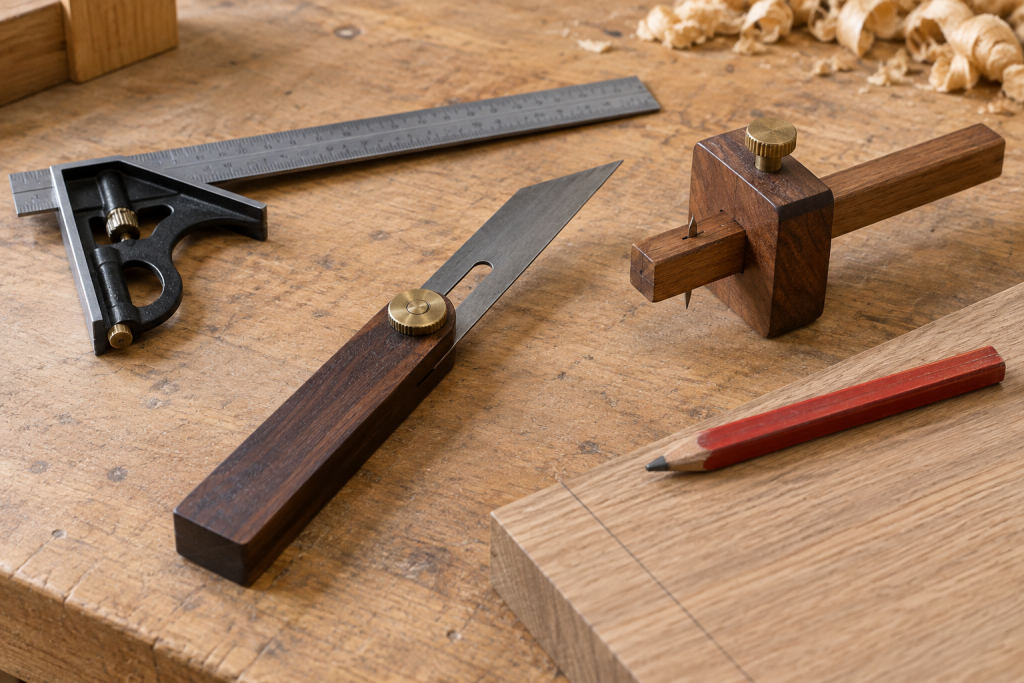
How to Use a Bevel Gauge to Check Matching Timber Angles
A bevel gauge, also called a sliding bevel, transfers an angle from one timber piece to another. It does not […]
A bevel gauge, also called a sliding bevel, transfers an angle from one timber piece to another. It does not […]
What you are transferring A compound angle has two slopes: one across the face of a board and another along
A tenon cheek is the side surface between the tenon’s shoulder and its end. Its length determines how far the
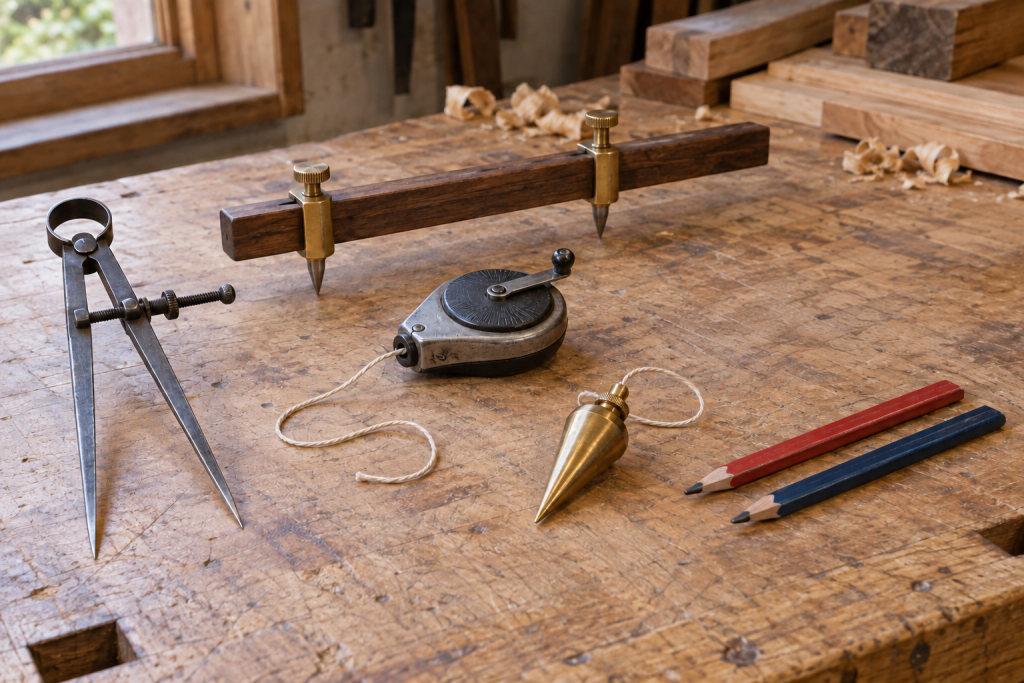
Marking the center of a dowel accurately is a small job with a large effect on the joint. If the
A timber shoulder is the vertical face at the end of a tenon, housed rail or other joint. Its line
A consistent timber lap joint depends on one dimension above all others: the depth of the lap. If that line
Marking a narrow timber edge is harder than it sounds. A standard carpenter’s pencil can be too wide for a
In joinery layout, “measure from the face” and “measure from the edge” are not interchangeable instructions. They describe two different
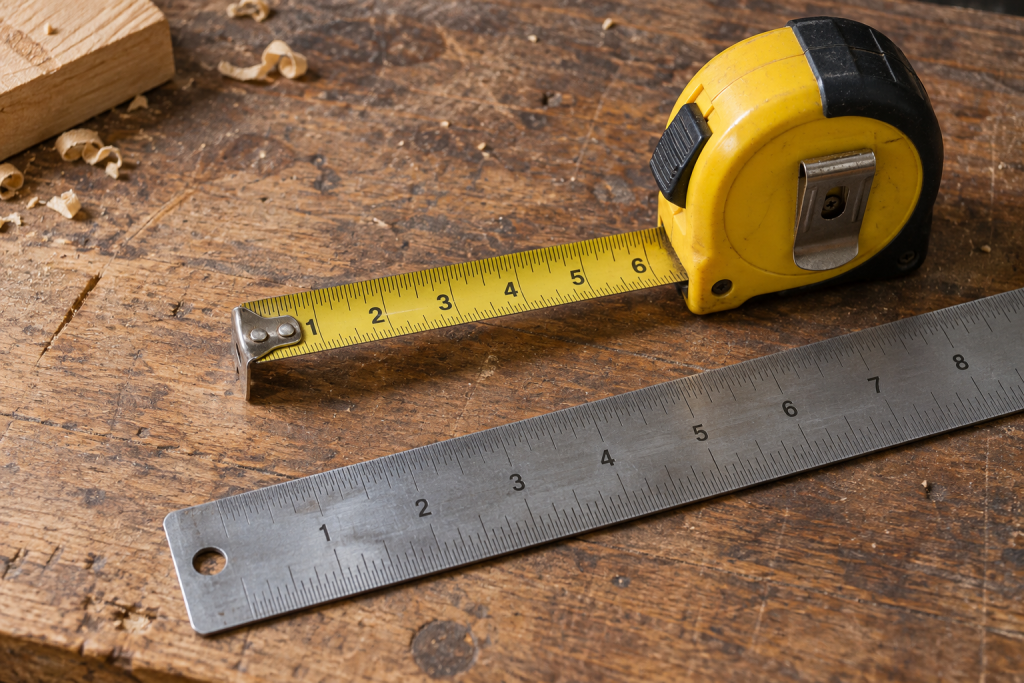
Marking a short rebate (also called a rabbet) is simple, but small errors show up quickly when the rebate is
A try square is one of the simplest tools in a joinery kit, but small errors show up quickly in