Pencil vs Marking Knife for Laying Out a Timber Cut
For most timber cuts, a sharp pencil is the quickest and most forgiving marking tool. A marking knife is slower, […]
For most timber cuts, a sharp pencil is the quickest and most forgiving marking tool. A marking knife is slower, […]
For short joinery measurements, a folding rule and a steel tape measure can both produce accurate work. They do not
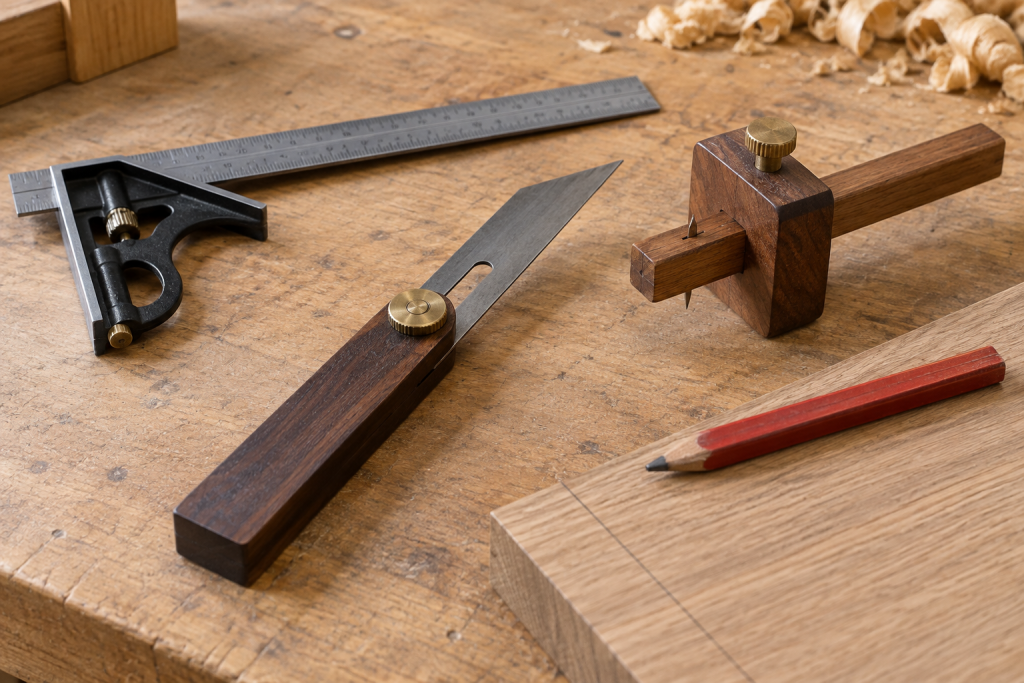
A carpenter’s pencil is made for rough work: broad lead, flat sides, and enough strength to survive a tool belt.
Rough timber is where a carpenter’s pencil earns its keep. A fine mechanical pencil line can disappear across open grain,
What matters when measuring timber frames alone Measuring timber framing by yourself is harder than ordinary stud work. The timber
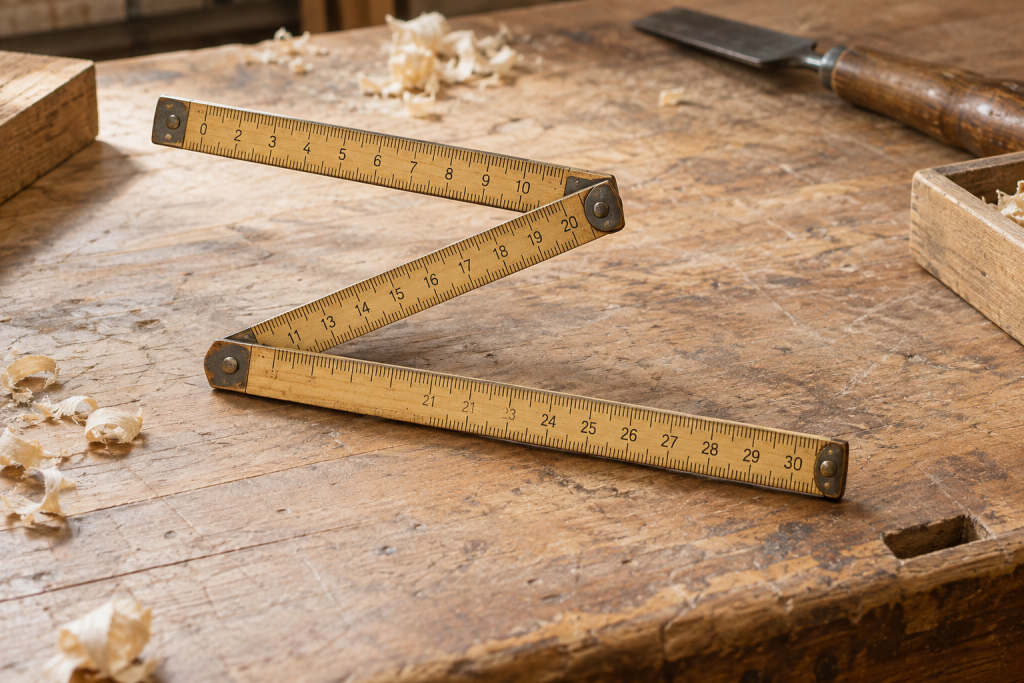
Why Folding-Rule Joints Matter A folding rule is only as accurate as its joints. The graduations may be printed or
Choosing a Folding Rule for Measuring Timber in Confined Spaces A folding rule is often more useful than a tape
A sliding bevel is only useful if its angle stays put. The common failure is familiar: you set the blade
A steel rule is a basic tool, but fine joinery exposes the difference between a rule that is merely usable
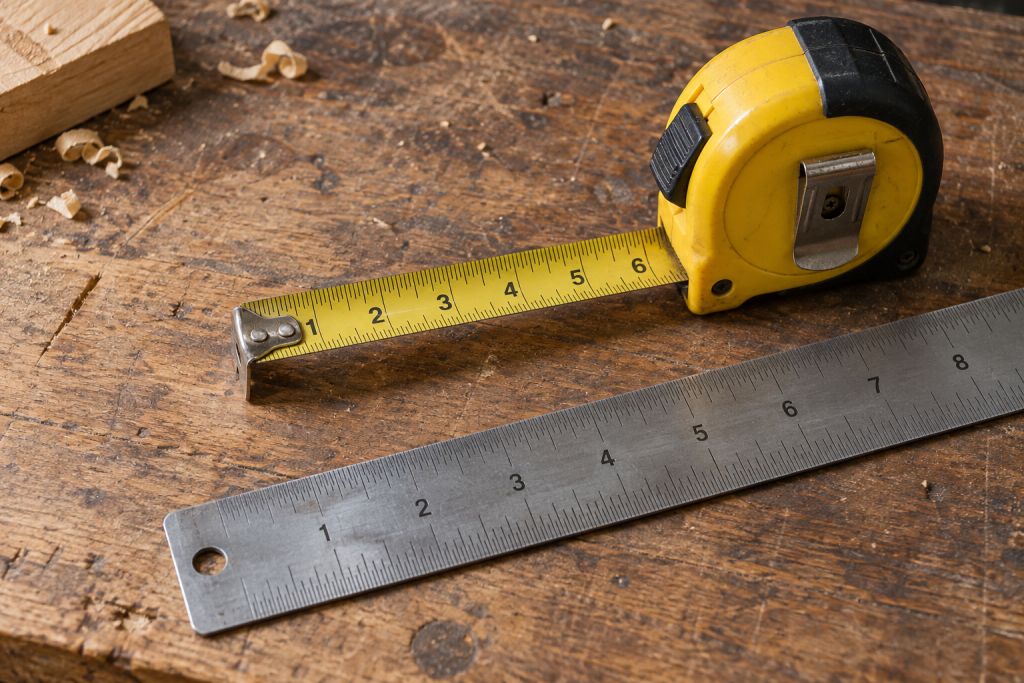
A steel rule looks simple, but reading one accurately against a knife line takes more care than reading a tape