What's inside
As an Amazon Associate I earn from qualifying purchases. This post may contain affiliate links at no extra cost to you.
The best vlogging cameras in 2026 depend on how you film: choose the DJI Osmo Pocket 3 for the simplest stabilized walking footage, the Sony ZV-E10 II for interchangeable-lens versatility, the Sony ZV-1 II for a compact all-in-one setup, and the Canon EOS R50 V when reliable autofocus and creator-focused controls matter most.
As an Amazon Associate we earn from qualifying purchases at no extra cost to you.


Sections
Best vlogging cameras compared
| Camera | Best for | Weight | Video strengths | Microphone input | Approximate battery life | Typical body price range |
|---|---|---|---|---|---|---|
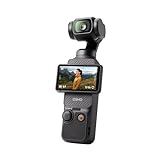
| DJI Osmo Pocket 3 | Walking, travel, one-person filming | 179 g | 4K up to 120 fps; three-axis mechanical gimbal | USB-C; DJI Mic 2 wireless support | About 116 minutes of 4K/60 recording | About $500–$800, depending on bundle |
| Sony ZV-E10 II | Interchangeable lenses and long-term growth | 377 g with battery and card | 26-megapixel APS-C sensor; 4K/60 with crop | 3.5 mm microphone and headphone ports | About 610 still-image shots; roughly 100–130 minutes of video use | About $1,000–$1,200 with kit lens |
| Canon EOS R50 V | Creator controls, livestreaming and autofocus | About 370 g with battery and card | APS-C sensor; 4K/60 with crop; vertical-video features | 3.5 mm microphone and headphone ports | Roughly 60–90 minutes of active video use | About $800–$1,100 with lens |
| Sony ZV-1 II | Pocketable talking-head and travel videos | 292 g with battery and card | 1-inch sensor; built-in 18–50 mm equivalent zoom | 3.5 mm microphone input | Roughly 45–75 minutes of active video use | About $800–$1,000 |
| Panasonic Lumix GH7 | Advanced production and controlled setups | 805 g with battery and card | Micro Four Thirds; 5.7K recording; strong codec options | 3.5 mm input, headphone output and optional XLR adapter | Roughly 90–120 minutes of active video use | About $2,000–$2,500 with or without a lens |
Battery figures vary with resolution, autofocus, screen brightness, temperature and stabilization, so treat them as planning estimates rather than guaranteed recording times. Most creators should carry at least one spare battery or a USB-C power bank.
Pick by filming style
For walking tours and moving shots: DJI Osmo Pocket 3
The Osmo Pocket 3 is the easiest choice when stabilization is your first priority. Its integrated three-axis gimbal physically keeps the camera level and smooth while you walk, pan or turn toward a subject. Electronic stabilization on a conventional camera can crop the image and may struggle with rolling motion; the Pocket 3 avoids much of that problem.
Its one-inch sensor produces cleaner footage than many small action cameras, particularly indoors or near sunset. The 2-inch rotating screen switches naturally between horizontal and vertical shooting, and subject tracking can keep a face centered without a separate operator. The limitations are equally important: the lens is fixed, the body is less suited to mounting large accessories, and the built-in microphone is vulnerable to wind. For serious outdoor audio, pair it with DJI Mic 2 transmitters or another compatible wireless system.
For a growing channel: Sony ZV-E10 II
The ZV-E10 II is the better investment when you expect your filming style to change. Its Sony E-mount accepts wide lenses for arm’s-length filming, bright primes for low light, telephoto lenses for demonstrations, and compact pancake lenses for travel. The 26-megapixel APS-C sensor gives it a clear advantage over one-inch cameras for background separation and dim rooms.
Autofocus is a major strength. Face and eye detection are dependable for talking-head work, while product-showcase autofocus is useful when you hold an object close to the lens. The fully articulating screen faces forward, and the camera includes a 3.5 mm microphone input and headphone output, making audio monitoring practical.
The main compromise is stabilization. The body has no mechanical sensor-shift stabilization, so handheld walking footage relies on electronic stabilization, a stabilized lens, or a gimbal. Active electronic stabilization also narrows the field of view. Use a wide lens if you plan to hold the camera at arm’s length.
For simple creator controls: Canon EOS R50 V
The EOS R50 V is aimed directly at creators who want a conventional mirrorless camera without navigating every production setting. Its front-facing screen, vertical-video options, livestreaming features and dedicated video controls reduce setup friction. Canon’s subject-detection autofocus is particularly useful for presenters who move between a desk and a demonstration area.
Like the Sony ZV-E10 II, it uses interchangeable lenses and lacks in-body sensor stabilization. A wide stabilized lens, monopod or small gimbal will improve moving footage. Its APS-C sensor is a good middle ground: more flexible in low light than a small compact-camera sensor, while still allowing relatively small lenses. The microphone and headphone connections make it a sensible choice for interviews, tutorials and regular indoor production.
For the smallest conventional camera: Sony ZV-1 II
The ZV-1 II is a practical choice when changing lenses sounds like unnecessary work. Its built-in 18–50 mm equivalent zoom is wide enough for most selfie framing and flexible enough for desk shots, food videos and travel clips. The fully articulating screen, face-priority autofocus and product-showcase mode make it approachable for beginners.
It is much smaller than an interchangeable-lens kit, but its one-inch sensor cannot match APS-C cameras in very dark rooms. Stabilization is electronic rather than mechanical, and the small battery is the first ownership issue to plan around. Two or three spare batteries, or USB power during stationary filming, are sensible. It also has only a microphone input rather than a headphone output, so audio should be checked with short test recordings.
For controlled, high-quality production: Panasonic Lumix GH7
The GH7 is excessive for casual daily vlogging but compelling for a channel involving interviews, product films, workshops or scripted work. It offers strong in-body stabilization, extensive recording formats, active cooling and a more production-oriented control layout. Its Micro Four Thirds lens system provides many compact lens choices, and an optional XLR adapter supports professional microphones.
It is heavier, more expensive and slower to operate than the other options here. Autofocus has improved substantially, but creators who rely on continuous face tracking may still prefer Sony or Canon. Choose the GH7 when recording flexibility, audio expansion and dependable long sessions matter more than pocketability.
Decision matrix for common buyers
| Your situation | Recommended choice | Why | What to accept |
|---|---|---|---|
| First camera, mostly walking videos | DJI Osmo Pocket 3 | Gimbal stabilization and tracking are ready immediately | Fixed lens and limited accessory flexibility |
| Weekly indoor videos with future upgrades | Sony ZV-E10 II | APS-C quality, strong autofocus and broad lens selection | Budget for a suitable wide lens and stabilization support |
| Presenter who wants simple video controls | Canon EOS R50 V | Creator-focused layout, vertical options and reliable autofocus | No in-body stabilization |
| Frequent travel with minimal luggage | Sony ZV-1 II | Small body and useful built-in zoom | Shorter battery life and weaker low-light performance |
| Interviews, studio work or paid production | Panasonic Lumix GH7 | Stabilization, codecs, cooling and expandable audio | Greater weight, cost and learning curve |
How stabilization affects your lens choice
Stabilization is not one feature with one result. A gimbal is strongest for smooth walking and deliberate camera movement. Optical stabilization in a lens helps reduce small hand movements, especially with longer focal lengths. Electronic stabilization is convenient but crops the image, which can make a normal lens too narrow for a selfie perspective.
For a mirrorless camera held at arm’s length, start with a lens around 10–16 mm on APS-C, approximately 15–24 mm full-frame equivalent. A 24 mm equivalent view can work from a tripod but often feels cramped when the camera is handheld. Before buying a lens, check whether its stabilization is optical and whether the camera applies an additional electronic crop.
Audio, low light and battery: the details that decide ownership
- Audio: A camera microphone is acceptable for a quick clip, but a lavalier or wireless transmitter gives more consistent speech. Keep the microphone close to the speaker and use a furry windscreen outdoors.
- Low light: APS-C cameras such as the ZV-E10 II and EOS R50 V generally provide more room for clean shadows than one-inch models. A bright lens and a small LED light can matter as much as the camera body.
- Battery planning: If one battery provides approximately 70 minutes of real-world filming and you record three 25-minute sessions, you need 75 minutes before pauses, autofocus and screen use are considered. Carry two charged batteries or power the camera by USB-C during stationary recording.
- Screen articulation: A side-hinged vari-angle screen is more useful than a tilting screen when the camera is mounted above, below or beside you. It also avoids being blocked by a top-mounted microphone.
Durability and maintenance realities
For most vlogging cameras, the first parts to wear are batteries, USB-C covers, screen hinges, tripod threads and the removable microphone windscreen—not the sensor. Avoid repeatedly forcing a cable sideways in the USB port, and use a short flexible cable or a dummy battery for long stationary sessions. Keep a spare screen protector for cameras that spend time in a backpack.
Clean the front lens with a blower before using a cloth; dragging grit across the coating can create marks. Do not store a damp camera in a sealed bag after filming in humid weather. Let it acclimatize gradually when moving between cold outdoors and a warm room, because condensation can form inside the lens or body.
Final recommendation
Choose the DJI Osmo Pocket 3 if smooth movement and convenience outweigh lens flexibility. Choose the Sony ZV-E10 II for the strongest all-round upgrade path, or the Canon EOS R50 V if its creator controls and Canon autofocus fit your workflow better. The Sony ZV-1 II is the compact, low-effort option, while the Panasonic GH7 earns its cost only when advanced recording, stabilization and audio features will be used regularly.