What's inside
- Best Video Editing Keyboards for Post Production: The Direct Answer
- Top 3 Picks
- Quick Comparison
- How We Chose
- 1. Logickeyboard Slimline for DaVinci Resolve on Mac – Best for Labelled Resolve Keys
- 2. Loupedeck More – Best for Adobe Editing Workflows
- 3. TUYCORPUS DaVinci Resolve Shortcuts Desk Mat – Best Budget Shortcut Reference
- 4. ADOBE PREMIERE PRO FOR BEGINNERS – Best Budget Learning Foundation
- 5. Blackmagic Design DaVinci Resolve Speed Editor – Best Overall for Resolve Timelines
- 6. ULANZI D100H Wireless Video Editing Keyboard with Dial Knob – Best Budget Controller
- 7. TOUR BOX Elite Plus Editing Controller – Best for Cross-Application Control
- How to Choose
- Frequently Asked Questions
- Closing Recommendation by Situation
- Best Video Editing Keyboards for Post Production: The Direct Answer
- Top 3 Picks
- Quick Comparison
- How We Chose
- 1. Logickeyboard Slimline for DaVinci Resolve on Mac – Best for Labelled Resolve Keys
- 2. Loupedeck More – Best for Adobe Editing Workflows
- 3. TUYCORPUS DaVinci Resolve Shortcuts Desk Mat – Best Budget Shortcut Reference
- 4. ADOBE PREMIERE PRO FOR BEGINNERS – Best Budget Learning Foundation
- 5. Blackmagic Design DaVinci Resolve Speed Editor – Best Overall for Resolve Timelines
- 6. ULANZI D100H Wireless Video Editing Keyboard with Dial Knob – Best Budget Controller
- 7. TOUR BOX Elite Plus Editing Controller – Best for Cross-Application Control
- How to Choose
- Frequently Asked Questions
- Closing Recommendation by Situation
As an Amazon Associate I earn from qualifying purchases. This post may contain affiliate links at no extra cost to you.
Sections
- Best Video Editing Keyboards for Post Production: The Direct Answer
- Top 3 Picks
- Quick Comparison
- How We Chose
- 1. Logickeyboard Slimline for DaVinci Resolve on Mac – Best for Labelled Resolve Keys
- 2. Loupedeck More – Best for Adobe Editing Workflows
- 3. TUYCORPUS DaVinci Resolve Shortcuts Desk Mat – Best Budget Shortcut Reference
- 4. ADOBE PREMIERE PRO FOR BEGINNERS – Best Budget Learning Foundation
- 5. Blackmagic Design DaVinci Resolve Speed Editor – Best Overall for Resolve Timelines
- 6. ULANZI D100H Wireless Video Editing Keyboard with Dial Knob – Best Budget Controller
- 7. TOUR BOX Elite Plus Editing Controller – Best for Cross-Application Control
- How to Choose
- Frequently Asked Questions
- Closing Recommendation by Situation
Best Video Editing Keyboards for Post Production: The Direct Answer
The best video editing keyboard for post production overall is the Blackmagic Design DaVinci Resolve Speed Editor — it is the only option on this list that ships as a purpose-built hardware control surface with a dedicated jog wheel, search dial, and source/timeline buttons mapped natively to DaVinci Resolve, and it suits editors who cut in Resolve daily and want tactile, muscle-memory-driven trimming rather than memorised keystrokes. If your work lives inside Adobe Premiere Pro instead, the Loupedeck More is the better fit because its console layout targets Adobe’s ecosystem directly. For editors who want a low-cost layout-learning tool rather than a control surface, the ULANZI D100H wireless keyboard with a dial knob delivers a programmable shortcut board and rotary control at a budget tier, while the Logickeyboard Slimline for DaVinci Resolve on Mac remains the cleanest pick for Mac-based Resolve editors who simply want correctly labelled keys in a low-profile form factor.
Top 3 Picks
Best Overall: Blackmagic Design DaVinci Resolve Speed Editor
A dedicated editing keyboard that bundles with DaVinci Resolve and connects over Bluetooth or USB-C, giving editors physical transport controls, a jog/search dial, and shortcut buttons for cut, trim, and ripple operations. It replaces the guesswork of remapped hotkeys with fixed, labelled controls, which is exactly what high-volume timeline work rewards. It is the strongest single purchase for anyone whose post-production day is Resolve-centric.
Best Budget: ULANZI D100H Wireless Video Editing Keyboard with Dial Knob
A compact wireless keyboard with an integrated rotary dial that can be assigned to scrubbing, volume, or application-specific functions. It costs a fraction of a dedicated console and still gives editors the one hardware element that matters most in a timeline: a dial under the left or right hand. It suits beginners, hybrid shooters, and editors who work across several machines.
Best Premium / Best for Adobe Workflows: TOUR BOX Elite Plus Editing Controller
A premium translucent-cased editing controller built around complete control of common editing applications, with assignable keys and dials in an enclosure intended for permanent desk placement. It targets editors who want a console-style surface without committing to a single non-linear editor’s hardware ecosystem. Consider it when you cut across multiple applications and want one controller to serve all of them.
Quick Comparison
| Product | Best For | Key Specs | Connection | Programmability | Price Tier |
|---|---|---|---|---|---|
| Logickeyboard Slimline for DaVinci Resolve on Mac (LKB-RESC-CWMU-US) | Mac-based Resolve editors who want labelled keys, not a console | Slimline low-profile layout, Resolve-specific key legends, Mac modifier keys (Cmd/Opt/Ctrl), full-size editing keyboard footprint | Wired USB (Mac layout) | None — fixed printed legends | Mid-range |
| Loupedeck More (Adobe Lightroom Classic, Photoshop CC, Camera Raw, Premiere) | Adobe-first editors and hybrid photo/video workflows | Multi-dial console with assignable buttons and touch-sensitive controls, plugin/profile support for Adobe apps | Wired USB | High — per-application profiles and custom actions | Mid-range |
| TUYCORPUS DaVinci Resolve Windows PC Shortcuts Desk Mat | Beginners who need shortcut recall in front of them | Extended desk-mat format printing a Resolve shortcut reference under keyboard and mouse | N/A (passive accessory) | None — reference only | Budget |
| ADOBE PREMIERE PRO FOR BEGINNERS (Step-by-Step Guide) | New editors learning Premiere before buying hardware | Book covering editing, organising media, and audio workflow fundamentals | N/A (learning resource) | None — software knowledge | Budget |
| Blackmagic Design DaVinci Resolve Speed Editor (bundle with Resolve) | Full-time Resolve editors doing heavy timeline trimming | Dedicated jog/search dial, source and timeline transport keys, cut/trim/ripple buttons, Resolve-native mapping | Bluetooth and USB-C | Moderate — fixed function set, Resolve-native | Premium |
| ULANZI D100H Wireless Video Editing Keyboard with Dial Knob | Budget-conscious and multi-machine editors | Compact wireless keyboard with integrated rotary dial, multi-device pairing | Wireless (multi-device) | Moderate — dial and shortcut assignment | Budget |
| TOUR BOX Elite Plus Editing Controller (Ice Translucent) | Editors who cut across several NLEs and want one console | Multi-key, multi-dial editing controller in a desktop enclosure, translucent shell, cross-application control | Wired USB-class console connection | High — assignable keys and dials | Premium |
How We Chose
We selected these seven products by working backwards from what actually slows editors down in post production, then checking which categories of hardware and reference material solve those specific bottlenecks. The first filter was layout relevance: a keyboard or controller only earns a place here if its key legends, dials, or programmability map to real editing commands — JKL transport, in/out marking, ripple and roll trims, blade, and timeline navigation. Products that are simply generic keyboards with colourful keycaps were excluded, because an editor’s bottleneck is rarely the switch mechanism and almost always the command layer.
The second filter was software compatibility stated plainly by the manufacturer. We grouped the picks by ecosystem — Resolve, Adobe, and cross-application — because compatibility claims are where most mismatched purchases happen. Third, we weighed connection options as a real constraint rather than a checkbox: Bluetooth matters if you work from a laptop or switch machines, while USB-C and wired connections matter for latency-sensitive trimming and for desks where peripherals multiply. Fourth, we applied a category-fit test so the list covers distinct needs: a labelled keyboard, a control surface, a programmable console, a wireless budget board, and low-cost learning aids. Finally, we considered upgrade path — whether each item still has a role if the editor later adds a second device. Prices are expressed only as tiers because retail pricing on this gear moves constantly with bundles and firmware revisions.
1. Logickeyboard Slimline for DaVinci Resolve on Mac – Best for Labelled Resolve Keys
As an Amazon Associate we earn from qualifying purchases at no extra cost to you.

This is the pick for the editor who has decided that the fastest route to speed is not new muscles but fewer translation steps. The Logickeyboard Slimline for DaVinci Resolve on Mac (part number LKB-RESC-CWMU-US) takes a low-profile keyboard form factor and prints the Resolve command set directly onto the keys, so the shortcut is visible rather than remembered. If you have ever hovered over a menu to confirm whether a modifier is Command or Option before committing to a cut, this product is aimed squarely at you.
Who It Suits
It suits two editor profiles especially well. The first is the Mac-based Resolve editor who already has a favourite keyboard feel and wants the low-profile slimline style rather than a mechanical board — this is a keyboard first and a shortcut aid second, so it must be comfortable for eight-hour typing days. The second is the editor transitioning from another non-linear editor into Resolve, where the biggest cost is unlearning one command map and learning another. Printed legends compress that transition because you stop reaching for menus.
Key Specs
- Form factor: Slimline, low-profile desktop keyboard — thinner chassis than a mechanical board, which keeps the wrists lower during long sessions
- Layout: Mac modifier arrangement (Command, Option, Control), so shortcuts match macOS-resident Resolve rather than a Windows port
- Legends: Resolve-specific command printing covering editing, trim, and timeline navigation functions
- Connection: Wired USB — no pairing, no charging, no firmware/host negotiation to troubleshoot mid-deadline
- Part number: LKB-RESC-CWMU-US (the identifier to quote when matching your region and platform)
Strengths
The core advantage is zero-configuration learning. Every other option on this list asks you to build mappings — this one is already mapped by the printing on the keys, and the mapping is legible from a seated position. There is also a real ergonomic argument for the slimline profile in post production: editors spend far more hours typing notes, markers, and search terms than they do flying a jog wheel, so a keyboard that is pleasant to type on earns its keep between the headline editing moments. The wired connection eliminates a class of failure that wireless peripherals introduce at exactly the wrong time, and because it is a genuine keyboard rather than a bolt-on controller, it does not consume desk space adjacent to your existing board.
There is a second, subtler benefit: labelled keys function as passive training. Editors who use one for a few months tend to internalise the command set faster than editors who remap a board and rely on memory alone, because the legend is reinforced every time the eye passes over the key. That makes this a reasonable purchase even for someone who intends to move to a full console later — it becomes the secondary keyboard rather than a wasted buy.
Pros
- Resolve commands printed directly on the keys — no mapping work required
- Mac-native modifier layout matching macOS Resolve shortcuts
- Slimline, low-profile chassis suited to long typing sessions
- Wired USB connection removes pairing and charging variables
- Functions as an ordinary keyboard on non-editing tasks
Cons
- No jog wheel or dial, so scrubbing and frame-accurate trimming stay on mouse or trackpad
- Legends are fixed — no remapping if you customise your own Resolve shortcut set
- Mac-specific layout and Resolve-specific legends limit use if you later switch platform or software
- Not designed for the tactile transport-button workflow that dedicated consoles provide
How It Compares
Against the Blackmagic Speed Editor, the trade is direct: the Speed Editor gives you physical transport and a search dial but not a full typing keyboard, while the Logickeyboard gives you a full keyboard but no dial. If your editing day is dominated by trimming and reviewing footage, the Speed Editor wins; if it is dominated by typing, logging, and shortcut-driven assembly, the Logickeyboard wins. Against the ULANZI D100H, the Logickeyboard gives better key feel and a complete labelled command set but costs more and cannot be paired across machines or reprogrammed. Against the TUYCORPUS desk mat, the Logickeyboard is the expensive version of the same idea — the mat puts shortcuts in your peripheral vision, while the keyboard puts them under your fingers.
2. Loupedeck More – Best for Adobe Editing Workflows
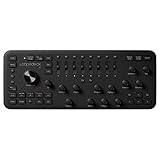
Loupedeck More is a multi-dial editing console built around the Adobe ecosystem, with stated support for Lightroom Classic, Photoshop CC, Camera Raw, and Premiere. That application list is the whole argument for the product: for editors who move between photo grading and video cuts, or who live inside Adobe’s video tools, this is the only item on this list designed from the ground up to serve that combination. It is not a keyboard you type on — it is a control surface you assign, and it rewards editors willing to invest an evening in configuration.
Who It Suits
It suits the hybrid creative: the photographer who has started delivering short-form video, the Premiere editor who also handles stills, and the freelance generalist who cannot justify separate hardware for each application. It also suits editors who think in adjustments rather than shortcuts — people who would rather turn a physical dial to move a parameter than drag a slider and then type a value. If your work is ninety per cent Premiere and you never touch Adobe’s stills applications, the value proposition narrows; if your work spans them, it widens considerably.
Key Specs
- Control types: Multiple rotary dials plus an array of assignable buttons, with touch-sensitive control surfaces for parameter adjustment
- Application profiles: Manufacturer-stated support for Adobe Lightroom Classic, Photoshop CC, Camera Raw, and Premiere
- Customisation: Per-application profiles with assignable actions and custom control sets
- Connection: Wired USB, keeping latency predictable during parameter sweeps
- Desk footprint: Compact console designed to sit alongside an existing keyboard rather than replace it
Strengths
The strength of a multi-dial console is parallel control: a dial that moves a grade parameter, an audio level, or a scale value gives you continuous, eyes-on-screen adjustment rather than the discrete, look-down-at-the-mouse motion that dragging a slider requires. In colour and audio work especially, that difference shows up in how long you can sustain a pass before fatigue sets in. Because profiles are per application, the same physical dials remap when you switch software, so the hardware purchase amortises across your whole toolset instead of one program.
The second strength is depth of customisation. Where the Logickeyboard is fixed and the Speed Editor is Resolve-native, Loupedeck More is a general-purpose assignment machine: editors typically build a layout for their own most-repeated actions rather than accepting a manufacturer’s default. That makes it a long-term purchase — the configuration tends to get better over the first several months as you notice which actions you repeat most and promote them to a physical control. For workflows that involve repetitive parameter changes rather than rapid timeline surgery, this is often a bigger productivity gain than a keyboard swap.
Pros
- Manufacturer-stated support for four core Adobe applications, covering video and stills
- Multiple dials enable continuous, eyes-on-screen parameter control
- Deep per-application customisation and assignable actions
- Complements an existing keyboard instead of replacing it
- Wired connection keeps response consistent during long adjustment passes
Cons
- Requires meaningful setup time before it pays back — the defaults are a starting point, not a finished workflow
- Not a typing keyboard, so it does not reduce keystroke memorisation
- Adobe-centric compatibility: it is the wrong tool if your pipeline is Resolve-first
- Dials do not substitute for a dedicated jog/search wheel for frame-accurate timeline transport
How It Compares
Against the Tour Box Elite Plus, both are programmable consoles and both are premium-tier in ambition, but the split is ecosystem versus breadth. Loupedeck More names Adobe applications explicitly, so its default profiles are useful the day you unbox it if you work in Premiere, Lightroom, or Photoshop. The Tour Box Elite Plus targets cross-application control with a broader assignment philosophy. If Adobe is your centre of gravity, take the Loupedeck; if you cut in two or three different editors a week, the Tour Box’s generalist approach is the closer match. Against the Blackmagic Speed Editor, the distinction is even sharper: the Speed Editor is a Resolve-native timeline tool with a jog dial for trimming, while Loupedeck More is an adjustment tool for parameters, grades, and audio. Editors who do both kinds of work sometimes end up with one of each on the desk, which is a legitimate two-device strategy rather than redundancy.
3. TUYCORPUS DaVinci Resolve Shortcuts Desk Mat – Best Budget Shortcut Reference
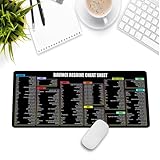
The TUYCORPUS desk mat is the cheapest way to change how you edit, and it is worth understanding why it belongs on a list of keyboards at all. It is an extended desk mat printed with DaVinci Resolve shortcuts for Windows PC, sized to sit under both keyboard and mouse so the reference material lives inside your working field of view rather than in a browser tab. If you are learning Resolve on a budget, this is the item that removes the single biggest friction point — looking up a shortcut mid-edit — for the price of a takeaway meal.
Who It Suits
It suits three groups. Beginners learning Resolve on Windows who have not yet decided which hardware to commit to. Editors returning to Resolve after time in another application, who know roughly what they want to do but not which keys do it. And editors with an existing keyboard they like, who would resist switching boards purely to gain printed legends. It is also a sensible add-on for anyone considering the Speed Editor: the mat covers the keyboard-side commands while the Speed Editor covers transport, which is a coherent low-cost pairing.
Key Specs
- Type: Passive accessory — extended desk mat / keyboard and mouse mat
- Printed content: DaVinci Resolve shortcut reference for Windows PC
- Format: Extended size covering keyboard and mouse positions simultaneously
- Connection: None required — no drivers, no power, no pairing
- Platform note: Windows PC shortcut legends; macOS shortcut mappings differ
Strengths
The mechanism here is real and well understood: reference placed in peripheral vision gets absorbed far faster than reference you have to deliberately go and find. Every time you glance down to check a command, you are also getting a passive repetition of the commands you already know, which is how shortcut sets actually stick. That makes the mat disproportionately effective in the first few weeks with a new editor, precisely when the cost of looking things up is highest.
Second, it has no failure modes. There is nothing to charge, pair, configure, or update, and it will not stop working when an application updates its shortcut set beyond recognition — worst case it becomes slightly out of date on a handful of commands, while still functioning as a mat. Third, it protects the desk surface and the mouse tracking area, which means the money is not purely spent on printed information. Editors who later buy a console or a labelled keyboard usually keep the mat anyway, because the mouse-side reference stays useful.
Pros
- Extremely low cost relative to any hardware option
- Places shortcut reference directly in the working field of view
- No drivers, power, pairing, or configuration
- Doubles as a functional desk and mouse mat
- Complements any keyboard or console you buy later
Cons
- Does not reduce the number of keystrokes you perform — it only helps you remember them
- Legends are fixed and Windows-specific, so it does not serve Mac-based Resolve editors
- Slight lag between printed shortcuts and application updates
- No tactile or transport benefit; nothing here replaces a jog wheel
How It Compares
Against the Logickeyboard Slimline, this is the same underlying idea — put the Resolve command set where you can see it — delivered two ways. The keyboard prints legends on individual keys and puts them under your fingers; the mat prints them in a grid you glance at. The keyboard is faster at the point of use because your eyes move less, but it costs many times more and forces you onto a specific keyboard. Many editors start with the mat and upgrade to a labelled keyboard, console, or both once they know their workflow well enough to spend properly.
Against the Speed Editor, the mat covers the command-recall problem while the Speed Editor covers the transport-and-trim problem. Neither substitutes for the other, which is why they pair naturally: the mat handles the keyboard-heavy assembly phase and the Speed Editor handles the fine-cut phase.
4. ADOBE PREMIERE PRO FOR BEGINNERS – Best Budget Learning Foundation

This is the odd item on the list and the honest one: before any keyboard, console, or controller can make you faster, you need to know which actions are worth putting on a key. Adobe Premiere Pro for Beginners is a step-by-step guide to editing video, organising media, and working with audio in Premiere, and it is included here because shortcut hardware multiplies existing competence rather than creating it. Buy it first if you are new; buy it alongside a keyboard if you are new and impatient.
Who It Suits
It suits the editor who has just installed Premiere and does not yet have a reliable mental model of import, sequence, and export. It suits self-taught editors who have been improvising in the timeline for a while and want the gaps filled in — particularly around media organisation, which is where improvised workflows collapse on long projects. It also suits editors who plan to buy a programmable console later: knowing your actual repeated actions is a prerequisite for configuring one well, and a systematic walkthrough of the software is the fastest way to find them.
Key Specs
- Type: Instructional book, step-by-step format
- Coverage: Editing video, organising media, and working with audio
- Target reader: Beginners to Premiere Pro
- Format: Print/paperback-style reference suitable for desk-side consultation
- Hardware required: None beyond a computer running Premiere
Strengths
The strongest argument for a structured guide is that improvised learning produces the wrong shortcuts. Editors who teach themselves tend to build habits around the first method they discover, which is frequently the slowest one available. A systematic guide introduces the intended workflow order — organise, then assemble, then refine — which is the sequence that shortcut hardware is designed to accelerate. Without that sequence established, a programmable console gets configured around bad habits and returns much less.
Second, it is platform-agnostic with respect to hardware. Nothing in a book goes obsolete when you change keyboards, and nothing in it needs charging. Third, the audio and media-organisation coverage is where beginners lose the most time in practice, and it is exactly the material that most free tutorials skim. For the cost of a budget-tier purchase, it removes a category of avoidable rework — relinking, re-organising, and re-editing footage you handled badly in the first pass — that dwarfs the cost of the book.
Pros
- Budget-tier cost with no hardware dependencies
- Step-by-step structure suited to genuine beginners
- Covers media organisation and audio, not just cutting
- Builds the mental model that makes later keyboard purchases effective
- Never needs drivers, power, or firmware updates
Cons
- Delivers no physical speed improvement on its own
- Premiere-specific, so of limited use to Resolve-first editors
- Print references need desk space alongside your monitor
- Editors already comfortable in an NLE will find much of it redundant
How It Compares
Against the TUYCORPUS desk mat, both are budget-tier knowledge aids, but they attack different problems. The mat is a recall aid for people who already understand the workflow and just need the key names; the book is a comprehension aid for people who do not yet have the workflow. If you cannot explain the order in which you assemble a sequence, buy the book. If you can but keep reaching for the mouse to find out which key marks an in-point, buy the mat.
Against any keyboard on this list, the comparison is not competitive but sequential: this is the purchase that determines which shortcuts you will eventually want printed or programmed onto hardware. Editors who read it first tend to configure the Loupedeck More and Tour Box Elite Plus more effectively, because they arrive with a clear list of the actions they repeat most.
5. Blackmagic Design DaVinci Resolve Speed Editor – Best Overall for Resolve Timelines

The Speed Editor is the most consequential purchase on this list for editors who cut in DaVinci Resolve. It is a dedicated editing keyboard built around transport and trim controls — a jog/search dial, source and timeline buttons, and cut, trim, and ripple functions — bundled with DaVinci Resolve and connectable over Bluetooth or USB-C. The design premise is that timeline surgery should be tactile and continuous rather than a sequence of discrete mouse movements, and for full-time Resolve editors it delivers exactly that.
Who It Suits
It suits editors who spend the majority of their working day inside Resolve performing fine cuts, reviewing takes, and adjusting edit points. It also suits documentary and interview editors disproportionately, because reviewing hours of footage for the right soundbite is precisely the task a search dial accelerates — you can scrub through material at speed and set in/out points without the mouse ever leaving the timeline. It suits freelance editors who bill by project and need to reduce time-per-cut, and it suits editors who have already learned Resolve’s shortcut set and now want to go faster than keystrokes allow. It is a poor fit for editors who only occasionally open Resolve or who primarily work in Adobe tools.
Key Specs
- Type: Purpose-built editing keyboard / control surface for DaVinci Resolve
- Primary controls: Jog/search dial plus source and timeline transport buttons
- Editing functions: Cut, trim, ripple and related timeline operations on dedicated keys
- Connection: Bluetooth and USB-C — wireless for flexible desk layouts, wired where you want certainty
- Bundle: Supplied with DaVinci Resolve, so the software licence is part of the purchase
- Compatibility: Native mapping to Resolve rather than a generic keyboard layer
Strengths
The dial is the whole story, and it is worth being precise about why. Trimming is a continuous operation: you are nudging an edit point by frames until it feels right. Mouse dragging a trim handle is a coarse, imprecise motion that requires looking at a small target; a physical dial gives you continuous, repeatable, fine-grained control that you can operate without looking at the controller at all. Editors describe the effect in terms of attention: the dial keeps your eyes on the picture rather than on the interface, and over a full day that compounds.
The second strength is the fixed function set. Because the controls are Resolve-native rather than a generic keyboard layer, there is no mapping work and no risk of your layout drifting out of sync with the application. The transport and trim keys do what their labels say, permanently. The third is the dual connection: Bluetooth lets you position the unit wherever your hand naturally rests, which matters because a transport surface needs to be reachable without a reach — many editors place it to the left of the keyboard as a mirror of where a mouse hand would sit. USB-C covers the case where wireless reliability is a concern and doubles as charging.
Fourth, the software bundle changes the economics. If you do not already own a Resolve licence, the controller effectively reduces to a much smaller incremental cost, which is why the Speed Editor often makes sense to editors who were going to buy Resolve anyway. That is an unusual situation in hardware and worth factoring into the decision.
Pros
- Jog/search dial enables continuous, eyes-on-screen trimming
- Dedicated transport and trim keys with native Resolve mapping
- Bluetooth and USB-C connections cover both desk layouts and reliability needs
- Bundled with DaVinci Resolve, improving the effective value
- No configuration required — controls are labelled and fixed
Cons
- Resolve-specific: minimal value if you cut primarily in other applications
- Not a full typing keyboard, so it sits alongside one rather than replacing it
- Fixed function set means limited remapping compared with a programmable console
- Occupies dedicated desk space next to your keyboard
- Premium tier — a significant outlay if you are not already committed to Resolve
How It Compares
Against the Logickeyboard Slimline for Resolve on Mac, this is the cleanest head-to-head on the list because both are Resolve-native. The Logickeyboard is a keyboard with printed legends and no dial; the Speed Editor is a dial with dedicated controls and no typing. Choose by which bottleneck is bigger. If you spend your day typing and assembling, the keyboard is the higher-leverage purchase. If you spend your day trimming and reviewing, the Speed Editor wins by a wide margin. Editors with desk space and budget sometimes run both, using the Speed Editor for transport and the keyboard for everything else.
Against the Tour Box Elite Plus, the division is specialisation versus flexibility. The Speed Editor is locked to Resolve but optimised inside it; the Tour Box Elite Plus is programmable and serves multiple applications but is not built around any one NLE’s transport model. If Resolve is your only editor, take the Speed Editor. If Resolve is one of three tools you use weekly, take the Tour Box.
6. ULANZI D100H Wireless Video Editing Keyboard with Dial Knob – Best Budget Controller

The ULANZI D100H is the budget entry point to the one hardware feature that changes editing most: a physical dial. It pairs a compact wireless keyboard with an integrated rotary knob, and it is aimed at editors who want rotary control and shortcut access without committing to a dedicated console. For someone who has never used a dial in a timeline, it is the cheapest way to find out whether that workflow suits them — and if it does not, the outlay is correspondingly small.
Who It Suits
It suits beginners and intermediate editors who want to test the dial workflow before spending at premium tier. It suits hybrid shooters who edit on a laptop and want one compact board that travels. It suits editors working across multiple machines — a desktop and a laptop, for instance — because wireless multi-device pairing means one keyboard can serve both without re-cabling. It also suits editors on a strict budget who nonetheless want shortcut customisation, since it offers assignment options that the fixed-legend Logickeyboard does not.
Key Specs
- Type: Wireless compact keyboard with integrated rotary dial knob
- Dial function: Assignable rotary control for scrubbing, volume, or application-specific functions
- Connection: Wireless, with multi-device pairing
- Form factor: Compact, portable footprint suited to laptop bags and small desks
- Programmability: Moderate — dial and shortcut assignment rather than full per-application profiles
Strengths
The dial at this price is the entire value proposition, and it is a genuine one. Even a single assignable rotary control changes how you scrub and how you adjust levels, because continuous control is fundamentally different from dragging. Editors accustomed to a mouse-only workflow frequently report that the dial is the change they notice most, ahead of any keyboard remapping — which means a budget board with a dial can outperform an expensive keyboard without one for timeline-heavy work.
Second, wireless multi-device pairing solves a practical problem that wired boards cannot: switching between two computers without reaching behind the desk. For editors who cut on a laptop during the day and a desktop in the evening, that alone justifies the purchase. Third, the compact form factor keeps desk real estate free for the things that need it — a colour-grading panel, a second monitor, or notes. Fourth, the short-throw keyboard layout is quick to type on for markers, labels, and search terms, which is most of what an editor types.
Pros
- Integrated rotary dial at budget tier — the cheapest route to continuous scrubbing
- Wireless multi-device pairing suits two-machine workflows
- Compact footprint leaves desk space for other tools
- Shortcut and dial assignment offer some customisation
- Low-risk way to evaluate whether a dial workflow suits you
Cons
- No application-native mapping, so shortcut setup is manual
- Wireless means charging and pairing variables during deadlines
- Programmability is shallower than a dedicated console’s per-application profiles
- Compact layout may omit keys heavy shortcut users rely on
- Not a substitute for a Resolve-native transport surface in fine-cut work
How It Compares
Against the Blackmagic Speed Editor, this is the honest budget-versus-purpose comparison. The Speed Editor gives you a Resolve-native jog dial, dedicated trim keys, and zero setup; the D100H gives you one assignable dial, manual mapping, and wireless flexibility for a fraction of the cost. If you cut in Resolve all day, the Speed Editor is worth the step up. If you are still deciding whether a dial belongs in your workflow, the D100H is the cheaper experiment and it retains value as a travel keyboard afterwards.
Against the Logickeyboard Slimline, the split is dial versus labelled legends. The Logickeyboard tells you which key does what and gives you a better typing surface; the D100H gives you rotary control and wireless freedom but asks you to build your own command map. Editors who dislike configuration should lean toward the labelled keyboard; editors who will happily spend an hour assigning keys should lean toward the D100H and put the savings elsewhere.
7. TOUR BOX Elite Plus Editing Controller – Best for Cross-Application Control

The Tour Box Elite Plus is a premium editing controller in a translucent “Ice” enclosure, built around complete control of editing applications through assignable keys and dials. Where the Speed Editor is Resolve-native and Loupedeck More is Adobe-centric, the Tour Box positions itself as a generalist console — one surface configured to serve whatever application you happen to be in. That makes it the right answer for editors whose toolset refuses to settle on one non-linear editor.
Who It Suits
It suits editors who work across multiple applications in a given week: cutting in one NLE, grading in another, retouching stills in a third. It suits editors who have already developed strong opinions about their shortcuts and want physical controls assigned to their own command set rather than a manufacturer’s defaults. It suits editors who prefer a compact console beside the keyboard to a full-size second keyboard. And it suits editors treating the purchase as long-term infrastructure — a programmable surface whose configuration improves as their workflow crystallises, rather than a fixed-function unit that ages with one application’s shortcut set.
Key Specs
- Type: Programmable editing controller / console
- Controls: Multiple assignable keys plus rotary dials for continuous parameter control
- Enclosure: Desktop form factor with an “Ice Translucent” shell
- Programmability: High — assignable keys and dials, intended for cross-application use
- Connection: Wired console connection for consistent latency
- Positioning: Built for “complete control” across editing applications rather than one NLE
Strengths
The defining strength is application independence. A printed-legend keyboard or a Resolve-native surface is only as useful as its software match; a programmable console is useful everywhere provided you invest in configuration. For editors who bill across several kinds of work, that flexibility is worth more than any single optimised control, because it means one purchase serves every project rather than one project type. The dials add continuous control on top, so it delivers both the button-layer and the parameter-layer benefits in one unit.
Second, it is designed to reduce hand travel. Consolidating frequently used commands and parameters onto a small surface beside the keyboard means your right hand moves inches instead of crossing to a mouse and back. Over a full editing day that is a large number of avoided movements, and it is the mechanism by which console users report less fatigue even when their raw editing speed is comparable.
Third, the translucent enclosure is not only cosmetic — a durable desktop console is a multi-year purchase, and the Elite Plus is positioned as a permanent fixture rather than a peripheral that gets replaced when the next keyboard fashion arrives. Fourth, the depth of assignment means the configuration matures: the layout you build in month one is rarely the layout you use in month six, and a programmable surface rewards that evolution.
Pros
- Cross-application programmability serves multi-NLE workflows
- Assignable keys plus dials cover both command and continuous parameter control
- Compact desktop footprint alongside an existing keyboard
- Configuration improves over time with your workflow
- Premium build positioning suited to long-term desk placement
Cons
- Premium tier pricing puts it out of reach for casual editors
- Requires substantial setup before it returns value
- No printed shortcut legends, so it does not aid recall of an unfamiliar command set
- Not a typing keyboard and not a Resolve-native transport surface
- Cross-application flexibility can mean less optimisation inside any single application
How It Compares
Against the Loupedeck More, this is the closest pairing on the list and the decision comes down to how Adobe-centric you are. Loupedeck More names Lightroom Classic, Photoshop, Camera Raw, and Premiere explicitly, so its profiles are productive immediately for editors inside that ecosystem. The Tour Box Elite Plus is broader by design and asks more configuration in exchange for serving applications Adobe does not cover. Adobe-first editors should take the Loupedeck; editors whose week spans Resolve, Premiere, and something else should take the Tour Box.
Against the Blackmagic Speed Editor, the contrast is flexibility versus specialisation. The Speed Editor cannot be anything other than a Resolve transport surface, and that is why it is excellent at being one. The Tour Box Elite Plus can be adapted to anything, which means it is never quite as tuned to any single task as a purpose-built unit. If you edit in one application, buy specialised. If you edit in several, buy flexible.
How to Choose
The single most useful question to answer before buying anything is this: what is the actual bottleneck in your editing day? Almost all editors assume it is speed of cutting, but the real cost is usually distributed across three different activities — deciding (reviewing footage and finding the take), assembling (arranging clips on a timeline), and refining (trimming, grading, and audio). Different hardware attacks different parts of that chain, and buying for the wrong part is the most common way editors waste money on peripherals.
Match the Hardware to the Bottleneck
- Review and trimming bottleneck: You spend hours scrubbing footage and nudging edit points. Buy for transport and dialogue. A jog/search dial is the answer, which points to the Speed Editor, or a budget dial board if you want proof of concept first.
- Assembly bottleneck: You know your cuts but you are constantly reaching for menus to execute them. Buy for command recall and keyboard speed. Printed legends (Logickeyboard) or a reference mat (TUYCORPUS) plus a fast typing board is the answer.
- Parameter bottleneck: You are making many small continuous adjustments — grade values, audio levels, transform scales. Buy for dials. A multi-dial console (Loupedeck More) or a programmable controller (Tour Box Elite Plus) wins.
- Knowledge bottleneck: You do not yet know which actions are worth automating. Buy learning material first (Adobe Premiere Pro for Beginners) and hardware second.
The Statistics That Actually Matter
Product listings emphasise switch type and keycap material. In post production, four other numbers matter far more, and they are the ones worth checking before purchase.
| Specification | Why It Matters for Editing | What to Look For |
|---|---|---|
| Number of assignable controls (keys + dials) | Determines how many of your repeated actions can live on hardware rather than menus | Count your ten most repeated actions; the controller should cover at least those ten |
| Desk footprint (width and depth) | A controller you cannot comfortably reach is a controller you stop using | Place it where your non-mouse hand already rests; measure before buying |
| Connection type and pairing behaviour | Wireless flexibility versus deadline reliability; multi-device pairing changes how many machines one board serves | Bluetooth/USB-C dual connection for flexibility; wired where latency is critical |
| Native mapping versus programmable | Native mapping means zero setup but no flexibility; programmable means setup cost but cross-application life | Choose native if you edit in one application; programmable if you edit in several |
Ecosystem Compatibility Is Not a Detail
Software compatibility is where most mismatched purchases happen, because manufacturers list compatibility generously and editors read it optimistically. Be strict with yourself here. If ninety per cent of your editing happens in DaVinci Resolve, buy Resolve-native hardware — the Speed Editor, or the Logickeyboard if a keyboard is what you need. If your work is predominantly Adobe, buy Adobe-oriented hardware — Loupedeck More. If your week genuinely spans three applications, buy a programmable console — Tour Box Elite Plus — and accept that you will spend an evening configuring it.
The reason to be strict is that a device designed for one application usually works in another, but only at the level of generic keyboard input. Its dials will not map to the parameters you expect, its labelled keys will describe commands that do not exist, and its profiles will have been written by someone who has never used your software. Generic usefulness is not the same as designed usefulness, and the gap between them is where editors get disappointed.
Desk Layout and Ergonomics, Measured
A control surface only works if it is within reach without looking. The practical test is simple: sit at your desk in your normal editing posture, let your free hand fall naturally, and see what area it lands in. That area is where a controller belongs. If you use a mouse with your right hand, the controller typically goes to the left of the keyboard — which is one reason left-side transport surfaces feel natural to editors and one reason wireless connection matters, since a Bluetooth link removes the cable routing problem that a wired unit would create across the desk.
Also count how much horizontal space you actually have. A full-size keyboard plus a dedicated controller plus a mouse plus a reference surface is a lot of frontage. If your desk is narrow, the calculus shifts toward devices that combine functions — the ULANZI D100H’s keyboard-plus-dial, for example — or toward learning aids that replace desk covering rather than adding to it, like the TUYCORPUS mat, which occupies space your desk was already using.
Connection Strategy: Bluetooth Versus Wired
Bluetooth is genuinely useful in editing setups for two reasons. First, it lets you position the device optimally rather than cable-optimally. Second, multi-device pairing means one board can serve a laptop and a desktop without re-plugging, which matters enormously if you alternate between machines.
Wired connections solve different problems. They eliminate charging as a mid-deadline risk, they remove pairing failures as a troubleshooting variable, and they guarantee consistent latency during fast repeated input — which is what trimming is. For a transport surface you use for hours of fine trimming, a USB-C cable is not a limitation, it is insurance. The best units offer both and let you choose per session, and that is the configuration to prefer if you can afford it.
Upgrade Path and Ownership Realities
Hardware in this category is durable, and that shapes the buying decision. Keyboards and consoles typically fail at their points of mechanical and electrical stress: the switches under the most-used keys, the dial encoder as it accumulates wear, cables and connectors at the strain relief where the wire bends repeatedly, and — on wireless units — the battery, which loses capacity over years of charge cycles before anything else wears out. None of these are consumables you replace quarterly, but they are the reasons a wired connection and a well-supported device hold up better over a long ownership period.
Cleaning matters more than most editors expect. Keycaps and controller surfaces accumulate skin oils and dust, and in a dial-based device, grit working into the encoder is what degrades the feel first. Regular wiping with a soft, slightly damp cloth — never a wet surface, and never liquid into the dial mechanism — keeps the controls consistent. Desk mats, meanwhile, are the item that shows wear earliest; they are also the cheapest to replace, which is part of why they work well as a first purchase.
The common mistakes are predictable. Buying a programmable console and leaving the defaults in place is the most frequent — it turns a premium purchase into an average one. Buying hardware before learning the software is the second, and it is why the budget learning guide sits on this list. The third is buying for a hypothetical workflow rather than the one you have: an editor who intends to learn colour grading someday buys a grading panel today and cuts with a mouse for a year. Buy for the work you did last month, and let the upgrade path follow the work you actually do next.
A Decision Matrix by Situation
- Complete beginner, tight budget: Adobe Premiere Pro for Beginners plus the TUYCORPUS desk mat. Learn the workflow and the shortcut names before spending on hardware.
- Beginner who wants a dial immediately: ULANZI D100H. Cheapest way to test whether rotary control changes your editing.
- Mac-based Resolve editor who types more than trims: Logickeyboard Slimline LKB-RESC-CWMU-US. Labelled keys, no configuration.
- Resolve editor who trims all day: Blackmagic Speed Editor. Native transport and jog dial; the bundle improves the value further.
- Premiere or Lightroom user, or hybrid photo/video: Loupedeck More. Adobe-stated application support with deep per-application profiles.
- Editor cutting across multiple NLEs: Tour Box Elite Plus. Programmable, cross-application, built for a desk it will occupy for years.
- Two-machine editor (laptop and desktop): ULANZI D100H for wireless multi-device pairing, or the Speed Editor if the machines are both Resolve workstations and Bluetooth positioning matters.
Frequently Asked Questions
Do I need a special keyboard to edit video, or will any keyboard work?
Any keyboard will technically work — every non-linear editor accepts standard keyboard shortcuts, and nothing in the software requires special hardware. The advantage of an editing-specific keyboard is that the command set is printed or programmed onto the device, which removes the lookup step while you are learning and reduces error once you are fast. Whether that is worth the money depends on how much of your day is spent assembling versus refining; editors who mostly trim get more from a dial than from legends.
Is a jog wheel actually faster than editing with a mouse?
For trimming specifically, yes, in most editors’ experience — a dial provides continuous, repeatable, frame-level control that you can operate without looking down, while a mouse requires you to target a small on-screen handle and watch the pointer. For other tasks, such as moving clips between tracks or navigating menus, the mouse remains competitive. The realistic gain is concentrated in review and fine-cut work rather than across the whole editing process.
Can I use a console like the Loupedeck or Tour Box with DaVinci Resolve?
Programmable consoles are generally application-agnostic by design, so they can be assigned to commands in many editors, including Resolve. The practical limitation is that any pre-built profiles written for Adobe applications will not map cleanly onto Resolve’s command set, so you would need to build the layout yourself. If Resolve is your primary editor and you want low setup effort, a Resolve-native control surface is the more efficient choice.
Should I buy a labelled keyboard or a programmable console first?
Buy the labelled keyboard first if you are still learning your editor, because printed legends teach you the command set while you work and require no configuration. Buy the programmable console first if you already know your shortcuts and your frustration is reaching for menus, since a console lets you place your own most-repeated actions on physical controls. The two also coexist well: a labelled keyboard for typing and command recall, a console for continuous parameter control.
How long does setup take on a programmable editing controller?
Expect a meaningful first session — several hours — to establish a basic layout for one application, and then incremental adjustments over weeks as you notice which actions you repeat. The configuration is never really finished; the useful practice is to revisit it at the end of each significant project and promote the actions that caused the most menu-hunting to physical controls. Treating setup as a one-time task is the main reason people underuse these devices.
What wears out first on editing hardware?
The most-used key switches, the dial encoder on dial-equipped devices, and the cable and connector at the strain relief where it bends. On wireless units, the battery typically degrades before the mechanism does, because capacity declines over charge cycles even with careful use. Regular cleaning — wiping surfaces and keeping grit out of the dial mechanism — is the maintenance step that delays the most common form of wear.
Do I need both a keyboard and a control surface?
Many editors end up with both, and it is a coherent setup rather than a redundant one: the keyboard handles typing, naming, searching, and command execution, while the control surface handles transport, trimming, and continuous parameter adjustment. If desk space is limited, a combined device — a keyboard with an integrated dial — or a compact console sitting beside the keyboard achieves most of the benefit in less frontage.
Which connection type should I prioritise, Bluetooth or USB?
Prioritise Bluetooth if you work from a laptop, switch between two machines, or need to position a controller outside easy cable reach — multi-device pairing and free placement are real workflow benefits. Prioritise wired if latency consistency and reliability during deadlines matter most, particularly for a transport surface you use for hours of fine trimming. Devices offering both connections let you choose per session, which is the most flexible arrangement.
Closing Recommendation by Situation
If you cut in DaVinci Resolve for a living, buy the Blackmagic Design DaVinci Resolve Speed Editor — the jog dial and native transport controls are the most direct route to faster trimming, and the bundled Resolve licence improves the effective value. If you edit on a Mac in Resolve but type far more than you trim, buy the Logickeyboard Slimline LKB-RESC-CWMU-US and enjoy correctly labelled keys with no configuration at all. If your work lives in Adobe’s ecosystem, or spans stills and video, buy the Loupedeck More for its stated application support and per-application profiles. If your week genuinely spans several non-linear editors and you want one console to serve all of them, buy the Tour Box Elite Plus and plan to spend an evening building your layout. If you are budget-constrained but want to know whether a dial changes your editing, buy the ULANZI D100H — it is the cheapest legitimate test of the dial workflow. If you are just starting out, buy Adobe Premiere Pro for Beginners and the TUYCORPUS Resolve shortcut desk mat first: they cost very little, they teach you the command set that later hardware will accelerate, and neither becomes obsolete when you upgrade.