
Our Short List of 3

- Head weight: 8 pounds
- Handle length: 36 inches
- Head: Rust-resistant forged steel
- Handle: IsoCore shock control system
- Overall length: 32 inches
- Total weight: 6.8 pounds
- Head: Hand-forged Swedish steel, drop forged
- Handle: American hickory, replaceable

- Head weight: 7 pounds
- Total weight: 8.5 pounds
- Handle length: 36 inches
- Head: Forged steel, axe-eye mounting
All 5 Picks at a Glance
| Product | Specs | Action |
|---|---|---|
| 1. Fiskars IsoCore 8-Pound Splitting Maul |
| Check price on Amazon |
| 2. Husqvarna 32-Inch Wooden Splitting Maul |
| Check price on Amazon |
| 3. Council Tool 7-Pound Splitting Maul |
| Check price on Amazon |
 4. Estwing 8-Pound Wood Splitting Maul |
| Check price on Amazon |
 5. Truper 12-Pound Splitting Maul |
| Check price on Amazon |
Key takeaways
- Find the best splitting maul for firewood with five proven picks, from heavy eight-pound mauls to a traditional hickory-handled maul and a 12-pound beast.
What's inside
- Quick Answer
- Table of Contents
- How to Choose
- 1. Fiskars IsoCore 8-Pound Splitting Maul
- 2. Husqvarna 32-Inch Wooden Splitting Maul
- 3. Council Tool 7-Pound Splitting Maul
- 4. Estwing 8-Pound Wood Splitting Maul
- 5. Truper 12-Pound Splitting Maul
- Who Should Skip
- Frequently Asked Questions
- Final Verdict
- Product and ASIN Reference
As an Amazon Associate I earn from qualifying purchases. This post may contain affiliate links at no extra cost to you.
A splitting maul turns large, knotty rounds into firewood when a lighter axe stalls. The heavy head and wedge-shaped blade force wood apart along the grain, while the blunt poll doubles as a striking face for driving steel splitting wedges. This guide covers five splitting mauls for different jobs, from all-round firewood work to the hardest elm and oak rounds. Each pick is a true maul with a heavy head and a poll for wedges, not a splitting axe and not a sledgehammer.
As an Amazon Associate, we earn from qualifying purchases.
Sections
- Quick Answer
- Table of Contents
- How to Choose
- 1. Fiskars IsoCore 8-Pound Splitting Maul
- 2. Husqvarna 32-Inch Wooden Splitting Maul
- 3. Council Tool 7-Pound Splitting Maul
- 4. Estwing 8-Pound Wood Splitting Maul
- 5. Truper 12-Pound Splitting Maul
- Who Should Skip
- Frequently Asked Questions
- Final Verdict
- Product and ASIN Reference
Quick Answer
For most firewood splitting, the Fiskars IsoCore 8-pound maul is the best pick, because its 36-inch handle and shock-absorbing grip balance power with control. Choose the Husqvarna 32-inch maul for traditional hickory feel, and the Truper 12-pound maul for the toughest rounds.
Table of Contents
- Quick Answer
- How to Choose
- 1. Fiskars IsoCore 8-Pound Splitting Maul
- 2. Husqvarna 32-Inch Wooden Splitting Maul
- 3. Council Tool 7-Pound Splitting Maul
- 4. Estwing 8-Pound Wood Splitting Maul
- 5. Truper 12-Pound Splitting Maul
- Who Should Skip
- Frequently Asked Questions
- Final Verdict
- Product and ASIN Reference
How to Choose
Start with the wood. Straight-grained, seasoned rounds split easily under a mid-weight maul, while large, knotty, or twisted rounds need a heavier head and a longer handle. If most of the pile is medium firewood, a seven or eight-pound head covers it. If the pile is full of elm, sweetgum, or oversized oak rounds, step up to a heavier head and expect to drive wedges as well.
Head weight sets the splitting force, and handle length sets the swing speed. Heads around six to seven pounds suit regular firewood and longer sessions, heads around eight pounds handle most tough rounds, and heads over ten pounds hit hardest but demand strength and good technique. A 36-inch handle builds leverage for tall users and large rounds, while a 32-inch handle gives more control for average-height users. A shorter handle suits strong users who want a compact, heavy swing.
Handle material changes the feel and the upkeep. Hickory handles offer a classic feel, natural shock absorption, and a grip that can be sanded smooth or replaced when worn. Composite and fiberglass handles resist weather and overstrike damage with little upkeep, and steel handles are nearly indestructible but transmit more shock to the hands. A shock-absorbing grip or a steel overstrike guard near the head helps on hard hits and missed swings.
Look at the poll and the wedge geometry. A maul differs from a splitting axe in one clear way: the back of the head is a flat, hardened poll made for striking steel wedges, so a round that will not split can be opened with a wedge instead of more swings. A wide, convex wedge face pries stubborn grain apart and releases from wet wood instead of sticking. A sheath or edge cover protects the blade in storage and keeps hands and gear safe during transport.
Finally, match the maul to the user and the session. A heavier maul splits faster per swing but tires the arms sooner, so a lighter maul often processes more wood over a full afternoon. Beginners should start with a seven or eight-pound maul and learn the stance and the swing before moving heavier. Wear sturdy boots, gloves, and eye protection, split on a stable block, and keep feet and bystanders clear of the swing path.
1. Fiskars IsoCore 8-Pound Splitting Maul
- Head weight: 8 pounds
- Handle length: 36 inches
- Head: Rust-resistant forged steel
- Handle: IsoCore shock control system
The Fiskars IsoCore 8-pound maul is the best all-round pick here, built for taller users and medium to extra-large logs. Its 36-inch handle builds serious swing speed, and the eight-pound forged steel head drives a wide wedge through the grain and releases cleanly. It turns large rounds into firewood with fewer swings than a mid-weight tool, and the blunt poll drives splitting wedges into rounds that refuse to open.
What sets this maul apart is the IsoCore shock control system in the handle, which damps shock and vibration so hard hits sting less through a long session. The head is inseparably riveted to the handle, which keeps the connection tight through repeated use, and a sheath covers the edge between sessions. The rust-resistant forged steel blade holds up in damp woodpiles and outdoor storage. At eight pounds of head weight on a long handle, this maul suits users who can handle a full-size swing and want maximum leverage on big wood.
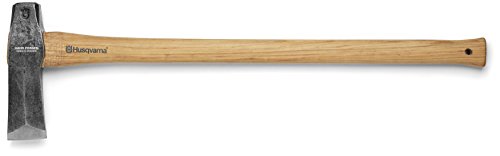
2. Husqvarna 32-Inch Wooden Splitting Maul
- Overall length: 32 inches
- Total weight: 6.8 pounds
- Head: Hand-forged Swedish steel, drop forged
- Handle: American hickory, replaceable
The Husqvarna 32-inch wooden splitting maul is the traditional pick here, hand-forged in Sweden with a 32-inch American hickory handle. Its drop-forged Swedish steel head carries a wide wedge that forces apart stubborn, knotty rounds, and the hardened poll drives splitting wedges when the blade alone is not enough. At 6.8 pounds in total, it hits hard while staying manageable through a full session.
The hickory handle gives a classic feel and natural shock absorption, and it can be replaced if it ever breaks, which keeps the tool in service for years. A steel collar protects the neck of the handle near the head from overstrike damage, and the head is seated with wood and steel wedges for a secure fit. A leather edge cover protects the blade in storage and during transport. This pick suits users who prefer a wooden handle and a hand-forged head, and who split mostly medium to large rounds rather than kindling.
3. Council Tool 7-Pound Splitting Maul
- Head weight: 7 pounds
- Total weight: 8.5 pounds
- Handle length: 36 inches
- Head: Forged steel, axe-eye mounting
The Council Tool 7-pound splitting maul is the American-made classic here, forged in the USA with a 36-inch straight wooden handle. Its seven-pound head sits between the lighter six-pound mauls and the heavier eight-pound models, which makes it a balanced choice for users who find an eight-pound head tiring but want more force than a lighter tool gives. The wide wedge face pries grain apart, and the extended poll gives a solid striking face for driving steel wedges into the toughest rounds.
The straight hickory handle gives a traditional feel and a predictable swing, and the axe-eye head mounting follows the classic pattern that workshops have trusted for generations. At 8.5 pounds in total, the maul carries enough momentum to open knotty rounds without demanding the strength that a much heavier head needs. This pick suits users who want a USA-made tool with a proven design and a weight that works for long sessions.
4. Estwing 8-Pound Wood Splitting Maul
- Head weight: 8 pounds
- Handle length: 36 inches
- Head: Forged steel, hardened
- Handle: Fiberglass, weather resistant
The Estwing 8-pound wood splitting maul pairs a heavy forged head with a 36-inch fiberglass handle for a hard-hitting swing that shrugs off weather and rough storage. The eight-pound head is forged and hardened, and its wedge-shaped blade drives through seasoned hardwood while the blunt poll handles wedge-driving duty on rounds that will not split cleanly.
The fiberglass handle resists moisture and overstrike damage better than wood, which suits users who store tools in an unheated shed or split in wet conditions. The long handle builds leverage for large rounds, and the grip gives a secure hold through the swing. This pick suits users who want a low-maintenance maul with real weight behind it, and who prefer a synthetic handle over hickory.
5. Truper 12-Pound Splitting Maul
- Head weight: 12 pounds
- Handle length: 27 inches
- Head: Carbon steel, heat-treated edge
- Handle: Steel with cushion grip
The Truper 12-pound splitting maul is the heaviest hitter here, built for the largest and most stubborn rounds. Its 12-pound head carries far more momentum than any other pick in this guide, which lets gravity and the swing do the work on dense, knotty wood that bounces lighter mauls. The 27-inch steel handle keeps the overall tool compact for such a heavy head, and the cushion grip helps the hands hold on through hard swings.
The steel handle is the toughest in this roundup, standing up to overstrikes and rough handling that would crack wood or chip composite. The shorter handle trades some leverage for control, which matters when swinging a head this heavy. This pick suits strong users who process very large rounds and want the most force per swing, and it is not the right first maul for a beginner or for a long session of light splitting.
Who Should Skip
Skip a splitting maul if the work is mostly kindling, small branches, or light camp splitting: a hatchet or a compact splitting axe is faster and far less tiring on small wood. Skip the heaviest mauls if strength or stamina is limited, since a 12-pound head punishes poor form and tires the arms quickly. Anyone who only splits a small amount of straight-grained softwood will finish faster with a mid-weight splitting axe. A maul also makes little sense for felling or limbing, where a thin-bit chopping axe cuts across fibers far better.
Frequently Asked Questions
What is the difference between a splitting maul and a splitting axe?
A splitting maul has a much heavier head, usually six to 12 pounds, with a blunt poll made for striking steel wedges. A splitting axe is lighter, usually two to five pounds of head weight, with a sharper wedge and no striking poll. Mauls suit large, knotty rounds, while axes suit everyday firewood and longer sessions.
What weight splitting maul should a beginner buy?
A seven or eight-pound maul with a 36-inch handle suits most beginners, because it offers strong splitting force without the fatigue of a 12-pound head. Learn the stance and the swing on straight-grained, medium rounds before moving to heavier tools or knotty wood.
Can I use a splitting maul to drive wedges?
Yes, that is what the poll is for. Set the steel wedge in a crack or in the end grain, then strike it squarely with the flat poll of the maul. Never strike a wedge with the blade edge, and never strike a steel wedge with a splitting axe, since axe polls are not made for it.
How do I keep a splitting maul in good shape?
Store it sheathed and dry, check the head seating and the handle for cracks before each session, and touch up the edge with a file following the original bevel. Oil a wooden handle lightly now and then, keep the poll faces clean, and replace a cracked handle before the head can loosen.
Final Verdict
The best splitting maul matches the wood and the user. The Fiskars IsoCore 8-pound maul covers the widest range of firewood work, the Husqvarna 32-inch maul brings traditional hickory feel and a hand-forged head, and the Council Tool 7-pound maul balances weight and power for long sessions. The Estwing 8-pound maul adds a weather-proof fiberglass handle, while the Truper 12-pound maul brings the most force for the toughest rounds.
Product and ASIN Reference
| Product | ASIN |
|---|---|
| Fiskars IsoCore 8-Pound Splitting Maul, 36-Inch | B014M9LQGG |
| Husqvarna 32-Inch Wooden Splitting Maul | B004WJ1NYW |
| Council Tool 7-Pound Splitting Maul, 36-Inch | B0DN25VZ3F |
| Estwing 8-Pound Wood Splitting Maul, 36-Inch | B0BHX32S8C |
| Truper 12-Pound Splitting Maul, 27-Inch | B000KL4V04 |
Related guides
More from Amazon
Programs that pair well with the guide above. Offers and eligibility are set by Amazon and may change.
A free business account with business pricing and bulk-buying tools for work, shop or home office.
Create a business accountFree shipping on eligible items, Prime Video and more. Eligible new members can start with a free trial.
Start a Prime free trialAudiobooks and podcasts to listen to on the go. Eligible new members can start with a free trial.
Try Audible freeAd-free music streaming. Eligible new subscribers can start with a free trial.
Try Music Unlimited freeAs an Amazon Associate we earn from qualifying purchases.
Write Your Review
No reviews yet. Be the first to share your experience!