What's inside
- Top 3 Picks
- Quick Comparison
- How We Chose
- 1. Rachio 3 Smart Sprinkler Controller, 8-Zone – Best for Most Homes
- 2. Orbit B-hyve Indoor Smart Sprinkler Controller, 8-Zone (57925) – Best Mid-Range Value
- 3. Orbit B-hyve Smart Sprinkler Controller, 6-Zone (57946) – Best for Small Yards
- 4. Rachio 3 Smart Sprinkler Controller, 16-Zone – Best for Large Properties
- 5. Rain Bird ARC8 App-Based Indoor/Outdoor Smart Wi-Fi Controller, 8-Zone – Best for Flexible Mounting
- 6. Orbit 57915 B-hyve 4-Zone Indoor Controller – Best Budget Entry
- 7. Hunter PRO-HC WiFi Sprinkler Controller, 12-Zone – Best Contractor-Grade Option
- 8. Snowtaros WiFi Smart Sprinkler Controller, 8-Zone – Best Budget Multi-Zone
- 9. RAINPOINT Smart Sprinkler Controller, 8-Zone – Best Budget for Weather Intelligence
- 10. Rain Bird ARC6 Smart Wi-Fi Indoor Controller, 6-Station – Best Compact Indoor Retrofit
- 11. Hunter HPC400 Sprinkler Controller, 4-Zone – Best Small-System Pro Brand
- 12. Soildrops WiFi Water Timer Smart Irrigation Controller with Gateway – Best for Drip and Hose-End Systems
- How to Choose
- Frequently Asked Questions
- Which One to Buy
- Top 3 Picks
- Quick Comparison
- How We Chose
- 1. Rachio 3 Smart Sprinkler Controller, 8-Zone – Best for Most Homes
- 2. Orbit B-hyve Indoor Smart Sprinkler Controller, 8-Zone (57925) – Best Mid-Range Value
- 3. Orbit B-hyve Smart Sprinkler Controller, 6-Zone (57946) – Best for Small Yards
- 4. Rachio 3 Smart Sprinkler Controller, 16-Zone – Best for Large Properties
- 5. Rain Bird ARC8 App-Based Indoor/Outdoor Smart Wi-Fi Controller, 8-Zone – Best for Flexible Mounting
- 6. Orbit 57915 B-hyve 4-Zone Indoor Controller – Best Budget Entry
- 7. Hunter PRO-HC WiFi Sprinkler Controller, 12-Zone – Best Contractor-Grade Option
- 8. Snowtaros WiFi Smart Sprinkler Controller, 8-Zone – Best Budget Multi-Zone
- 9. RAINPOINT Smart Sprinkler Controller, 8-Zone – Best Budget for Weather Intelligence
- 10. Rain Bird ARC6 Smart Wi-Fi Indoor Controller, 6-Station – Best Compact Indoor Retrofit
- 11. Hunter HPC400 Sprinkler Controller, 4-Zone – Best Small-System Pro Brand
- 12. Soildrops WiFi Water Timer Smart Irrigation Controller with Gateway – Best for Drip and Hose-End Systems
- How to Choose
- Frequently Asked Questions
- Which One to Buy
As an Amazon Associate I earn from qualifying purchases. This post may contain affiliate links at no extra cost to you.
Sections
- Top 3 Picks
- Quick Comparison
- How We Chose
- 1. Rachio 3 Smart Sprinkler Controller, 8-Zone – Best for Most Homes
- 2. Orbit B-hyve Indoor Smart Sprinkler Controller, 8-Zone (57925) – Best Mid-Range Value
- 3. Orbit B-hyve Smart Sprinkler Controller, 6-Zone (57946) – Best for Small Yards
- 4. Rachio 3 Smart Sprinkler Controller, 16-Zone – Best for Large Properties
- 5. Rain Bird ARC8 App-Based Indoor/Outdoor Smart Wi-Fi Controller, 8-Zone – Best for Flexible Mounting
- 6. Orbit 57915 B-hyve 4-Zone Indoor Controller – Best Budget Entry
- 7. Hunter PRO-HC WiFi Sprinkler Controller, 12-Zone – Best Contractor-Grade Option
- 8. Snowtaros WiFi Smart Sprinkler Controller, 8-Zone – Best Budget Multi-Zone
- 9. RAINPOINT Smart Sprinkler Controller, 8-Zone – Best Budget for Weather Intelligence
- 10. Rain Bird ARC6 Smart Wi-Fi Indoor Controller, 6-Station – Best Compact Indoor Retrofit
- 11. Hunter HPC400 Sprinkler Controller, 4-Zone – Best Small-System Pro Brand
- 12. Soildrops WiFi Water Timer Smart Irrigation Controller with Gateway – Best for Drip and Hose-End Systems
- How to Choose
- Frequently Asked Questions
- Which One to Buy
Top 3 Picks
The best smart irrigation controller with weather data for most yards is the Rachio 3, 8-Zone — it pairs the most mature weather-based scheduling engine in the category with an app that most people can finish setting up in under 30 minutes. If you want weather-based scheduling without premium money, the Orbit B-hyve 8-Zone Indoor (57925) is the value benchmark. For large, multi-zone properties where hydraulic coverage matters more than app polish, the Hunter PRO-HC 12-Zone is the professional-grade pick.
Quick Comparison
The table below covers every controller in this roundup. Price tiers are relative bands, not fixed figures — street prices on irrigation hardware move with season and promotions.
| Product | Best for | Key specs | Price tier |
|---|---|---|---|
| Rachio 3, 8-Zone | Best overall weather-based scheduling for typical suburban lots | 8 zones, indoor, Wi-Fi, Weather Intelligence, EPA WaterSense labeled, app scheduling with flow/weather skip | Premium |
| Orbit B-hyve 8-Zone Indoor (57925) | Best mid-range balance of zone count and weather features | 8 zones, indoor, Wi-Fi, B-hyve app, weather-based delays and seasonal adjust, EPA WaterSense listed | Mid-range |
| Orbit B-hyve 6-Zone (57946) | Smaller yards needing a modest zone count | 6 zones, indoor, Wi-Fi, B-hyve app, weather-based scheduling, manual run at the unit | Mid-range |
| Rachio 3, 16-Zone | Large properties with many hydrozones | 16 zones, indoor, Wi-Fi, Weather Intelligence, EPA WaterSense labeled, flow and weather skip | Premium |
| Rain Bird ARC8 (8-Zone) | Indoor or outdoor installs with a lean toward pro-grade timers | 8 stations, indoor/outdoor enclosure, Wi-Fi, app control, EPA WaterSense labeled | Mid-range |
| Orbit 57915 B-hyve 4-Zone Indoor | Budget entry with weather-aware scheduling | 4 zones, indoor, Wi-Fi, B-hyve app, weather delays, compact footprint | Budget |
| Hunter PRO-HC 12-Zone | Contractor-grade residential and light commercial | 12 zones, indoor/outdoor, Wi-Fi, Hunter Hydrawise-style app features, expandable station count | Premium |
| Snowtaros 8-Zone Wi-Fi | Budget multi-zone coverage with app control | 8 zones, indoor, Wi-Fi, app scheduling, weather-based delays | Budget |
| RAINPOINT 8-Zone Wi-Fi | Budget buyers who want local weather intelligence | 8 zones, indoor, Wi-Fi, local weather intelligence, programmable schedules | Budget |
| Rain Bird ARC6, 6-Station | Compact indoor retrofit on a small system | 6 stations, indoor, Wi-Fi, app control, weather-based scheduling | Mid-range |
| Hunter HPC400, 4-Zone | Small residential systems wanting pro-brand reliability | 4 zones, indoor/outdoor options, Wi-Fi, smart scheduling, expandable | Premium |
| Soildrops Wi-Fi Timer with Gateway | Hose-end and small drip systems needing a bridge | Gateway-based Wi-Fi, app scheduling, weather-based adjustments, drip and hose-end compatible | Budget |
How We Chose
This roundup compares controllers by the things that actually determine whether weather-based scheduling works in a given yard: how many zones the unit supports, whether it is rated for indoor or outdoor mounting, whether it needs a separate rain or soil sensor or pulls weather data from the cloud, and how complete the app is. A controller with excellent weather logic and only four zones is the wrong answer for a property with eight hydrozones, and a 16-zone controller is wasted money on a two-zone drip system.
We also weighed the upgrade path. A mid-range controller with an indoor enclosure and no sensor terminals can still be the right pick if the yard is stable; a contractor-grade unit with expansion modules makes more sense where the landscape is likely to be rezoned. Price tier is included as a label rather than a number because irrigation controller pricing swings with promotions and seasonal demand. Selection was based on published specifications, manufacturer documentation, brand track record in the irrigation category, and how each controller’s feature set maps to real yard layouts — not on field testing or ownership.
1. Rachio 3 Smart Sprinkler Controller, 8-Zone – Best for Most Homes
As an Amazon Associate we earn from qualifying purchases at no extra cost to you.
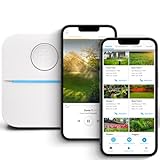
The Rachio 3 in the 8-zone configuration is the controller most people should start with. Eight zones covers a typical suburban lot: front lawn, back lawn, side yard, garden beds, and drip lines, with a couple of spares for future additions. The weather engine, marketed as Weather Intelligence, adjusts schedules automatically based on local forecast data and can skip a cycle when rain is expected. The unit is EPA WaterSense labeled, which means it meets an efficiency standard rather than simply claiming one.
Key specs
- Zone capacity: 8 stations
- Mounting: indoor enclosure, wall-mounted near the existing valve wiring
- Connectivity: 2.4 GHz Wi-Fi, app-based scheduling on phone and web
- Weather logic: cloud weather data with automatic rain skip and seasonal adjustment
- Certification: EPA WaterSense labeled
- Sensor support: accepts a wired rain sensor where local code or preference requires one
- Typical install time: 20-40 minutes for a like-for-like swap of an existing timer
Strengths. The scheduling experience is the reason to buy it. Rather than asking you to build a program, the app walks through yard details — soil type, plant type, sun exposure, slope — and generates a schedule from them. That schedule then flexes with weather. For a homeowner who has never touched a controller programming menu, this removes the single biggest source of over-watering: schedules that were set once in spring and never revisited. The zone count is also generous enough that most yards will not need the 16-zone version.
Pros
- Weather-based scheduling that adjusts without manual intervention
- 8 zones covers most single-family residential systems
- Setup guided by yard characteristics rather than raw run times
- EPA WaterSense labeled, useful for rebate programs in some water districts
- Strong third-party integration story for smart-home systems
Cons
- Indoor-only enclosure means it must be mounted near the valve box or a protected location
- Premium tier pricing compared to Orbit and Rain Bird equivalents at the same zone count
- Requires reliable 2.4 GHz Wi-Fi at the mounting location — a common failure point in garages
- Cloud-dependent: without internet, weather-based adjustment stops (the unit still runs stored schedules)
How it compares. Against the Rachio 3 16-zone, this is purely a zone-count question: the engine, app, and enclosure are the same family, so the only reason to move up is a property with more than eight hydrozones. Against the Orbit B-hyve 8-zone, the Rachio costs more but delivers a more guided scheduling flow; the B-hyve is the better pick if budget is the deciding factor and you are comfortable configuring zones manually. Against the Rain Bird ARC8, the Rachio wins on app polish while the ARC8 wins on mounting flexibility thanks to its indoor/outdoor housing.
2. Orbit B-hyve Indoor Smart Sprinkler Controller, 8-Zone (57925) – Best Mid-Range Value

The Orbit B-hyve 8-zone indoor unit is the pick for buyers who want weather-based scheduling but do not want to pay premium prices for it. Orbit has been in the irrigation timer business long enough that the B-hyve line has a mature app and a well-understood feature set: weather delays, seasonal adjust, and remote control from a phone. Eight zones at a mid-range tier is the strongest zone-per-cost ratio in this roundup outside the budget cluster.
Key specs
- Zone capacity: 8 stations
- Mounting: indoor enclosure
- Connectivity: Wi-Fi with the B-hyve app for iOS and Android
- Weather logic: weather-based delays and automatic seasonal adjustment
- Certification: EPA WaterSense listed
- Manual control: front-panel buttons for running zones without the app
- Expansion: not expandable — zone count is fixed at eight
Strengths. The value proposition is straightforward: you get eight zones and weather-aware scheduling at a mid-range price, and you get a physical control panel so the system is usable when the phone is not at hand. The B-hyve app is the most widely used consumer irrigation app in North America, which means setup guides, community answers, and troubleshooting threads are plentiful. For a household where one person manages the yard and others occasionally need to run a zone, the front-panel controls matter more than they seem on a spec sheet.
Pros
- Eight zones at a mid-range price — best zone-per-cost in the middle tier
- Weather delays and seasonal adjust reduce water waste without a separate sensor
- On-unit buttons for manual zone runs
- EPA WaterSense listed
- Large existing user base means easy troubleshooting
Cons
- Indoor-only enclosure limits mounting locations
- Scheduling is more manual than Rachio’s guided flow — you set zone parameters yourself
- No zone expansion, so a future landscape addition means a new controller
- App interface is functional rather than refined
How it compares. Against the Rachio 3 8-zone, the B-hyve gives up guided scheduling polish and some smart-home integration depth in exchange for a lower price at the same zone count. Against the 6-zone B-hyve (57946), it is the same platform with two more zones — choose based on how many valves you actually have, not on future-proofing, since neither expands. Against the Rain Bird ARC8, the ARC8 offers an indoor/outdoor enclosure that the B-hyve lacks, which may be decisive for installs where running wiring indoors is impractical.
3. Orbit B-hyve Smart Sprinkler Controller, 6-Zone (57946) – Best for Small Yards

The 6-zone B-hyve is the same platform as the 8-zone version, trimmed to six stations. That is the right size for a small lot: front lawn, back lawn, one or two beds, and a drip line, with a spare. If your valve box has five or six valves, buying eight zones means paying for capacity you will never use.
Key specs
- Zone capacity: 6 stations
- Mounting: indoor enclosure
- Connectivity: Wi-Fi with the B-hyve app
- Weather logic: weather-based scheduling and seasonal adjust
- Manual control: on-unit buttons for zone runs and program start
- Expansion: fixed at six zones
Strengths. Six zones is a genuinely good fit for townhomes, smaller detached homes, and yards where the irrigation was designed simply. The controller shares the B-hyve app ecosystem, so weather-based delays work exactly as they do on the larger units. Fewer zones also means less programming overhead: a shorter zone list you can review at a glance in the app or on the panel.
Pros
- Right-sized for small residential systems — no paying for unused zones
- Same weather-based scheduling engine as the larger B-hyve units
- Physical controls for running zones without the app
- Compact indoor housing fits tight utility spaces
Cons
- Six zones leaves little headroom if the yard gains a new hydrozone
- Indoor-only
- No expansion path
- At similar pricing to the 8-zone version in some seasons, it can be poor value if the 8-zone is discounted
How it compares. Against the 8-zone B-hyve (57925), the choice is purely capacity — if you have six valves, buy six zones, but check pricing first, because the 8-zone unit occasionally sells close enough that the extra zones are effectively free. Against the Hunter HPC400 4-zone, the B-hyve offers two more stations at a lower tier but without Hunter’s contractor-grade build and expansion ecosystem.
4. Rachio 3 Smart Sprinkler Controller, 16-Zone – Best for Large Properties

The 16-zone Rachio 3 exists for properties where eight zones is not enough: larger lots with separate hydrozones for front, back, sides, beds, drip, and sometimes a separate vegetable garden or orchard block. Sixteen stations also suits small commercial or HOA-managed landscapes where each planting bed is zoned independently for precise control.
Key specs
- Zone capacity: 16 stations
- Mounting: indoor enclosure
- Connectivity: Wi-Fi, app and web scheduling
- Weather logic: Weather Intelligence with automatic rain skip and local forecast adjustment
- Certification: EPA WaterSense labeled
- Sensor support: wired rain sensor input
Strengths. The value of sixteen zones is not just count — it is the ability to give each planting type its own schedule. Lawns, drip-irrigated beds, and shade plantings have very different water needs, and blending them into fewer zones forces compromise. With sixteen stations, you can separate sun from shade, spray from drip, and slope from flat ground, then let weather data adjust all of it. For high-value landscapes, that granularity pays for the unit over a few seasons.
Pros
- 16 zones allows true hydrozoning by plant type, sun exposure, and slope
- Same guided scheduling and weather engine as the 8-zone version
- EPA WaterSense labeled
- Good fit for HOA and light commercial landscapes
Cons
- Overkill for ordinary residential lots — you pay for stations you will never wire
- Indoor enclosure only
- Premium pricing at the top of the consumer range
- More zones means more programming review, even with automation
How it compares. Against the 8-zone Rachio 3, the decision is entirely about valve count: if you have nine or more valves, buy the 16-zone; if you have eight or fewer, the 8-zone is cheaper for identical software. Against the Hunter PRO-HC 12-zone, the Rachio wins on app simplicity, while the PRO-HC wins on enclosure flexibility and expandability for future additions.
5. Rain Bird ARC8 App-Based Indoor/Outdoor Smart Wi-Fi Controller, 8-Zone – Best for Flexible Mounting

The ARC8 is the pick when mounting location is the constraint. Many controllers in this class are indoor-only, which forces you to either run valve wiring indoors or find a protected spot near the valve box. The ARC8 is rated for indoor and outdoor installation, so it can live in the garage, on an exterior wall, or in a weather-protected cabinet next to the valves.
Key specs
- Zone capacity: 8 stations
- Mounting: indoor or outdoor enclosure
- Connectivity: Wi-Fi with Rain Bird’s app
- Weather logic: app-based weather adjustments and scheduling
- Certification: EPA WaterSense labeled
- Brand pedigree: Rain Bird is one of the longest-established irrigation manufacturers
Strengths. Rain Bird’s advantage is that the controller is designed by a company whose primary business is irrigation, not consumer electronics. The enclosure reflects that: it is built to be installed where the wiring is, including outdoors, which removes a real logistical obstacle for retrofit projects. The app handles scheduling and weather-based adjustment, and the unit is EPA WaterSense labeled, which is relevant if your water utility offers rebates on qualifying controllers.
Pros
- Indoor or outdoor mounting — the most flexible enclosure in this roundup at this tier
- Eight zones at mid-range pricing
- EPA WaterSense labeled
- Irrigation-specialist brand with deep parts and support availability
Cons
- App experience is less polished than Rachio’s
- Weather-based scheduling requires more manual configuration than guided setups
- Fixed eight-zone capacity
- Outdoor-rated does not mean waterproof against direct spray — still needs sensible placement
How it compares. Against the Rachio 3 8-zone, the ARC8 trades app polish for mounting flexibility — if your controller must go outside, that trade is often worth taking. Against the Orbit B-hyve 8-zone, it costs more but offers the outdoor enclosure the B-hyve cannot match, plus a brand with a stronger commercial irrigation reputation.
6. Orbit 57915 B-hyve 4-Zone Indoor Controller – Best Budget Entry

The 4-zone B-hyve is the cheapest way into weather-aware scheduling on this list without leaving the established B-hyve ecosystem. Four zones fits small yards, drip-only systems, and raised-bed gardens where a single valve or two feeds everything.
Key specs
- Zone capacity: 4 stations
- Mounting: indoor enclosure
- Connectivity: Wi-Fi with the B-hyve app
- Weather logic: weather-based delays and seasonal adjust
- Footprint: compact — suits small cabinets and tight utility walls
Strengths. For a small drip system or a two-to-three-zone lawn setup, four stations is enough, and the B-hyve app delivers the same weather-delay behavior as the larger models. It is the lowest-cost way to stop over-watering on a small property while keeping a real app and real weather logic.
Pros
- Lowest-cost reputable entry point with genuine weather-based scheduling
- Small physical footprint
- Same app ecosystem as the larger B-hyve controllers
- Simple setup — few zones means fast programming
Cons
- Four zones caps the system hard — no room for landscape growth
- Indoor only
- No expansion
- For only slightly more, an 8-zone version may be available, making this poor value if discounted alternatives are on the shelf
How it compares. Against the 6-zone and 8-zone B-hyve units, this is a pure capacity ladder — buy the smallest number of zones that matches your actual valve count, but compare prices, because tier gaps within the B-hyve line are sometimes small. Against the RAINPOINT 8-zone, the RAINPOINT gives you twice the zones for a budget-tier price, at the cost of a less established app and brand support network.
7. Hunter PRO-HC WiFi Sprinkler Controller, 12-Zone – Best Contractor-Grade Option

Hunter’s PRO-HC is the professional-tier choice. Hunter is a fixture in commercial and residential irrigation, and the PRO-HC is built for installers who need reliability, expandability, and an enclosure that handles real-world mounting conditions. Twelve zones suits large residential properties and light commercial sites.
Key specs
- Zone capacity: 12 stations, with expansion capability via add-on modules
- Mounting: indoor/outdoor rated enclosure
- Connectivity: Wi-Fi with Hunter’s app ecosystem
- Weather logic: smart scheduling with weather-based adjustments
- Build: contractor-grade housing and terminals
- Target user: irrigation professionals and serious owner-operators
Strengths. The PRO-HC’s defining feature is that it is designed to be installed and serviced rather than simply plugged in. The enclosure tolerates outdoor mounting, the station count can grow, and the wiring terminals are built for repeated work. For a property where the system is likely to be rezoned — adding a bed, splitting a lawn zone, extending drip — expandability is the difference between a controller that lasts a decade and one that gets replaced in three years.
Pros
- Expandable station count — protects the investment as the landscape changes
- Indoor/outdoor enclosure
- Contractor-grade construction and terminals
- Twelve zones at base, enough for large residential systems
- Strong professional support and documentation
Cons
- Premium pricing, and expansion modules cost extra
- App and setup are oriented toward installers — less hand-holding than Rachio
- Overkill for a standard four-to-eight-zone home
- More configuration decisions to get right up front
How it compares. Against the Rachio 3 16-zone, the PRO-HC trades app simplicity for expandability and enclosure durability; if you expect the system to change, the Hunter is the safer long-term buy. Against the Hunter HPC400 4-zone, it is the same brand philosophy at triple the capacity — the HPC400 suits small systems, the PRO-HC suits large ones.
8. Snowtaros WiFi Smart Sprinkler Controller, 8-Zone – Best Budget Multi-Zone

The Snowtaros 8-zone unit addresses the budget buyer who still wants eight stations. Where the entry-level Orbit gives four zones and the mid-range units cost more, this delivers eight zones with app control and weather-based delays at the low end of the market.
Key specs
- Zone capacity: 8 stations
- Mounting: indoor enclosure
- Connectivity: Wi-Fi with companion app
- Weather logic: weather-based delay functionality
- Price position: budget tier
Strengths. The pitch is zone count per dollar — eight zones at a budget price is the highest raw capacity in the budget cluster alongside the RAINPOINT unit. For a homeowner with eight valves who cannot justify mid-range pricing, this is the pragmatic route into app-based scheduling.
Pros
- Eight zones at budget pricing
- App-based scheduling and weather delays
- Straightforward retrofit on an existing eight-zone system
Cons
- Less established brand — thinner documentation and community support
- Indoor-only, fixed capacity
- App maturity and long-term software support are less certain than with Orbit, Rachio, or Rain Bird
- Fewer verified integration and rebate-program credentials than WaterSense-labeled competitors
How it compares. Against the RAINPOINT 8-zone, both are budget eight-zone units with local weather intelligence claims; the deciding factor is usually current availability and which app interface you find more usable. Against the Orbit B-hyve 8-zone, the Orbit costs more but brings a larger support ecosystem and a WaterSense listing — worth the premium if rebates or long-term support matter to you.
9. RAINPOINT Smart Sprinkler Controller, 8-Zone – Best Budget for Weather Intelligence

RAINPOINT’s 8-zone controller targets the same buyer as the Snowtaros unit but leads with local weather intelligence and programmable scheduling as its headline features. It is a budget-tier way to get automatic weather adjustment across eight zones.
Key specs
- Zone capacity: 8 stations
- Mounting: indoor enclosure
- Connectivity: Wi-Fi with companion app
- Weather logic: local weather intelligence for schedule adjustment
- Programming: programmable schedules per zone via app
- Price position: budget tier
Strengths. Eight zones plus automatic weather adjustment at a budget price is the core value. For a household that wants the controller to respond to local conditions without paying premium prices, this hits the essential function. Programmable per-zone schedules let you separate lawn from drip even within a modest budget.
Pros
- Eight zones with weather intelligence at the low end of the market
- Per-zone programmable schedules
- App-based control and monitoring
- Good fit for budget-conscious retrofits of existing eight-zone systems
Cons
- Newer brand with less track record than legacy irrigation manufacturers
- Indoor-only enclosure, no expansion
- Weather data quality depends on the app’s regional coverage
- Not EPA WaterSense listed, so likely ineligible for utility rebates
How it compares. Against the Snowtaros 8-zone, the differences are marginal — both are budget eight-zone units, so pick on app usability and current availability. Against the Orbit B-hyve 8-zone, the Orbit is the safer purchase in every respect except price: bigger user base, WaterSense listing, and better odds of long-term app support.
10. Rain Bird ARC6 Smart Wi-Fi Indoor Controller, 6-Station – Best Compact Indoor Retrofit

The ARC6 is the six-station version of Rain Bird’s app-based controller line. It is the right size for small properties and the right brand for buyers who want an irrigation specialist rather than a consumer-electronics company making a timer.
Key specs
- Zone capacity: 6 stations
- Mounting: indoor
- Connectivity: Wi-Fi with Rain Bird’s app
- Weather logic: app-based weather-based scheduling
- Brand: Rain Bird, a long-established irrigation manufacturer
Strengths. Rain Bird’s controller platform is built on decades of irrigation engineering, and the ARC6 brings that to a six-zone indoor form factor. Parts availability, documentation, and installer familiarity are the practical advantages: if something goes wrong, replacements and compatible components are easy to source.
Pros
- Six zones at mid-range pricing from a specialist irrigation brand
- Compact indoor footprint suited to small cabinets
- Parts and support widely available
- App-based weather scheduling
Cons
- Indoor only — no outdoor mounting option like the ARC8
- Six zones limits future expansion
- App is functional rather than premium-feeling
- No expansion modules
How it compares. Against the Rain Bird ARC8, the difference is enclosure and zone count: the ARC8 can go outdoors and handles eight stations, while the ARC6 is indoor-only with six. Against the Orbit B-hyve 6-zone, both are indoor six-zone mid-range units — Rain Bird brings irrigation-specialist credibility, Orbit brings the larger consumer app user base.
11. Hunter HPC400 Sprinkler Controller, 4-Zone – Best Small-System Pro Brand

The HPC400 is Hunter’s four-zone smart controller, aimed at small residential systems where the owner wants professional-grade hardware without buying twelve or more stations. It suits a straightforward lawn-and-beds setup on a compact lot.
Key specs
- Zone capacity: 4 stations, with expansion capability in the Hunter ecosystem
- Mounting: indoor and outdoor installation options
- Connectivity: Wi-Fi with Hunter’s app
- Weather logic: smart scheduling with weather-based adjustment
- Build: contractor-oriented construction
Strengths. The case for the HPC400 is that it puts professional hardware behind a small system. If you have four valves but intend to add more, or if the controller will be mounted outdoors, this is one of the few four-zone units with a real upgrade path and a durable enclosure. It is also the natural pick for someone already invested in the Hunter ecosystem through sprinklers and valves.
Pros
- Expansion path within the Hunter platform
- Indoor/outdoor mounting flexibility
- Contractor-grade build quality
- Suits small systems that may grow
Cons
- Premium pricing for only four zones
- Setup assumes some familiarity with irrigation systems
- Overkill if the system will never exceed four zones
- App feature depth varies by region and installer configuration
How it compares. Against the Orbit 57915 4-zone, the Hunter costs more but offers outdoor mounting and an expansion path the Orbit lacks — worth it if either matters. Against the Hunter PRO-HC 12-zone, this is the same philosophy at a third of the capacity: buy the HPC400 for small systems, the PRO-HC for large ones.
12. Soildrops WiFi Water Timer Smart Irrigation Controller with Gateway – Best for Drip and Hose-End Systems

The Soildrops unit is different from everything else on this list: it is a gateway-based Wi-Fi controller aimed at drip irrigation and hose-end watering rather than a hardwired multi-zone valve system. The gateway provides the network bridge, and the controller handles app scheduling with weather-based adjustments.
Key specs
- Architecture: Wi-Fi controller paired with a gateway for connectivity
- Application: drip irrigation and hose-end watering
- Control: app-based scheduling and weather-based adjustment
- Mounting: suited to outdoor watering positions near spigots and drip manifolds
- Price position: budget tier
Strengths. For gardeners running drip lines from a spigot — raised beds, container arrays, small orchard rows — a hardwired multi-zone controller is the wrong tool. This unit is designed for that use case: attach it to the water source, bridge it to Wi-Fi through the gateway, and schedule from the app with weather awareness. It is the cheapest way on this list to add smart scheduling to a non-hardwired watering setup.
Pros
- Aimed squarely at drip and hose-end systems rather than hardwired valves
- Gateway solves the Wi-Fi reach problem common at outdoor spigots
- App scheduling with weather-based adjustment
- Lowest-cost entry in this roundup
Cons
- Not a replacement for a hardwired in-ground zone controller
- Gateway adds a device to power and maintain
- Fewer zones of control than any valve-based unit here
- Budget-tier brand support and documentation
How it compares. Against any of the valve-based controllers here, this is a different product category — it does not replace a Rain Bird ARC8 or Orbit B-hyve for an in-ground sprinkler system. It is the right pick only when the watering source is a spigot, and the nearest comparable function on this list is a single zone of a budget controller, which is both more expensive and more complicated to install for that purpose.
How to Choose
The single most common mistake when buying a smart irrigation controller is buying for the wrong constraint. Buyers fixate on app features, but the decisions that actually determine satisfaction are zone count, mounting location, and how weather data reaches the unit. Work through those three first, then use app quality and brand support as tiebreakers.
Count your valves before anything else
Zone capacity must match the number of valves in your system, and the penalty for guessing wrong is asymmetric. Buying too few zones means the controller cannot run your system at all — you will be replacing it immediately. Buying too many means you paid for stations you never wire. Walk to the valve box and count the solenoids, or count the wire pairs running from the controller. If you have six valves, buy six zones; if you have eight, buy eight. Do not buy four zones hoping to add valves later — expansion is rare in the consumer tier, and only Hunter’s controllers in this list offer a genuine upgrade path.
One caveat: if you are within one zone of a tier boundary, size up if the price gap is small. A controller with eight zones when you have seven valves is cheap insurance. A controller with four zones when you have six valves is a return.
Decide where the controller can physically live
Mounting is the second hard constraint, and it is the one buyers overlook most often. Most units on this list are indoor-only. That means the controller needs a wall inside a garage, utility room, or basement, and the valve wiring has to reach it. If your valve box is 60 feet from the house and the existing timer is in a plastic cabinet on the side wall, an indoor-only controller forces you either to relocate the wiring or to find a protected indoor path.
Controllers with indoor/outdoor ratings — the Rain Bird ARC8, the Hunter PRO-HC, and the Hunter HPC400 — solve this by mounting where the wiring already is. That flexibility is worth real money on a retrofit, sometimes more than the app differences between two otherwise similar units. Outdoor-rated is not the same as submersion-proof, though: even an outdoor enclosure should be mounted vertically, out of direct sprinkler spray, with the wiring entering from below where practical.
Understand how weather data actually reaches the controller
Every controller here claims “weather-based” scheduling, but the mechanism matters. There are three common approaches:
- Cloud weather data by ZIP or coordinates. The controller pulls forecast and historical evapotranspiration data from an internet service and adjusts run times or skips cycles. This is what Rachio’s Weather Intelligence and Orbit’s weather delays do. It needs no extra hardware, but it depends on the accuracy of the nearest weather station, which can be miles away in rural areas.
- On-site rain sensor input. A wired or wireless rain sensor tells the controller it has actually rained, and the controller skips the cycle. This is more locally accurate than forecast data for rain events but does not adjust for temperature, humidity, or wind. Many controllers here accept a sensor, and it is often worth adding one where local forecasts are unreliable.
- Hybrid. The controller uses cloud data for scheduling adjustments and accepts a rain sensor as a confirmation layer. This is the most robust setup, and it is achievable on the mid-range and premium units in this roundup that support both.
If your property sits in a microclimate — a valley, a coastal strip, a high-desert plateau — do not rely on cloud data alone. Add a rain sensor, or choose a controller that supports one. The cost of a sensor is small compared to a season of over-watering.
Match zone granularity to your planting types
This is where zone count becomes more than a number. If your system has a single valve feeding both full-sun lawn and shade beds, no smart controller can water them correctly — the lawn will be under-watered or the beds drowned. The fix is hydrozoning: separate valves for sun versus shade, spray versus drip, flat versus sloped ground.
If your system is already hydrozoned, a controller with enough stations to preserve that separation is essential. If it is not, buying a controller with spare capacity lets you split a zone later by adding a valve and running wire, which is a modest plumbing and wiring job compared to redoing the whole system. The 12-zone Hunter PRO-HC and 16-zone Rachio 3 are the picks for properties likely to be rezoned; the 4-zone units are for systems that are finished and small.
Weigh app quality against brand longevity
An irrigation controller is a ten-year purchase in most yards, and the app is the part most likely to be abandoned first. Established irrigation manufacturers — Rain Bird, Hunter, Orbit — have business models built on irrigation hardware, so app support tends to persist. Newer budget brands may offer equivalent hardware at lower prices, but if the app is discontinued, the controller becomes a dumb timer at best.
Assess the app on four things: whether setup is guided or manual, whether schedule changes can be made remotely, whether the weather adjustment is transparent (can you see why a cycle was skipped?), and whether there is a manual override on the unit itself. The last one matters more than buyers expect — guests, house-sitters, and contractors all need to run a zone without downloading an app. Controllers here with physical panel controls, including the Orbit B-hyve units and the Rain Bird and Hunter models, are easier to live with in shared households.
Consider rebates and efficiency listings
Many water utilities offer rebates for EPA WaterSense labeled irrigation controllers, which in this roundup includes the Rachio 3 models, the Orbit B-hyve 8-zone, and the Rain Bird ARC8. A rebate can shift the value calculation substantially: a premium controller that qualifies may end up costing less than a budget controller that does not, once the utility check arrives. Check your water district’s current program before deciding, and note the model must usually be on the approved list — labeling, not brand, is what qualifies.
Plan the installation before you buy
A like-for-like controller swap is a 20-to-40-minute job: photograph the existing wiring, label each zone wire, disconnect the old unit, mount the new one, and reconnect in the same order. Two things commonly go wrong. First, zone wires are not always labeled, so photographing the old terminal block before removal is essential. Second, the new controller may need a common wire and a power source in a location the old one did not — check the enclosure dimensions and the power lead length against your existing setup before ordering.
Also confirm your Wi-Fi reaches the mounting point. Controllers overwhelmingly use 2.4 GHz networks, and a metal valve box, a concrete garage wall, or a detached shed will block a signal that works fine elsewhere in the house. If the mounting location is marginal, a mesh node or a controller with outdoor mounting and a better antenna position solves it. Budget controllers with gateway accessories, like the Soildrops unit, exist precisely because Wi-Fi at an outdoor spigot is a common dead zone.
A worked example: sizing a typical quarter-acre lot
Suppose the property has front lawn on two valves, back lawn on two valves, three planting beds on individual valves, and a drip line on one valve. That is eight zones. Add one spare for a future bed and the target is nine stations — which rules out every 8-zone controller here and points to the 12-zone Hunter PRO-HC or the 16-zone Rachio 3. If the budget does not stretch, the alternative is to consolidate two beds onto one valve and stay at eight zones with the Rachio 3 8-zone or Orbit B-hyve 8-zone, accepting less precise watering in those beds. That is the trade-off in concrete form: precise hydrozoning costs one tier of capacity.
For a small lot with front lawn, back lawn, one bed, and one drip line — four valves — the math runs the other way. A 4-zone controller covers it exactly, and anything larger is money spent on empty terminals. If there is a realistic chance of adding a bed or splitting the lawn, moving to six or eight zones costs little more and buys flexibility.
Water savings: where the money actually comes from
Weather-based scheduling saves water in two ways. The first is cycle skipping: when rain is forecast or has fallen, the controller does not run, avoiding duplication. The second, larger effect is seasonal adjustment: run times shrink in cool, humid months and grow in hot, dry ones, instead of running a fixed summer schedule year-round. A schedule set in July and left alone through October over-waters by a wide margin in most climates; automatic seasonal adjustment corrects that without user intervention.
The practical implication for buying decisions is that weather data quality matters more than zone count for savings, provided the zone count is adequate. A budget 8-zone controller with accurate local weather data will save more water than a premium controller with poor local coverage. Before buying, check whether the app’s weather service has a station near you — a call to the manufacturer or a look at the app’s coverage map answers this in minutes.
Frequently Asked Questions
Do I need a separate rain sensor if my controller uses weather data?
Not strictly, but adding one improves accuracy in areas where forecasts are unreliable or where the nearest weather station is far away. Cloud weather data predicts rain; a rain sensor confirms it actually fell at your property. On controllers that accept both — most mid-range and premium units here — the combination is the most water-efficient configuration.
Can I install a smart controller myself, or do I need an irrigation professional?
A like-for-like replacement of an existing controller is a straightforward DIY job: photograph the wiring, label the zone wires, and reconnect in the same order at the new unit. You need professional help when there is no existing controller, when new valves or wiring must be run, or when the mounting location requires new power. Most smart controllers include wiring diagrams and app-guided setup.
Will a smart controller work without internet?
The controller will continue running its stored schedules, but weather-based adjustments and app control stop until the connection returns. That is why the manual panel controls on the Orbit B-hyve, Rain Bird, and Hunter units matter — they let you start a zone or change a program at the unit when the network is down.
How many zones do I actually need?
Count the valves in your system and match that number exactly, with one spare if the price difference is small. Zone capacity must be equal to or greater than your valve count for the system to run at all. Expansion is uncommon in the consumer tier, so buy the capacity you need up front rather than planning to add zones later.
What is the difference between EPA WaterSense labeled and non-labeled controllers?
WaterSense labeling means the controller meets an independent efficiency standard, including weather-based scheduling capability. The practical benefit is rebate eligibility: many water utilities require a WaterSense listing for their irrigation controller rebates. A controller without the label may perform similarly but will not qualify for those programs.
Can I use a smart controller with drip irrigation?
Yes, provided the drip line runs from a valve on a hardwired system — it occupies one zone like any other. Drip zones usually need longer, less frequent run times than spray zones, which is exactly why separate zones for drip and spray matter. For drip fed from an outdoor spigot rather than a valve, a gateway-based timer such as the Soildrops unit is the appropriate category.
Do I need to replace the controller if I add a zone later?
Usually yes, unless you chose an expandable model. Only the Hunter controllers here offer genuine station expansion via add-on modules. Everything else has fixed capacity, so adding a valve beyond the controller’s zone count means replacing the unit. If landscape growth is likely, factor expandability into the purchase.
How long do these controllers last?
Hardware typically lasts many years, but the app and cloud service are the real lifespan limit. Controllers from established irrigation manufacturers — Rain Bird, Hunter, Orbit — have the strongest record of long-term software support. When evaluating a budget unit from a newer brand, weigh the lower price against the risk that app support ends before the hardware fails.
Which One to Buy
For a standard suburban lot with six to eight valves, the Rachio 3 8-zone is the default answer: guided weather-based scheduling, WaterSense labeling, and enough capacity for a typical yard. If the budget is tighter and you are comfortable configuring schedules manually, the Orbit B-hyve 8-zone (57925) delivers most of the function for less. On a large or likely-to-grow property, choose the Hunter PRO-HC 12-zone for expansion or the Rachio 3 16-zone for maximum hydrozoning. Small systems with four valves are best served by the Orbit 57915 or the expandable Hunter HPC400. If the controller must mount outdoors, the Rain Bird ARC8 is the mid-range pick that makes that possible. And if your watering comes from a spigot rather than a valve manifold, the Soildrops gateway timer is the correct category entirely — the valve controllers here are simply not built for that job.