What's inside
As an Amazon Associate I earn from qualifying purchases. This post may contain affiliate links at no extra cost to you.
Sections
Our Top Picks


What a low-angle jack plane is good for
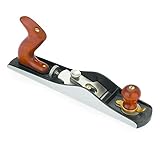
A low-angle jack plane is a versatile bench plane for fitting doors, trimming joints, flattening small areas and cleaning up end grain. Its iron sits bevel-up, so the bedding angle and the iron’s bevel combine to set the cutting angle. With a 25-degree bevel, the usual 12-degree bed gives a 37-degree angle suited to general work. A steeper bevel raises the cutting angle, which can help reduce tear-out in difficult grain.
On a jobsite, the main advantage is range: one plane can handle rougher adjustments and finer fitting with a change of iron or setup. The trade-off is weight. A typical metal jack plane is several pounds, and a shorter, lighter block plane is easier to carry for a handful of small chamfers or edge corrections. If that is your usual work, a low-angle block plane may be the more practical purchase.
As an Amazon Associate we earn from qualifying purchases at no extra cost to you.

What to check before buying
Look for a sole that is flat enough for accurate work, a mouth that can be adjusted, and an iron thick enough to resist chatter. Check that the lateral adjustment moves the iron predictably and that the depth-adjustment mechanism does not bind. These details matter more than a polished finish or an unusually low price.
Expect to sharpen and tune a new plane. Many irons need honing before they cut cleanly, and some soles benefit from checking against a reliable straightedge. A plane that leaves tracks or skips is not automatically defective: a dull edge, a projection set too deep, or a mouth packed with shavings can cause the same symptoms. But a badly warped sole or a mechanism that will not hold its setting is a poor jobsite compromise.
Low-angle jack plane options compared
| Option | Best for | Trade-off |
|---|---|---|
| Premium adjustable-mouth plane | Frequent fitting and varied grain | Costs more; still needs setup and sharpening |
| Mid-priced metal plane | Regular site and shop use | Quality control and sole flatness can vary |
| Budget plane | Occasional adjustments and learning | May need more time spent tuning |
| Low-angle block plane | Small trims, edges and end grain | Short sole is less stable on long surfaces |
For regular work, compare low-angle jack planes by adjustment quality, iron support and parts availability rather than price alone. A good mid-priced plane is often enough for a carpenter who sharpens their own tools. A cheaper one can be fine for occasional door fitting, provided you are willing to inspect it and correct small setup problems.
Choose by workload, not by label
If you regularly trim doors, fit cabinet parts or tune tenons on site, a full-size jack plane gives you more control than a block plane. Its longer sole bridges small hollows and helps keep a long edge straight. For short, localized tasks, that length and weight are unnecessary. A block plane is quicker to grab and less tiring overhead or from a ladder, but it can follow a dip instead of cutting it out.
For a first general-purpose plane, prioritize an adjustable mouth and a standard replacement iron that is easy to find. Specialty irons can improve performance, but buying several before you know what work gives you trouble is poor value. A second iron with a 38- to 50-degree bevel can be useful for tear-out-prone grain, though it takes more effort to push than a lower-angle setup.
Set it up for clean cuts
Start with a sharp iron. Hone the bevel and remove the wire edge from the back; a rough edge crushes fibers and makes the plane feel harder to push. Retract the iron, fit it square to the sole, then advance it until a fine shaving appears evenly across the mouth. For a general fitting pass, a shaving around 0.05 to 0.1 mm is a useful starting point. If the plane tears out, take a thinner cut, close the mouth if it is adjustable, or use a higher bevel angle.
A wide, open mouth is more forgiving with thicker shavings but gives less support close to the cutting edge. A tight mouth can help on fine cuts, yet it clogs more readily if the iron is set too deep. Clear packed shavings before forcing the lever cap or adjustment wheel; forcing them can shift the iron or damage the mechanism.
A reliable jobsite adjustment routine
Mark the high spots with pencil, clamp the work securely and take a few controlled passes. Check fit often rather than planing to a guess. When trimming a door edge, support the door and work from both ends toward the center where practical; this reduces the chance of breaking out the far corner. Keep the iron sharp and avoid taking a heavy cut across a narrow edge, where the plane can tip and round it.
For a joint that is nearly fitted, plane the waste in small increments and test the mating parts after each few strokes. If the surface develops ridges, check that the iron is square and that the cap iron or lever cap is seated firmly. If the plane chatters, reduce projection, secure the work more firmly and check for a loose iron. A low-angle jack plane is useful because it can do several jobs, but it is not a substitute for a sharp edge, stable workholding or careful measuring.
If your kit needs a broader range than one plane can cover, a spare bench-plane iron can be a more useful upgrade than replacing a serviceable plane. Keep it protected from rust, label its bevel angle and carry a small honing setup if the tool will see a full day of fitting work.