What's inside
As an Amazon Associate I earn from qualifying purchases. This post may contain affiliate links at no extra cost to you.
Trimming timber flooring boards is a different job from flattening a benchtop. You usually need to remove a small amount of material, keep an edge straight, and avoid damaging a finished surface. The best hand plane is therefore one that starts easily, leaves a controlled cut, and is comfortable to use at floor level.
For most flooring work, a sharp No. 4 bench plane is the safest all-round purchase. A low-angle block plane is more compact and useful for end grain, while a jointer plane is better only when you must correct a long, bowed board edge.
As an Amazon Associate we earn from qualifying purchases at no extra cost to you.


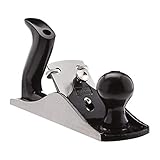

Sections
Our Top Picks


What the Plane Needs to Do
Flooring boards are commonly trimmed for door jambs, last-board fitting, hearths, stairs, or small adjustments at a wall. These cuts are often made after the boards have been machined, so removing 0.5 to 2 mm is preferable to taking a heavy shaving.
A plane for this work should have a rigid sole, a blade that can be sharpened easily, and a mouth opening small enough to reduce tear-out. A comfortable depth-adjustment system also matters because you may switch repeatedly between a fine finishing cut and a heavier trimming cut.
Do not choose a plane simply because it is long. A long sole bridges hollows and helps straighten an edge, but it is awkward when trimming a board already fixed in place. For ordinary site fitting, control is more valuable than maximum length.
Best Plane Types for Flooring Boards
| Plane type | Best use | Advantages | Limitations |
|---|---|---|---|
| Block plane | End grain, short trims, installed boards | Compact, easy to hold, usually low-angle | Short sole can follow a crooked edge |
| No. 4 bench plane | General edge trimming and fitting | Good control, stable, versatile | Heavier and less convenient in tight corners |
| No. 5 jack plane | Removing more material or correcting an edge | Quicker stock removal than a smoother | More effort to control for delicate fitting |
| Jointer plane | Long, visibly bowed board edges | Bridges hollows and produces a straight edge | Expensive, large, unnecessary for most repairs |
| Rabbet plane | Shoulder or rebate work | Can trim to a defined step | Specialist tool, not a general flooring plane |
The Best Choice for Most Buyers
A standard No. 4 bench plane is the sensible first purchase if you fit flooring more than occasionally. Its roughly 240 mm sole is long enough to support the cut without becoming cumbersome. It can trim a board edge, reduce a high spot, ease a door threshold, and perform general workshop work afterwards.
Look for a plane with a flat sole, a blade at least 50 mm wide, and a mouth that can close down to about 1 mm for fine shavings. A plane with a thicker blade is less prone to chatter, especially when trimming hard oak or ash. On cheaper planes, check the casting for twist and make sure the lever cap holds the blade firmly across its width.
Budget versions can be fine. If the sole is reasonably flat and the blade is usable, sharpening and careful adjustment often matter more than the badge. Allow time to flatten the back of the iron and establish a 25- to 30-degree primary bevel. A poor blade setup can make a good plane appear defective.
When a Block Plane Is Better
Choose a low-angle block plane when the work is mainly short end-grain cuts. It is useful for trimming a board to fit around a door lining, easing the exposed end of a stair tread, or removing a small corner from a board that is already nailed down.
The low bed angle, commonly around 12 degrees, gives a lower effective cutting angle with a standard bevel-up blade. This can reduce resistance in end grain, but it does not eliminate tear-out. Cut from both edges toward the centre when possible, and support the board so the last shaving does not break out the corner.
A block plane is not ideal for making a long board edge straight. Its short sole follows local dips, so you may create a wavy edge that looks acceptable until the boards are assembled. It is a useful second plane, not always the best first one.
When to Buy a Jack or Jointer Plane
A No. 5 jack plane earns its space when boards need more than a final trim. If an edge is 2 or 3 mm oversize along much of its length, a jack plane removes material faster than a small smoother. Use a moderate blade camber rather than a dead-straight edge, otherwise the corners can leave tracks.
A jointer plane is justified when you regularly straighten long, bowed edges before joining boards. For occasional flooring installation, it is usually excessive. A straightedge, a sharp No. 4, and patience will handle most boards. If the edge has a severe bow, mark the high areas with pencil and take controlled cuts rather than trying to remove the full bow in one pass.
Setup and Cutting Technique
Start with a sharp blade. On a board edge, begin with a shaving around 0.2 to 0.4 mm thick. A heavy cut increases the chance of tear-out and makes it harder to stop at a layout line. Keep the plane sole flat on the board and use both hands: one on the rear tote or handle and one applying light downward pressure over the front.
Mark the waste side with a pencil or knife line. Take two or three light passes, checking the fit after each pass. Stop when the board slides into place without force; flooring should not be hammered tightly into a wall because seasonal movement needs room.
For a board that is already installed, protect the surrounding finish with masking tape and use a block plane with short strokes. A sharp chisel can remove the last small nib at a corner, but do not use it as a substitute for a plane along a long edge.
Common Failure Modes
Tear-out usually comes from cutting against the grain, using a blunt iron, taking too deep a shaving, or leaving the mouth too open. Reverse the cutting direction, reduce the depth, and close the mouth if the plane allows it.
Chatter indicates vibration. The blade may not be seated properly, the lever cap may be loose, or the cut may simply be too deep. Clean the bed, tighten the assembly, and reduce the shaving before blaming the plane.
A board that fits at one end but not the other may have been planed out of square. Check the edge with a try square and use winding sticks or a straightedge where length makes the error hard to see.
What to Buy
For one flooring project, a sound budget No. 4 or low-angle block plane is enough. Buy the block plane if the cuts are short and mostly end grain; buy the No. 4 if you want one tool that will also handle general carpentry.
If you want a ready-to-use upgrade, compare premium No. 4 bench planes, but do not pay for a heavy professional plane unless you will use it regularly. Spend part of the budget on a reliable waterstone sharpening set. A correctly sharpened inexpensive plane is more useful than an expensive plane with a blunt blade.