What's inside
As an Amazon Associate I earn from qualifying purchases. This post may contain affiliate links at no extra cost to you.
Trimming a hardwood door stop is a small job with little room for error. A few careful plane strokes can ease a tight spot; one heavy cut can leave a hollow, a chipped edge, or a stop that no longer meets the door evenly. The best choice depends on how much wood you need to remove and whether you can take the stop off the jamb.
As an Amazon Associate we earn from qualifying purchases at no extra cost to you.



Sections
Our Top Picks
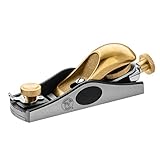
 Rockler Bench Dog No. 60-1/2 Low Angle Block60-1/2 Block Plane6.25 x 1.6 x 6.25 inches0 PoundsCheck on Amazon
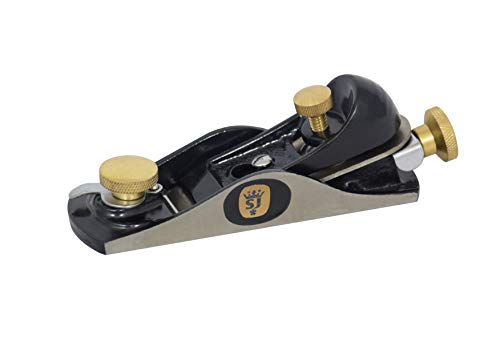 Spear & Jackson CBP95 9 1/2 Carpenters Block9 1/2 In6.89 x 1.77 x 2.76 Inches1.98 poundsCheck on Amazon


Choose a plane for the job
For a stop already fixed to the jamb, a block plane is usually the easiest tool to control. Its short body works in tight spaces, and many models can be set for a fine cut. A standard low-angle block plane is a useful general-purpose choice; a higher-angle version may behave better on difficult, figured grain, though sharpness and a light cut still matter more than the label.
If the stop can be removed, a bench plane gives you more support and makes it easier to keep a long edge straight. A small shoulder plane is useful when trimming a rebate or cleaning a corner, but it is a specialist purchase for most door-stop work. For one ordinary fitting job, an inexpensive block plane that can be sharpened and adjusted is often enough.
Plane comparison
| Plane type | Best use | Trade-off |
|---|---|---|
| Block plane | Small corrections to a stop in place | Short sole is less suited to keeping a long edge straight |
| Bench plane, about No. 4 size | Trimming a stop removed from the jamb; smoothing longer surfaces | Too long and awkward for many tight in-place cuts |
| Shoulder plane | Trimming a shoulder or fitting a rebate | Costs more and has limited use outside precise joinery |
What to look for when buying
Prioritize a blade that can be sharpened, a sole that sits flat, and an adjuster that lets you control the cut without fuss. Check that the iron moves without sideways play and that the mouth can be set reasonably close to the cutting edge. On a block plane, an adjustable mouth helps with fine work, but it does not compensate for a dull blade.
Budget planes can arrive with a rough sole or a blade that needs attention. That is not automatically a reason to reject one: a sole that is broadly flat and a blade that can be sharpened may be perfectly serviceable for occasional door fitting. But if you have to spend hours correcting a poor casting before it takes a shaving, paying more for a better-finished plane can make sense. Compare adjustable-mouth block planes and, if the stop will come off the jamb, No. 4 bench planes.
Prepare the door and stop
First find where the door binds. Close it gently, note the tight areas, and check that the hinge screws are secure and the jamb has not shifted. A plane removes wood; it will not correct a sagging door or loose hinge. Mark the contact points with pencil or a strip of paper, then remove only enough material to give the door a small, even clearance. There is no universal target because seasonal movement and the existing fit vary, but avoid creating a conspicuous gap to solve one isolated rub.
If the stop is painted, score the paint line along the edge you plan to cut. This reduces the chance of peeling paint beyond the cut. Protect the door and floor, and check for nails or fixings before planing. If you remove the stop, label its position and take care not to split the timber while prying it off.
Set the plane for a fine cut
Sharpen the iron before starting. A dull edge crushes hardwood fibers, needs more force, and is more likely to skate or tear out. Set the blade so it takes a thin, continuous shaving—often around a tenth of a millimetre or less for final fitting. Start with a lighter cut than you think you need. If the plane stalls, chatters, or takes thick curls, retract the blade and reset it rather than pushing harder.
On an in-place stop, hold the plane square to the face and keep the sole supported. Work in short, controlled strokes, checking the door frequently. Plane with the grain where possible; reversing direction can lift fibers and chip the edge, especially near the end of a short piece. If the grain changes, reduce the cut or approach from the other direction. A sharp blade and fine setting can help, but strongly reversing grain may still tear out.
Check the fit and avoid common mistakes
After a few strokes, close the door again. Do not try to remove the full correction in one pass: repeated fitting checks are slower than repairing an overcut stop. Keep the trimmed face flat and avoid rounding its edge unless the original profile calls for it. If a long section must remain straight, remove the stop and use a longer plane with the work securely supported.
Common problems are easy to recognize. A chipped edge usually points to an unscored paint line, a blunt iron, or cutting against the grain. A hollow often comes from rocking a short plane or concentrating on the middle of the stop. An uneven gap means too much was removed in one place; a small amount of touch-up may be possible, but a badly overcut stop may need replacement. For a single small rub, a sharp block plane is generally the economical choice. Buy a longer bench plane only when the stop is removable or you have other straightening and smoothing work to justify it.