What's inside
As an Amazon Associate I earn from qualifying purchases. This post may contain affiliate links at no extra cost to you.
Sections
Our Top Picks
 Stanley 1-12-004 Smooth Plane Bailey No. 4Smooth Plane 2 Inch9.88 x 5.67 x 2.68 inches4.2 poundsCheck on Amazon

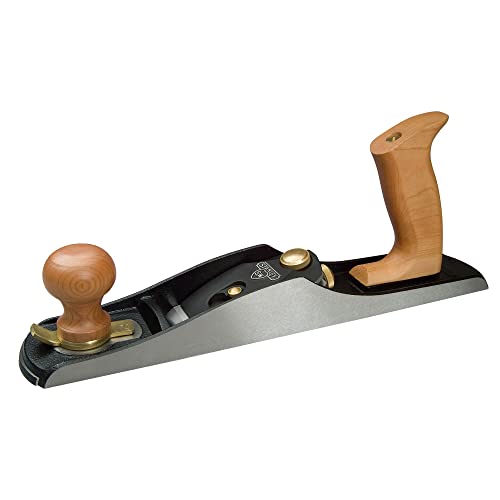

What you need to fit an interior door
For most site fitting, a sharp bench plane and a small block plane cover the work. The bench plane removes material from a long edge; the block plane handles corners, easing, and small adjustments. A powered planer is faster on a badly oversized door, but it is easier to take off too much, tear out veneer, or leave a wavy edge. If the door needs only a few millimetres removed, a hand plane gives better control and does not need power on site.
Before buying, check the doors you fit. Solid timber doors tolerate more planing than hollow-core doors, whose thin faces and lippings can be damaged by aggressive cuts. Many veneered doors have only a limited amount of trimming permitted by the maker. Check the label or manufacturer’s instructions first; no plane can make an over-trimmed door sound again.
As an Amazon Associate we earn from qualifying purchases at no extra cost to you.



Which plane suits the job?
| Plane type | Best use | Trade-off |
|---|---|---|
| No. 4 bench plane | General fitting and smoothing a door edge | A useful all-rounder, but it needs a sharp iron and some setup |
| No. 5 bench plane | Removing more material and working longer edges | Its length helps keep an edge straight; it is heavier to use one-handed |
| Block plane | Small corrections, chamfers, and trimming end grain | Easy to carry, but too short for reliably flattening a long edge |
| Shoulder plane | Fine work on rebates and shoulders | Specialist and usually unnecessary for routine door fitting |
A No. 4 bench plane is a sensible first choice if you want one plane for door edges and general bench work. If you routinely have to take several millimetres off an edge, a No. 5’s longer sole can help keep the result straight. Neither size is automatically better: choose the one you can control comfortably and keep sharp.
A basic block plane is worthwhile for touch-ups, but do not expect it to do the bench plane’s job. For occasional fitting where the cut is tiny, a adjustable block plane may be enough. It costs less and takes little space, but trimming a full door edge with it is slow and can leave dips.
What to look for before buying
Look for a flat sole, a blade that can be sharpened, and adjusters that hold their setting. A low-cost plane can work well after setup, but some arrive with a rough sole, a poorly ground iron, or lateral adjustment that shifts during use. If you are comfortable flattening and sharpening, the cheaper option is often fine. If not, paying more for a plane that arrives ready to cut can save time—though price alone does not guarantee that.
For door fitting, a fine cut matters more than a large mouth or heavy body. The iron should take thin, continuous shavings without chatter. Check that the blade is wide enough for the sole and that the cap iron clamps it securely. A sharp edge is essential: a dull plane needs more force, tends to skip, and is more likely to tear the veneer at the edge.
A controlled way to plane the door
Measure the opening at the top, middle, and bottom, then check the door’s swing and hinge positions. Do not plane to a single measurement if the jamb is out of square. Mark the amount to remove on the door and confirm the required clearance against the door maker’s guidance and local requirements. There is no universal gap that suits every frame or door.
Support the door firmly on padded trestles. Set the plane for a fine cut and test it on scrap of similar material if available. Plane with the grain where possible, taking overlapping strokes along the edge rather than digging in at one spot. Check progress frequently with a straightedge and a test fit. It is easier to take off another shaving than to put back an edge that has become tapered or too narrow.
At the ends of the edge, reduce the chance of breakout by starting from each end and meeting in the middle, or by taking very light end cuts. A small chamfer on the leading edge can help the door clear the jamb, but keep it modest and consistent. If the plane suddenly tears fibres or leaves ridges, stop and check the grain direction, blade sharpness, and cut depth.
Common problems and limits
Hollow-core doors are the main reason to slow down. Their lippings may be narrow, and planing beyond them can expose the core or loosen the face. Some veneered doors also have thin face material that chips if the plane catches an unsupported corner. Follow the trimming limits for the specific door, and do not assume that a solid-looking edge means there is ample material underneath.
Another common mistake is using a short plane to correct a bowed edge. A block plane follows local bumps easily, so repeated spot cuts can make the edge worse. Use a longer bench plane for straightening, and check with a straightedge after a few passes. If the frame itself is badly twisted or the required removal exceeds the door’s permitted trim, adjust the frame or choose a suitable replacement rather than forcing the fit.
Useful supporting kit
A pencil, tape measure, reliable square, straightedge, and stable trestles make the plane more effective. A sharpening stone or honing guide is a better use of money than extra plane accessories if the iron is not cutting cleanly. Carry the plane with its blade retracted, and store it dry; rust on the sole can drag across a finished door edge.
For a first site kit, buy one decent bench plane, learn to sharpen it, and add a block plane only if you regularly need fine corner work. A premium plane can be a pleasure to use, but careful setup and a sharp edge matter more than a costly badge. On doors that need only a small adjustment, a well-set budget plane can do the job neatly.