
Key takeaways
- Compare five grain fillers that level open pores for glass-smooth finishes, with easy spreading, fast drying and coats that take stain evenly.
What's inside
As an Amazon Associate I earn from qualifying purchases. This post may contain affiliate links at no extra cost to you.
Open-grained woods such as oak, ash, mahogany, and walnut show tiny pores under a clear topcoat, and those pores catch light and break up an otherwise flat surface. A grain filler packs those pores level with the surrounding wood so a topcoat can lie flat and shine evenly. The five fillers below cover the main ways to get there: water-based gels that dry clear, a white gel made for paint-grade work, a tintable powder filler, and a walnut-tinted filler that blends with darker woods.


Each pick below was checked against a live listing with a real ASIN, and the notes spell out where each one fits best. Match the filler to your wood, your stain plan, and the topcoat you intend to use, and the glass-smooth result follows from the prep rather than from extra coats of finish.
Sections
Quick Picks
As an Amazon Associate we earn from qualifying purchases
| Product | Best for | Key spec |
|---|---|---|
| Goodfilla White Wood and Grain Filler | Paint-grade and stain-grade pore filling | Water-based, 8 oz, stainable and tintable |
| Aqua Coat White Cabinet Wood Grain Filler Gel | Cabinets and painted surfaces | Water-based gel, 16 oz, dries in 30 to 60 minutes |
| Aqua Coat Clear Wood Grain Filler Gel | Clear topcoats over open grain | Water-based clear gel, 16 oz, low odor |
| Deuvuo Walnut Wood Filler | Walnut and dark woods | Walnut tint, 9.87 oz, stainable and sandable |
| Timbermate Maple/Beech/Pine Hardwood Wood Filler | Pale woods and thinned grain filling | Water-based, 8 oz, zero VOC |
How to Choose
Match the filler to the wood and the finish
Open-grained woods such as oak, ash, mahogany, and walnut hold deep pores that a topcoat alone cannot level, while close-grained woods such as maple, birch, and cherry usually need no filler at all. Begin by naming the wood and the finish you plan to use. A clear topcoat calls for a clear or tinted filler that disappears into the grain, while a painted surface calls for a white filler you can see during application. When the filler and the finish pull in the same direction, the surface comes out flat with fewer coats and less sanding.
Water-based gels versus oil-based paste fillers
Water-based gels spread with a blade or squeegee, clean up with water, and dry fast enough for a second coat in the same session, which suits oak and ash tabletops and cabinets. Oil-based paste fillers give a longer working time and take stain mixed into the filler, which suits large surfaces where color matching matters. Gels dry clear and suit clear topcoats, while pastes carry pigment and suit tinted work. Pick the base that matches your schedule and your stain plan rather than the one with the longest list of claims.
Dry time, coats, and sanding between coats
Most grain fillers need two or three thin coats, with a light sanding between each one, because a single thick coat shrinks as it dries and leaves the pores half full. Spread the filler across the grain, scrape off the excess at an angle, and let each coat dry fully before sanding with fine grit. Rushing the dry time traps moisture under the next coat and shows up later as dull patches under the topcoat. Patience between coats costs an hour and saves a full redo.
Color, tinting, and stain compatibility
A filler that takes stain evenly is the difference between pores that vanish and pores that stand out as dark lines. Clear fillers suit work where the stain color is still undecided, since they add almost no color of their own. White fillers suit painted work, and walnut or mahogany tints suit dark woods where the fill should read as grain rather than as a patch. Mix tint into a neutral filler a little at a time and check the dried color on a scrap piece before committing to the whole surface.
The 5 Best Options
Goodfilla White Wood and Grain Filler, 8 oz
Goodfilla White is a water-based filler that arrives ready to spread and works across paint-grade and stain-grade jobs. It packs open pores without shrinking, sinking, or cracking, and it accepts stain, paint, pigment, tint, or dye mixed in before application, so one jar covers both pale and tinted work. The white color makes it easy to see where the fill has gone, which helps on cabinet doors and drawer fronts headed for paint. Leftover filler rehydrates with water instead of hardening in the jar, so little goes to waste between jobs.
Specs
- Water-based formula
- 8 oz container
- White color
- Stainable, tintable, and sandable
- Zero-waste formula
- Non-toxic
- Made in the USA
- Does not shrink, sink, or crack
- Mixes with any pigment, tint, stain, or dye
Best for: Paint-grade cabinets and stain-grade furniture where pores need one even fill.
Watch out for: White shows through a clear topcoat on dark wood, so keep it for painted work or tint it to match.
Aqua Coat White Cabinet Wood Grain Filler Gel, 16 oz
Aqua Coat White is a water-based gel built for cabinets and other paint-grade surfaces, where visibility during application matters as much as the final flatness. The white gel shows exactly where it has been spread, and it lays down a visible, even layer that sands smooth once dry. It dries in 30 to 60 minutes, carries low odor and low VOC, and cleans up with water. Use it where paint will cover the fill, and the pores disappear under the topcoat instead of telegraphing through it.
Specs
- Water-based gel
- 16 oz (1 pint)
- Model 130-700-P
- UPC 653341611710
- Dry time of 30 to 60 minutes
- Low odor and low VOC
- Sandable and paintable
- White, made for paint-grade work
Best for: Cabinet doors and drawer fronts headed for paint.
Watch out for: White gel is easy to see during application, which helps coverage, but it must be sanded flush before paint or it will show as a ridge.
Aqua Coat Clear Wood Grain Filler Gel, 16 oz

Aqua Coat Clear is the companion gel for work that will carry a clear topcoat, since it dries crystal clear and leaves the wood tone untouched. Its small particle size lets the gel sink into open pores on oak, ash, mahogany, walnut, and birch, sealing them so the topcoat does not soak in unevenly. It works on raw wood or after staining, mixes with water-soluble pigments and dyes, and sands, stains, and paints cleanly. Two or three thin coats with light sanding between them give the flat base a glossy finish needs.
Specs
- Water-based clear gel
- 16 oz (1 pint)
- Model Aqua Coat Pint
- UPC 748252493613
- Item weight 1.14 lb
- Dimensions 3.55 x 3.55 x 4.2 inches
- Coverage of about 4.73 to 5.67 square meters per pint
- Low odor and low VOC
- Sandable, stainable, and paintable
- Glossy finish
Best for: Tabletops, desktops, and guitars where the wood tone must stay visible under a clear topcoat.
Watch out for: Clear gel is hard to see while wet, so work in good light and check each section before it dries.
Deuvuo Walnut Wood Filler, 9.87 oz

Deuvuo Walnut is a tinted filler for dark woods, where an untinted fill would read as a pale scar across the grain. The walnut tone blends with walnut, mahogany, and other dark species, and the filler accepts stain, paint, and dye for closer matching. It spreads smoothly, dries quickly, and sands to a flat surface without shrinking, sinking, or cracking. One jar covers furniture, floors, cabinets, tables, and doors, which makes it a useful single fill for a whole room of dark woodwork.
Specs
- Walnut color
- 9.87 oz
- Paintable, stainable, and sandable
- Quick drying
- Does not shrink, sink, or crack
- Mixes with pigment, tint, stain, or dye
- For furniture, floors, cabinets, tables, and doors
Best for: Walnut furniture and dark wood repairs where a tinted fill blends with the grain.
Watch out for: One walnut tone cannot match every dark wood, so check the dried fill against the surrounding wood before topcoating.
Timbermate Maple/Beech/Pine Hardwood Wood Filler, 8 oz
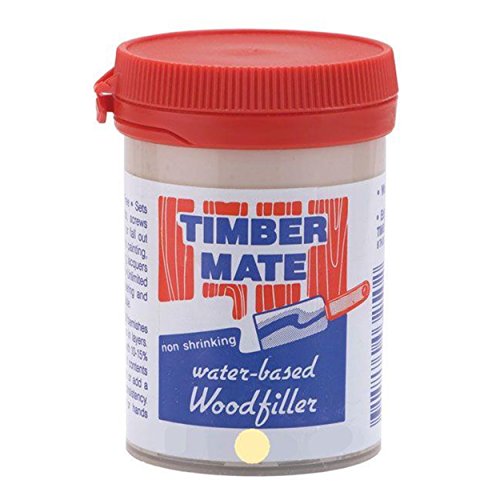
Timbermate Maple, Beech, and Pine is a water-based filler that mixes with water to any consistency, from a stiff paste for edges to a thin cream for pore filling. That flexibility makes it the pick for pale woods, where a pre-matched maple, beech, and pine shade sits close to the surrounding grain and takes stain rather than sitting on top of it. It dries fast, sands to a feather edge, and any leftover filler goes back in the jar with a few drops of water. Keep it indoors, since it is an interior filler.
Specs
- 8 oz jar
- Water-based
- Maple, beech, and pine shade
- Fast drying
- Part of a 13-shade range matched to common woods
- Zero VOCs
- No acrylic, latex, or solvents
- Re-wettable, leftover filler goes back in the jar
- Interior use
Best for: Pale woods such as maple, beech, and pine, thinned with water for pore filling.
Watch out for: Thin it to a creamy consistency for grain filling; used straight from the jar it behaves as a hole filler rather than a pore filler.
Which One Fits Your Situation
Painting cabinets or trim
Choose a white filler for anything headed for paint. White shows where it has been spread, sands flush, and disappears under primer and paint, while a clear filler hides on the surface and leaves missed pores behind. Goodfilla White and Aqua Coat White both fit here, with the gel suiting large flat doors and the Goodfilla suiting small repairs and tinted work.
A clear topcoat over figured wood
Choose a clear gel when the wood itself is the showpiece and the stain color is still open. Clear filler seals the pores without adding color, so figured oak, ash, or walnut keeps its tone under lacquer or varnish. Aqua Coat Clear fits here, with two or three thin coats and a light sanding between them giving the flat base a glossy topcoat needs.
Matching dark wood such as walnut
Choose a tinted filler when the wood is dark and a pale fill would stand out. A walnut-tinted filler blends with the grain and accepts stain for closer matching, while a clear filler on dark wood can leave pale dots in deep pores. Deuvuo Walnut fits here, and Goodfilla tinted with walnut stain covers the same ground when a custom tone is needed.
Small repairs and instrument work
Choose a small jar and a thin, smooth fill for guitars, small boxes, and touch-ups. An 8 oz jar keeps waste down, and a filler that sands flush will not leave ridges on an instrument neck or body. Timbermate thinned with water and Deuvuo Walnut both fit here, with the Timbermate suiting pale woods and the Deuvuo suiting dark ones.
Common Mistakes
- Spreading filler over a dusty surface: dust under the fill blocks adhesion and shows as dark specks under a clear topcoat, so vacuum and wipe the wood clean before the first coat.
- Laying on one thick coat: a thick coat shrinks as it dries and leaves pores half full, while two or three thin coats with light sanding between them fill level.
- Using white filler under a clear topcoat on dark wood: white fill in deep pores reads as pale dots, so match the filler color to the wood or use a clear gel.
- Topcoating before the filler dries through: a topcoat over damp filler traps moisture and turns cloudy, so wait for the full dry time on the label before sanding and sealing.
- Skipping the sand-back: filler left proud of the surface shows as a ridge under gloss, so sand flush with fine grit and check the surface in raking light before the topcoat.
Frequently Asked Questions
Can I use a grain filler on any wood?
Open-grained woods such as oak, ash, mahogany, and walnut gain the most, since their pores are deep enough to catch light under a topcoat. Close-grained woods such as maple, birch, and cherry usually need no filler, though a thin coat can still even out the surface before a gloss finish. Match the filler to the wood rather than using one filler for every board.
How many coats of grain filler do I need?
Two or three thin coats cover most open-grained woods, with a light sanding between coats to keep the surface level. Deep pores in oak or ash may need a third coat, while a single thin coat suits light grain on walnut. Spread each coat across the grain, scrape off the excess, and let it dry fully before the next one.
Should grain filler go on before or after stain?
Either order works, and the choice depends on the filler. Clear gels go on raw wood or after staining, since they add almost no color of their own. Tinted fillers usually go on before stain, with stain mixed into the filler for color matching. Whichever order you choose, let the filler dry fully and sand it flush before the topcoat goes on.
What grit should I sand with between coats?
Fine grit suits the sanding between filler coats, since the goal is to level the fill without cutting into the wood around it. A 220 grit pass after the first coat and a 320 grit pass before the topcoat cover most jobs. Sand lightly, with the grain, and wipe the dust away before the next coat so the fill bonds cleanly.
Related guides
More from Amazon
Programs that pair well with the guide above. Offers and eligibility are set by Amazon and may change.
A free business account with business pricing and bulk-buying tools for work, shop or home office.
Create a business accountFree shipping on eligible items, Prime Video and more. Eligible new members can start with a free trial.
Start a Prime free trialAudiobooks and podcasts to listen to on the go. Eligible new members can start with a free trial.
Try Audible freeAd-free music streaming. Eligible new subscribers can start with a free trial.
Try Music Unlimited freeAs an Amazon Associate we earn from qualifying purchases.

Write Your Review
No reviews yet. Be the first to share your experience!