
Key takeaways
- Five dust extractors for workshops and clean jobsites, from a compact cordless unit to 11-gallon HEPA machines with auto-clean and tool actuation.
What's inside
- Quick Answer
- 1. DEWALT DWV010 — Best All-Round Dust Extractor
- 2. Bosch VAC090AH — Best Dust Extractor for Silica Compliance
- 3. Makita VC4210L — Best Quiet Full-Size Dust Extractor
- 4. Festool CT 15 E HEPA — Best Compact Premium Dust Extractor
- 5. Makita XCV11Z — Best Cordless Dust Extractor
- How to Choose a Dust Extractor
- Who Should Skip a Dust Extractor
- FAQ
- Final Verdict
- Product and ASIN Reference
As an Amazon Associate I earn from qualifying purchases. This post may contain affiliate links at no extra cost to you.
Sanding, sawing, and routing throw fine dust into the air before you notice it on the floor. A shop vacuum moves the mess around, but a true dust extractor connects straight to the tool, captures dust at the source, and traps the finest particles in a sealed HEPA filter. The result is cleaner air, cleaner cuts, and far less sweeping. The five extractors below cover the full range, from a cordless two-gallon unit you can carry one-handed to an 11-gallon machine built for all-day sanding in occupied homes. Each one is a portable, tool-connected extractor with HEPA filtration, not a stationary dust collector or a general-purpose shop vacuum.
As an Amazon Associate, we earn from qualifying purchases.
Sections
- Quick Answer
- 1. DEWALT DWV010 — Best All-Round Dust Extractor
- 2. Bosch VAC090AH — Best Dust Extractor for Silica Compliance
- 3. Makita VC4210L — Best Quiet Full-Size Dust Extractor
- 4. Festool CT 15 E HEPA — Best Compact Premium Dust Extractor
- 5. Makita XCV11Z — Best Cordless Dust Extractor
- How to Choose a Dust Extractor
- Who Should Skip a Dust Extractor
- FAQ
- Final Verdict
- Product and ASIN Reference
Quick Answer
For most workshops, the DEWALT DWV010 is the best all-round dust extractor, with 155 CFM, automatic filter cleaning, and tool actuation in a compact 8-gallon body. If you want the quietest full-size machine, pick the Makita VC4210L. For cordless freedom on small jobs, the Makita XCV11Z is the cordless pick here. The Bosch VAC090AH and Festool CT 15 E cover silica compliance and compact premium build.
1. DEWALT DWV010 — Best All-Round Dust Extractor
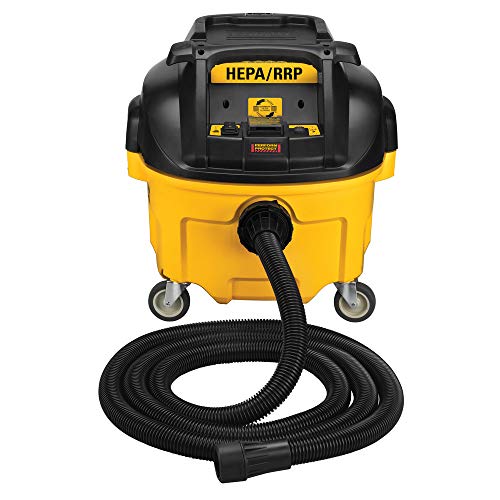
The DWV010 is the workhorse of this list. Its 15-amp motor delivers 155 CFM, and the automatic filter clean pulses every 30 seconds so suction stays steady through long sanding sessions. Two HEPA filters are included, and the unit meets EPA lead-renovation rules for HEPA vacuums when fitted with DWV9330 filters. A tool-actuated outlet turns the extractor on and off with the connected tool.
At 21 pounds with heavy-duty wheels and casters, the DWV010 rolls easily between a miter saw and a workbench, and the 15-foot anti-static hose reaches across a small shop without dragging. The 8-gallon tank is large enough for a full afternoon of sanding yet small enough to empty without a struggle. Confirm the listing matches model DWV010 and includes the HEPA filters before ordering.
Specs
- Capacity: 8 gallons
- Airflow: 155 CFM from a 15-amp motor
- Filtration: HEPA, two filters included, auto-clean every 30 seconds
- Hose: 15-foot anti-static hose with universal connector
- Tool actuation: yes, with variable suction control
- Weight: 21 pounds
2. Bosch VAC090AH — Best Dust Extractor for Silica Compliance

Bosch built the VAC090AH around jobsite silica rules. It is part of the Bosch PRO+GUARD system, designed to help users move toward OSHA Silica Table 1 compliance, with a HEPA flat filter that captures 99.97 in 100 particles at 0.3 microns and larger. The automatic filter clean taps the filter every 15 seconds, which keeps suction near its 150 CFM maximum even as fine concrete and drywall dust load the filter.
Power tool activation lets the connected tool switch the extractor on and off, and the Power Broker dial balances power between the extractor and the tool on a shared circuit. The 9-gallon tank handles wet and dry debris, and the 9.85-foot hose, bend nozzle, and power tool adapter come in the box. At 28 pounds and 60 decibels, it is one of the quieter corded extractors in its class. If your work involves concrete, masonry, or tile, this is the extractor shaped most directly around that job.
Specs
- Capacity: 9 gallons, wet and dry
- Airflow: 150 CFM, 97 inches of static water lift
- Filtration: HEPA flat filter, auto-clean every 15 seconds
- Hose: 9.85-foot vacuum hose with bend nozzle and tool adapter
- Tool actuation: yes, with Power Broker dial
- Weight: 28 pounds
3. Makita VC4210L — Best Quiet Full-Size Dust Extractor

The VC4210L is the largest and quietest corded extractor in this guide. Its 12-amp motor produces 148 CFM and 92 inches of water lift, while the sound-absorbing motor chamber holds the working sound level to 60 dB(A), a real difference when you are sanding in a home where people are still living. The 11-gallon tank, with 9 gallons of wet capacity, swallows a full day of floor sanding before it needs emptying.
A three-stage filtration system pairs a main nano filter with a certified HEPA filter, and automatic filter cleaning keeps airflow steady without manual intervention. The tool-activated outlet switches the extractor with the connected tool, and the Auto-Start Wireless System lets compatible Makita tools trigger it wirelessly with a separate adapter. The 1-1/4-inch by 13-foot anti-static hose and 24.6-foot cord give generous reach, and wide-set rear wheels keep the 35-pound body stable on uneven floors. One flag: the Amazon listing showed no featured offers at last crawl, so confirm availability with the seller before ordering.
Specs
- Capacity: 11 gallons gross, 9 gallons wet
- Airflow: 148 CFM, 92 inches of water lift
- Filtration: three-stage with certified HEPA filter, automatic filter cleaning
- Hose: 1-1/4-inch by 13-foot anti-static hose
- Tool actuation: yes, plus AWS wireless capability with separate adapter
- Weight: 35 pounds
4. Festool CT 15 E HEPA — Best Compact Premium Dust Extractor

The CT 15 E is the smallest extractor in the Festool line, built for woodworkers who want Festool filtration and build quality without hauling a full-size unit. The 15-liter container, about four gallons, holds enough for sanding and routing sessions, and the variable suction dial lets you back off the airflow for delicate work such as sanding veneer.
A touch-operated control panel works even with gloves on, and the tool-triggered outlet switches the extractor with the tool. The HEPA filter meets EPA renovation guidelines for lead-safe work, and the flat top accepts Festool Systainers, so the extractor doubles as a rolling cart. At under 24 pounds, it is easy to carry up a flight of stairs or load into a van. The compact tank is the trade-off: for heavy drywall or floor sanding, the larger machines above will go longer between emptying.
Specs
- Capacity: 15 liters, about 4 gallons
- Airflow: variable suction with touch control
- Filtration: HEPA filter, certified for lead-safe renovation work
- Hose: 11.5-foot suction hose, 27 mm diameter
- Tool actuation: yes, with tool-triggered outlet
- Weight: under 24 pounds
5. Makita XCV11Z — Best Cordless Dust Extractor

The XCV11Z is the only battery-powered extractor here, and it fills a gap the corded machines cannot: quick dust collection away from an outlet. Its brushless motor delivers 57 CFM and 27 inches of water lift from any 18V LXT battery, with up to 60 minutes of runtime from a single 5.0Ah battery. The two-gallon HEPA canister captures 99.97 in 100 particulates 0.3 microns and larger, which makes it a genuine dust extractor rather than a handheld vacuum with a fine filter.
At 10.1 pounds with a 5.0Ah battery, it hangs from a shoulder strap or sits on a bench beside a router, and it converts into a blower for clearing a work surface. The filter cleaning system keeps suction steady as the canister fills. It ships as a bare tool: battery and charger are sold separately, so factor that in if you are not already on the Makita 18V platform. Availability on Amazon has been uneven, with third-party sellers filling the gap.
Specs
- Capacity: 2 gallons
- Airflow: 57 CFM, 27 inches of water lift
- Filtration: HEPA cartridge filter with filter cleaning system
- Power: 18V LXT battery, brushless motor, up to 60 minutes with 5.0Ah battery
- Tool actuation: no, manual operation with blower conversion
- Weight: 10.1 pounds with 5.0Ah battery
How to Choose a Dust Extractor
Match the extractor to the dust you make. Fine sanding dust and silica dust demand HEPA filtration and sealed airflow; coarse chips from a planer or jointer belong in a stationary collector, not a portable extractor. Airflow, measured in CFM, decides how well the extractor keeps up: 55 to 60 CFM suits a random-orbit sander, while 140 CFM and above keeps pace with a track saw or a floor sander.
Tank size decides how often you stop to empty. A two-gallon canister suits trim work and spot sanding, while an 8- to 11-gallon tank suits full days of sanding or drywall. Automatic filter cleaning matters: fine dust clogs a filter fast, and a machine that cleans its own filter every 15 to 30 seconds holds suction.
Tool actuation changes daily use most: the extractor switches on and off with the tool, so you never forget to run it, and the shop stays quiet between cuts. Hose diameter matters too: a 36 mm hose moves more air for large tools, while a 27 mm hose suits sanders and routers. Finally, check the filter standard. A true HEPA filter captures 99.97 in 100 particles at 0.3 microns; a filter described only as fine or high-efficiency is not the same thing, and it will not satisfy silica or lead-renovation rules.
Who Should Skip a Dust Extractor
A portable dust extractor is the wrong tool for a stationary shop full of large machines. If your planer, jointer, and table saw run all day, a stationary dust collector with a four-inch hose and a large chip separator will serve you better.
Skip the corded full-size models if you only need occasional cleanup. A two-gallon cordless extractor covers quick bench cleanup without the weight, the hose, and the emptying routine of an 8- to 11-gallon machine. Renters and apartment woodworkers should also weigh noise and size.
Finally, skip any extractor that lacks HEPA filtration if your work involves silica dust, lead paint, or fine drywall dust. Filtration is the whole point of this category, and a machine without a sealed HEPA stage is a shop vacuum with a different label.
FAQ
Can a dust extractor replace a shop vacuum?
For tool-connected dust collection, yes, and it does the job better, because it captures dust at the source with sealed HEPA filtration. For general floor cleanup, wet spills, and large debris, a shop vacuum is still the more practical tool.
Do I need a HEPA filter for wood dust?
Wood dust alone does not always require HEPA filtration, but fine sanding dust, MDF dust, silica dust, and lead paint dust do. A HEPA filter also keeps the finest particles out of the air you breathe.
What size dust extractor do I need for a random-orbit sander?
A two-gallon cordless extractor or a compact four-gallon unit is enough for a random-orbit sander, since the tool produces fine dust at a modest rate. Move up to 8 gallons or more only if you sand for hours at a time.
Why does my dust extractor lose suction?
The usual cause is a loaded filter or a full bag, which is why automatic filter cleaning matters. Check the hose and tool adapter for clogs, confirm the filter is seated and sealed, and empty the tank before it reaches the fill line.
Final Verdict
The DEWALT DWV010 is the safest single choice for most workshops: strong airflow, automatic filter cleaning, tool actuation, and a tank that suits a full day. The Bosch VAC090AH is the pick when silica compliance shapes the job, and the Makita VC4210L is the pick when quiet operation in an occupied home matters most. The Festool CT 15 E suits woodworkers who want premium build in a compact body, while the Makita XCV11Z is the choice for cordless work away from an outlet. Match the filter class and the airflow to the dust you actually make, and confirm the model number before ordering.
Product and ASIN Reference
| Product | ASIN |
|---|---|
| DEWALT DWV010 HEPA Dust Extractor, 8-Gallon | B00OA02TZ0 |
| Bosch VAC090AH Dust Extractor, 9-Gallon | B076CSZXY3 |
| Makita VC4210L HEPA Dust Extractor, 11-Gallon | B07ZMN75V2 |
| Festool CT 15 E HEPA Dust Extractor | B09YJ4BDK8 |
| Makita XCV11Z 18V LXT HEPA Dust Extractor, Tool Only | B07M8JTDNS |
Related guides
More from Amazon
Programs that pair well with the guide above. Offers and eligibility are set by Amazon and may change.
A free business account with business pricing and bulk-buying tools for work, shop or home office.
Create a business accountFree shipping on eligible items, Prime Video and more. Eligible new members can start with a free trial.
Start a Prime free trialAudiobooks and podcasts to listen to on the go. Eligible new members can start with a free trial.
Try Audible freeAd-free music streaming. Eligible new subscribers can start with a free trial.
Try Music Unlimited freeAs an Amazon Associate we earn from qualifying purchases.

Write Your Review
No reviews yet. Be the first to share your experience!