What's inside
As an Amazon Associate I earn from qualifying purchases. This post may contain affiliate links at no extra cost to you.
A chisel carried loose in a carpenter’s belt can lose its edge against a tape clip, nail, or another tool. A pouch prevents most of that damage, but only if it holds the blade securely without making the chisel awkward to draw. The right choice depends on how many chisels you carry, whether they’re kept in a set or selected one at a time, and how often you move around the site.
As an Amazon Associate we earn from qualifying purchases at no extra cost to you.


Sections
Our Top Picks
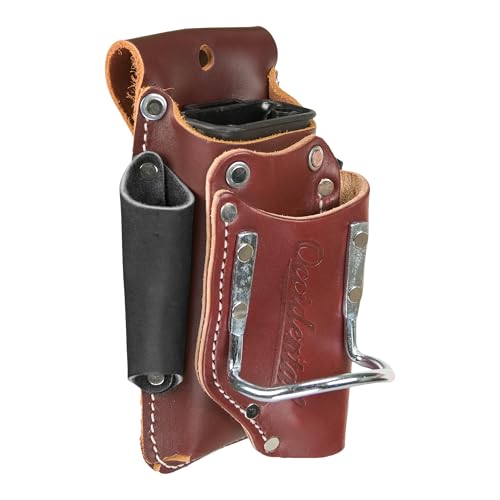
 Occidental Leather Clip-On 4 in 1 Tool/Tape Holder1 PACK7.95 x 4.65 x 4.02 Inches0.45 PoundsCheck on Amazon

What a chisel pouch needs to do
A useful pouch covers the cutting edge, keeps the tool from falling out when you bend or climb, and lets you identify and draw the chisel without fumbling. The blade should not rub against metal hardware or another blade. Look for individual sleeves or dividers, a closed bottom, and enough retention that an inverted shake won’t send the chisel onto the floor.
Fit matters more than the pouch’s stated capacity. A wide pocket may hold several chisels, but if they knock together, their edges can chip. Narrow sleeves are safer, though they can be slow to load and may not fit chisels with unusually wide blades or bulky handles. Check the pocket dimensions against your actual tools, including handle width—not just the blade size.
Pouch styles compared
| Style | Best for | Main trade-off | Check before buying |
|---|---|---|---|
| Individual leather or canvas sleeves | Carrying a few frequently used chisels | Easy access, but limited capacity | Sleeve length, fit, and edge coverage |
| Multi-pocket belt pouch | Keeping several chisels ready on the belt | More capacity adds bulk and weight | Separate pockets and secure retention |
| Roll-up tool wrap | Transporting a full set between jobs | Protects well in a bag but is slower to access on the belt | Tie closure and pocket depth |
| Individual plastic guards | Low-cost edge protection in a toolbox | Protects the edge but may not attach to a belt | Guard fit and whether it stays on |
Choosing material and construction
Leather is durable and can hold its shape, but thick, stiff leather may be uncomfortable against the hip until it breaks in. It can also stretch with use, so a sleeve that starts out snug may loosen. Inspect stitching around the mouth and bottom: those areas take the most stress as tools are drawn and replaced. Rivets can reinforce a pouch, but make sure they cannot contact the blade.
Canvas and synthetic fabric are usually lighter and often cost less. They work well for ordinary site use if the pockets are reinforced and the base is closed. Thin fabric can wear through at the corners, especially where sharp blade corners repeatedly press against it. For frequent daily use, compare seam construction and pocket lining rather than choosing by material label alone. Browse leather carpenter chisel pouches or canvas belt pouches by the dimensions and pocket layout of your own chisels.
Some belt pouches use open-top pockets for fast access. That can be fine when working at a bench or on level flooring, but it’s a poor match for climbing, bending, or working overhead. A retaining flap or snug pocket reduces the chance of losing a chisel. It may take an extra second to stow the tool, but that is generally a good trade when moving around a site.
Capacity and belt fit
Carry only what you use. Two or three chisels in a compact holder are easier to manage than a full set hanging at your side, and fewer tools mean less chance of blade-to-blade contact. If you need a broad range of sizes, a roll is a practical way to protect the set in a tool bag; move only the working chisels to a belt pouch. A chisel roll for a full set is usually better for transport than for rapid on-belt access.
Check how the pouch attaches to your belt. A narrow loop may twist under the weight of several steel chisels, while a wide tunnel can be awkward to move between belts. Try it on with the rest of your kit if possible. The pouch should sit where you can reach it without colliding with a tape measure, hammer, or plane. If it swings when you walk, reduce the load or choose a more stable attachment.
Preventing edge damage in use
Before putting a chisel away, brush off grit and wood chips. Fine debris can hold moisture against the steel or abrade the edge as the tool moves. Store each blade in its own pocket with the cutting edge fully covered. Don’t push a chisel into a sleeve if the edge catches; stop and check whether the pocket is too narrow, too shallow, or obstructed.
A common failure is a blade that gradually cuts through the pouch bottom. Inspect the fabric or leather regularly, especially if you carry wide chisels. Another is a loose guard that stays in the pouch when the chisel is pulled out. Test guards by drawing each tool several times; a plastic cap that falls off easily protects little once the tool is on the belt.
For occasional work, a modest canvas holder or fitted edge guards may be enough. Spend more on a dedicated pouch when you carry chisels daily, work from ladders, or need quick access without risking a dropped tool. Whatever the price, the key test is simple: each edge stays covered, tools don’t touch one another, and the pouch remains secure through normal movement.