What's inside
As an Amazon Associate I earn from qualifying purchases. This post may contain affiliate links at no extra cost to you.
A block plane is useful when a door is only a little too tight: a few shavings can ease a sticking edge without setting up a power tool. It is not the right fix for a badly out-of-square door or a large amount of material. For quick adjustments, the useful differences are blade adjustment, mouth opening, grip, and how easily the plane stays under control at the end of a stroke.
As an Amazon Associate we earn from qualifying purchases at no extra cost to you.


Sections
Our Top Picks
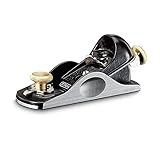
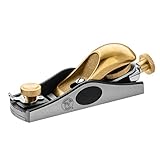
 Rockler Bench Dog No. 60-1/2 Low Angle Block60-1/2 Block Plane6.25 x 1.6 x 6.25 inches0 PoundsCheck on Amazon


What to look for in a door-edge plane
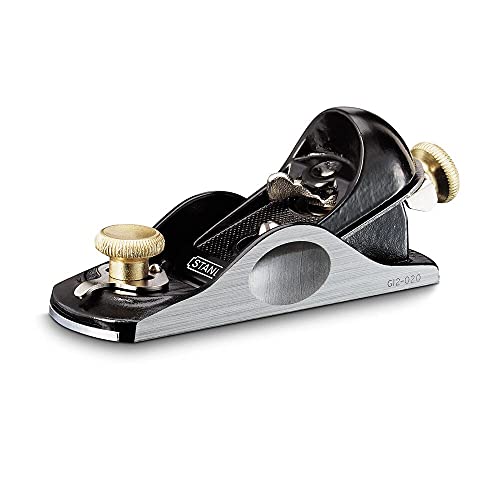
For most door work, choose a low-angle block plane with an adjustable mouth and a blade you can set finely. A low cutting angle is helpful on end grain, which is commonly exposed when trimming the top or bottom of a door. An adjustable mouth lets you open the throat for a quicker cut or close it to reduce tear-out on figured or splinter-prone wood.
Fit and adjustment matter more than extra features. The iron should sit securely, and the depth adjuster should make small changes predictable. Check that the lateral adjustment moves the blade across the mouth without fuss. A plane that is hard to adjust can remove too much before you realize it.
A standard block plane is small and easy to carry, but its short sole can follow a waviness in the edge instead of correcting it. If the door needs more than a light touch-up, a longer plane or a different repair method may leave a straighter edge.
Block plane options compared
| Type | Best for | Trade-off |
|---|---|---|
| Adjustable low-angle block plane | Everyday door fitting, including end grain | Costs more than a basic fixed-mouth plane; still too short for straightening a long edge |
| Basic block plane | Occasional, small adjustments on straight-grained wood | Less control over mouth opening and sometimes less convenient blade adjustment |
| Longer bench plane | Truing an edge that is uneven over much of its length | Bulkier to handle on a hung door and slower to set up for a tiny correction |
For a first plane used mainly on doors, an adjustable low-angle model is the versatile choice. Browse adjustable low-angle block planes and compare blade adjustment, mouth adjustment, and the feel of the body—not just the listed cutting angle. If the plane will see only occasional use and the door edge is plain, a basic block plane can be enough; a standard block plane is a reasonable lower-cost starting point.
Check the fit before planing
Find exactly where the door binds before taking it off. Close it slowly and look for a tight spot, or use a strip of paper to locate contact. Check the hinges and frame as well: a loose hinge screw or a shifted stop can mimic an edge that needs trimming. Mark the high spot with pencil and note how much clearance the door has elsewhere.
Take the door off if you can work more safely and steadily with it supported on a bench or padded trestles. If it stays hung, keep the plane controlled and avoid leaning hard against the door. Planing a thin edge while the door moves can cause a gouge, a chipped corner, or a cut into the finish.
Start with a small target. A clearance of roughly 1/16 inch along a side is a useful reference for many interior doors, but existing gaps, hardware, and the door’s movement through the seasons matter. Do not remove material simply to make every gap match if that would expose the frame or create a new problem.
Set the plane and take controlled shavings
Make sure the iron is sharp. A dull edge needs more force and is more likely to tear fibers or skid. Retract the blade, then advance it until a very fine, even shaving appears across the mouth. Check that the blade projects equally from side to side; a skewed iron can leave a stepped edge.
For the long-grain side of a door, plane with the grain where possible. Work from each end toward the middle, or plane toward the middle from both ends, to reduce the chance of splitting the far corner. Keep strokes short near the ends and support the door so the edge does not flex. On an end-grain cut at the top or bottom, a low-angle plane helps, but still use light strokes and support the exit edge.
After a few passes, reinstall the door or test its fit in place. A block plane can remove wood quickly once its iron is set too deep. Check frequently rather than trying to reach the final clearance in one run. When the fit is right, ease the sharp arris with one light pass; a small chamfer helps protect the corner from splintering.
Common problems and when to stop
If the plane chatters, the iron may be dull or projecting too far. If it digs in at the start or end of a stroke, reduce the cut and keep the sole flat as you begin and finish. Tear-out usually means the grain is running against the cut, the mouth is too open, or the iron needs sharpening. Close the mouth if adjustable, take thinner shavings, or change direction where the grain allows.
Stop and reassess if the edge needs more than about 1/8 inch removed over a long stretch, or if the door is rubbing because it has sagged. A short plane may round or hollow the edge instead of producing a straight one, and removing too much can leave an uneven gap. Correct hinge alignment or use a longer plane for substantial edge work. If the door is painted, sealed, or veneered, check how much material can safely come off before cutting through the surface layer.
Keep the plane iron covered when it is not in use, and do not set the plane down on the blade. A simple, sharp block plane is enough for most small door-edge corrections; paying extra is worthwhile mainly when smoother adjustment and a better-controlled mouth will save time on repeated work.