
Our Short List of 3

- Best for: Crews tying their first automatic grid on residential slabs.
- 12V lithium-ion batteries, 1800mAh capacity
- Tying wire diameter: 0.8mm
- Wire length: more than 110 m
- Applicable steel strapping scope: 8mm – 34mm

- Best for: Heavy foundation mats and columns with #6 and #7 bar pairs.
- Twin-wire feed with 19-gauge tie wire
- Ties combined bar up to #7 x #7
- Item weight: 10 lb
- Package dimensions: 21.05 x 15.65 x 5.6 in

- Best for: Quick manual ties on small footings, repairs, and tight spots.
- Hand powered with a reinforced internal spring
- Maximum diameter: 0.5 in
- Soft black knurled handle for an ergonomic grip
- Product dimensions: 31.5 x 3.56 x 3.56 cm
All 5 Picks at a Glance
| Product | Specs | Action |
|---|---|---|
| Meiney Automatic Rebar Tie Gun 8-34mm |
| Check price on Amazon |
| MAX RB443T TwinTier Rebar Tying Tool |
| Check price on Amazon |
| NEIKO 61025A Automatic Rebar Wire Twister |
| Check price on Amazon |
 NEWTRY Cordless Rebar Tie Gun Pro 21V |
| Check price on Amazon |
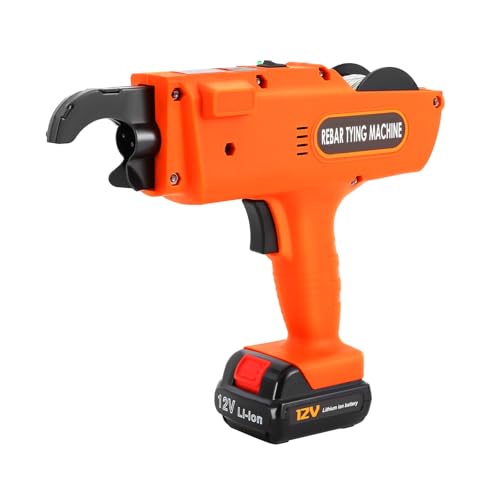 Futchoy Automatic Rebar Tier 8-34mm |
| Check price on Amazon |
Key takeaways
- Compare five rebar tying tools that twist wire ties fast and tight, with automatic heads, comfortable grips and smooth feeds for rebar work.
What's inside
As an Amazon Associate I earn from qualifying purchases. This post may contain affiliate links at no extra cost to you.
Tying rebar by hand eats up hours on any slab, footing, or wall, and loose ties let bars shift while concrete goes in. An automatic tying tool wraps, twists, and cuts wire around each crossing in under a second, so a crew can finish a grid before lunch instead of late afternoon. The five tools below cover the full range of the job, from a pro twin-wire tier that handles heavy bar to a simple hand twister for quick fixes.
Each pick was checked against its Amazon listing for model, wire size, and bar range, so the specs below match what the listing actually shows. Battery guns suit long runs of repetitive ties, while the manual twister shines when only a few crossings need attention. Match the tool to the bar sizes on your drawings, check the wire gauge it feeds, and keep a spare battery or coil nearby, and the tying phase will stop being the slow part of the pour.
Sections
Quick Picks
As an Amazon Associate we earn from qualifying purchases
| Product | Best for | Key spec |
|---|---|---|
| Meiney Automatic Rebar Tie Gun | Tight budgets | 12V, 8-34mm range, 2 batteries |
| MAX RB443T TwinTier | Heavy bar pairs | Twin-wire feed, up to #7 x #7 |
| NEIKO 61025A Wire Twister | Quick manual fixes | Hand powered, reinforced spring |
| NEWTRY Cordless Tie Gun Pro | Adjustable tension | 21V, 9 tension levels, 360 ft coil |
| Futchoy Automatic Rebar Tier | Long shifts | 12V, 4500mAh battery, 8-34mm range |
How to Choose
Match the Tool to Your Bar Sizes
Bar size decides everything else. A gun rated for 8 to 34mm covers most residential slabs, footings, and walls, where bars run from #3 to #5. If your drawings call for #6 or #7 pairs, only a large-jaw tier with a twin-wire feed will close the knot cleanly, and a small gun will jam or leave the wire loose. Check the combined diameter the tool lists, not a single bar, because ties join two bars at every crossing. A manual twister has no jaw limit, so it fits anywhere your hand reaches, though it ties far slower than any battery gun on a big grid.
Battery Power or Hand Power
Battery guns tie a knot in under a second, which matters when a grid holds hundreds of crossings. Two batteries in the kit keep the work moving while one charges, and a 1.5-hour charge time means a lunch break restores a spent pack. Hand twisters cost far less and never run flat, yet each tie needs a pull and a twist by hand, so they suit repairs and small pours rather than full foundations. Weigh the size of the job first: a weekend footing can go either way, while a commercial mat foundation belongs to a battery gun with a spare coil in the toolbox.
Wire Gauge and Coil Capacity
Most of these tools feed 0.8mm wire, which suits standard ties on residential bar. Pro tiers add a second wire for heavy combinations, and the listing will say so plainly when twin-wire feed is part of the design. Coil length decides how often you reload: a coil over 100 meters ties well past a hundred crossings before it runs out, while a short spool stops the crew at the worst moment. Buy wire that matches the tool maker and gauge exactly, because a coil made for another brand can bind in the feed path and waste a full morning of tying time.
Weight, Grip, and All-Day Comfort
A tying gun lives in your hand for hours, so weight and balance matter as much as knot speed. Guns near five pounds feel light through a morning, while a ten-pound tier tires wrists by midday unless the grip sits right and the balance point rests over the hand. A rubberized handle with a clear trigger guard keeps the tool steady on dusty gloves, and a belt hook lets you park it while you move bars. Try the grip angle in your mind against a low mat of bar: you will bend, reach, and twist all day, so comfort is a feature, not a luxury.
The 5 Best Options
Meiney Automatic Rebar Tie Gun 8-34mm
- Best for: Crews tying their first automatic grid on residential slabs.
- 12V lithium-ion batteries, 1800mAh capacity
- Tying wire diameter: 0.8mm
- Wire length: more than 110 m
- Applicable steel strapping scope: 8mm – 34mm
Crews tying their first automatic grid on residential slabs.
The 1800mAh packs run down faster than larger batteries on very long grids, so keep the spare charged.
The Meiney gun is the straightforward entry into automatic tying: a 12V tool that feeds 0.8mm wire around bars from 8 to 34mm and finishes each knot in about 0.8 seconds. Two 1800mAh batteries and a charger come in the box, so one pack can charge while the other works, and the kit also includes pliers and a storage box for the job site. Its plastic and metal body keeps the tool light enough for long sessions, and the 110-meter wire length means fewer coil changes on a big grid. For crews tying their first automatic grid, this is the low-friction way to learn the rhythm.
MAX RB443T TwinTier Rebar Tying Tool
- Best for: Heavy foundation mats and columns with #6 and #7 bar pairs.
- Twin-wire feed with 19-gauge tie wire
- Ties combined bar up to #7 x #7
- Item weight: 10 lb
- Package dimensions: 21.05 x 15.65 x 5.6 in
Heavy foundation mats and columns with #6 and #7 bar pairs.
At ten pounds it is the heaviest tool in this set, so long overhead sessions will tire your wrists.
The RB443T is the professional pick, a twin-wire tier that replaced the RB441T and handles combined bar up to #7 by #7 with 19-gauge wire. Two wires per tie give heavy cages a grip that single-wire guns cannot match, which matters on thick foundation mats and columns where a loose tie can let bars drift during the pour. At ten pounds it is the heaviest tool here, so it suits crews who tie all day and accept the weight in exchange for holding power. The large jaw swallows big crossings without a fight, and the tool earns its place on jobs where bar size rules out the smaller guns.
NEIKO 61025A Automatic Rebar Wire Twister
- Best for: Quick manual ties on small footings, repairs, and tight spots.
- Hand powered with a reinforced internal spring
- Maximum diameter: 0.5 in
- Soft black knurled handle for an ergonomic grip
- Product dimensions: 31.5 x 3.56 x 3.56 cm
Quick manual ties on small footings, repairs, and tight spots.
Each tie needs a pull by hand, so a full foundation grid will take far longer than with a battery gun.
The NEIKO 61025A is the only hand-powered tool, and it earns its place by doing one job well: hook a loop tie, pull, and the reinforced spring twists it tight in a couple of motions. No battery, no charger, and no coil to load, which makes it the tool you grab for a dozen ties on a small footing or a repair where a gun would be overkill. The soft black knurled handle gives a secure grip even with dusty gloves, and the updated spring mechanism resists the wear that killed earlier twisters. It weighs under a pound, so it rides in a nail bag all day without notice.
NEWTRY Cordless Rebar Tie Gun Pro 21V
- Best for: Crews who want to fine-tune knot tightness across mixed bar sizes.
- 21V output with two 2000mAh lithium-ion batteries
- Tying diameter range: 0.3 in to 1.33 in (7-34mm)
- Knot time: 0.8 seconds per knot, 38-42 knots per minute
- Wire coil length: 360 ft per spool
Crews who want to fine-tune knot tightness across mixed bar sizes.
The two-hour charge time means you should keep the spare battery charged before a long tying session.
The NEWTRY Pro runs on a 21V platform with two 2000mAh batteries, and its nine-level tension control lets you dial each knot from gentle to extra secure instead of living with one fixed tightness. It ties bars from 7 to 34mm at about 0.8 seconds per knot, good for 38 to 42 knots a minute, and the 360-foot coil keeps reloads rare on a long run. A full charge takes about two hours, so the second battery covers the gap while the first charges. At 3.2 pounds it is one of the lighter guns here, which helps when the grid sits low and every tie means another bend.
Futchoy Automatic Rebar Tier 8-34mm
- Best for: Long tying shifts where a large battery keeps the work moving.
- 12V lithium-ion battery, 4500mAh capacity
- Tying wire diameter: 0.8mm
- Wire length: more than 110 m
- Applicable steel strapping scope: 8mm – 34mm
Long tying shifts where a large battery keeps the work moving.
At 6.5 pounds it is heavier than the lighter guns here, so your wrists will feel it by the end of a long day.
The Futchoy tier covers the same 8 to 34mm range as the Meiney gun, but its 4500mAh battery is the largest in this set, which suits long shifts where swapping packs breaks the rhythm. It feeds 0.8mm wire, finishes a knot in about 0.8 seconds, and carries more than 110 meters of wire per coil, so reloads stay rare through a full grid. The 12V motor and 1.5-hour charge time match the class standard, and the orange housing is easy to spot among formwork and stacked bar. If your crew ties from morning to late afternoon, the bigger battery is the feature that earns this pick its place.
Which One Fits Your Situation
Tying a Full Foundation Grid
A battery gun is the right call when the grid holds hundreds of crossings. The Meiney or Futchoy gun ties each knot in under a second, and a second battery in the kit keeps the pace while the first charges. Load a long coil before you begin, walk the grid in rows, and the tying phase finishes in a fraction of the time hand tying would need.
Small Backyard Slabs and Footings
For a shed slab or a garden wall footing, the NEIKO twister does the job without a battery or a coil to manage. Hook each loop tie, pull, and move on; a few dozen ties take minutes rather than an afternoon. If the pour grows past a hundred crossings, switch to one of the battery guns before your hands tire.
Working With Large-Diameter Bar
Bars #6 and #7 need the MAX RB443T, the only tool here with a jaw and twin-wire feed built for heavy pairs. Its ten pounds feel honest on a thick mat, and the double wire holds the cage square while concrete flows in. Lighter guns will jam or leave loose knots on bar this size, so do not force them.
Occasional Repairs and Tight Spots
When only a few ties need attention, or the crossing sits in a corner a gun cannot reach, the NEIKO twister is the answer. It needs no power, fits anywhere a hand fits, and costs little enough to live in a tool bag permanently. Keep loop ties nearby and the fix takes moments.
Common Mistakes
- Buying a gun rated below your largest bar pair, then forcing ties that come out loose.
- Feeding the wrong wire gauge or a coil made for another brand, which binds the feed path.
- Tying only every other crossing on a heavy mat, which lets bars shift during the pour.
- Forgetting a charged spare battery and a spare coil, which stalls the crew mid-grid.
- Skipping the tension setting on an adjustable gun, so light ties sit loose and heavy ties kink the wire.
Frequently Asked Questions
What size rebar can an automatic tying tool handle?
Most battery guns in this set tie bars from 8 to 34mm combined, which covers #3 through #5 pairs on residential work. The MAX RB443T goes further, handling combined bar up to #7 by #7 with its twin-wire feed. Always check the combined diameter on the listing, since a tie joins two bars at each crossing.
Do I need special wire for a tying gun?
Yes. Each gun feeds a set wire diameter, usually 0.8mm, and a coil made for its feed path. Twin-wire tiers need their own paired wire, such as the 19-gauge wire the MAX RB443T uses. Buy wire that matches the tool maker and gauge exactly, because the wrong coil can jam the feed and waste tying time.
How many ties can one battery charge complete?
It depends on the tool and the wire. The Meiney and Futchoy guns carry coils over 110 meters, and pro tiers such as the MAX line tie thousands of knots per charge on a single battery. Carry a charged spare and a spare coil, since a dead battery in the middle of a grid costs more time than the spare ever will.
Is a manual twister enough for a small slab?
Yes, for a small slab or footing with only a few dozen ties, a manual twister such as the NEIKO 61025A is fast enough and far simpler to carry. Hook a loop tie, pull, and the spring twists it tight. Once the count climbs past a hundred crossings, a battery gun saves enough time to justify its place in the kit.
Related guides
More from Amazon
Programs that pair well with the guide above. Offers and eligibility are set by Amazon and may change.
A free business account with business pricing and bulk-buying tools for work, shop or home office.
Create a business accountFree shipping on eligible items, Prime Video and more. Eligible new members can start with a free trial.
Start a Prime free trialAudiobooks and podcasts to listen to on the go. Eligible new members can start with a free trial.
Try Audible freeAd-free music streaming. Eligible new subscribers can start with a free trial.
Try Music Unlimited freeAs an Amazon Associate we earn from qualifying purchases.




Write Your Review
No reviews yet. Be the first to share your experience!