
Our Short List of 3

- Length: 36 inches with a gooseneck curve
- Shaft: 3/4 inch hex, forged from one piece of American steel
- Working ends: Angled chisel end and slotted hook end for nail pulling
- Weight: 4.4 pounds
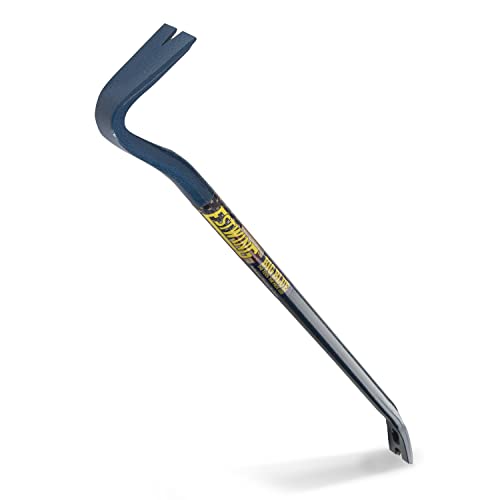
- Length: 36 inches with a gooseneck curve
- Shaft: Forged from one piece of solid American steel
- Working ends: Angled chisel end and slotted hook end for nail pulling
- Grip: Shock-reducing grip material
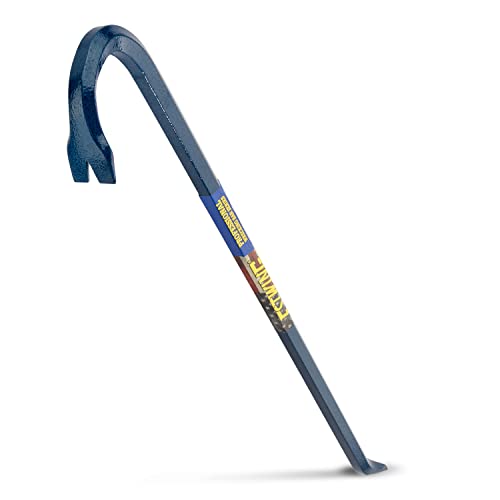
- Length: 30 inches with a gooseneck curve
- Shaft: Forged from one piece of solid American steel
- Working ends: Angled chisel end and slotted hook end for nail pulling
- Finish: Blue
All 4 Picks at a Glance
| Product | Specs | Action |
|---|---|---|
| 1. Estwing Gooseneck Wrecking Bar, 36 Inch EWB-36 |
| Check price on Amazon |
| 2. Estwing Gooseneck Wrecking Bar Pro, 36 Inch EWB-36PS |
| Check price on Amazon |
| 3. Estwing Gooseneck Wrecking Bar, 30 Inch EWB-30 |
| Check price on Amazon |
 4. Estwing Gooseneck Wrecking Bar, 24 Inch EWB-24 |
| Check price on Amazon |
Key takeaways
- Compare the best wrecking bars for demolition, framing and deck removal: gooseneck bars in 24, 30 and 36 inch lengths with chisel ends and nail slots.
What's inside
- Quick Answer
- 1. Estwing Gooseneck Wrecking Bar, 36 Inch EWB-36
- 2. Estwing Gooseneck Wrecking Bar Pro, 36 Inch EWB-36PS
- 3. Estwing Gooseneck Wrecking Bar, 30 Inch EWB-30
- 4. Estwing Gooseneck Wrecking Bar, 24 Inch EWB-24
- 5. Spec Ops Tools Pry Bar, 30 Inch Demo Bar
- How to Choose Wrecking Bars
- Who Should Skip These Wrecking Bars
- Frequently Asked Questions
- Final Verdict
- Product and ASIN Reference
As an Amazon Associate I earn from qualifying purchases. This post may contain affiliate links at no extra cost to you.
The best wrecking bar for most demolition and carpentry work is the Estwing Gooseneck Wrecking Bar in 36 inches, because its long forged steel shaft turns a hard pull into steady leverage, its angled chisel end slides under boards and subfloor, and its slotted hook end pulls nails without a second tool. The Pro version adds a shock-reducing grip for long sessions, while the 30 inch and 24 inch versions cover tighter spaces and lighter framing work. The Spec Ops 30 inch demo bar rounds out the set with a shock-absorbing grip and a high-carbon steel shaft.
A wrecking bar is a long, heavy pry bar made for demolition, not for trim. Where a flat bar is thin and short and made to lift molding without marking the wood, a wrecking bar runs 24 inches or longer, carries a thick forged shaft, and is built to pull framing apart, lift subfloor, strip decking and break down nailed assemblies. The gooseneck curve at one end is the signature shape: it sets the chisel end at an angle that bites under a board while the shaft stays clear of the work, so each pull lifts instead of sliding.
As an Amazon Associate, we earn from qualifying purchases.
Sections
- Quick Answer
- 1. Estwing Gooseneck Wrecking Bar, 36 Inch EWB-36
- 2. Estwing Gooseneck Wrecking Bar Pro, 36 Inch EWB-36PS
- 3. Estwing Gooseneck Wrecking Bar, 30 Inch EWB-30
- 4. Estwing Gooseneck Wrecking Bar, 24 Inch EWB-24
- 5. Spec Ops Tools Pry Bar, 30 Inch Demo Bar
- How to Choose Wrecking Bars
- Who Should Skip These Wrecking Bars
- Frequently Asked Questions
- Final Verdict
- Product and ASIN Reference
Quick Answer
Buy the Estwing 36 inch gooseneck wrecking bar for the most leverage on framing, subfloor and deck demolition. Choose the Pro version for a shock-reducing grip, the 30 inch bar for general tear-out, the 24 inch bar for tight spaces, and the Spec Ops 30 inch demo bar for a grippy alternative.
1. Estwing Gooseneck Wrecking Bar, 36 Inch EWB-36
- Length: 36 inches with a gooseneck curve
- Shaft: 3/4 inch hex, forged from one piece of American steel
- Working ends: Angled chisel end and slotted hook end for nail pulling
- Weight: 4.4 pounds
The best all-around wrecking bar here, because 36 inches of forged steel gives the longest lever in the group, and a long lever is what moves nailed framing, lifts subfloor sheets and pulls deck boards that a short bar only strains against. The bar is forged from a single piece of American steel, so there is no joint or weld where the shaft meets the head, and the 3/4 inch hex shaft resists twisting when the bar is loaded hard at an angle. One end carries an angled chisel that slides under boards and pries them up, and the other end carries a slotted hook that grips nail heads and pulls them out.
The gooseneck curve sets the chisel end low against the work while the shaft rises clear, so the pull stays straight and the force lands on the board instead of on the wrist. At 4.4 pounds the bar has enough heft to drive its own chisel end under a board with a tap, yet it stays light enough to carry across a job site all day.
2. Estwing Gooseneck Wrecking Bar Pro, 36 Inch EWB-36PS
- Length: 36 inches with a gooseneck curve
- Shaft: Forged from one piece of solid American steel
- Working ends: Angled chisel end and slotted hook end for nail pulling
- Grip: Shock-reducing grip material
The Pro version of the 36 inch gooseneck bar, for demolition sessions that run long enough for vibration and grip fatigue to matter. It keeps the same one-piece forged steel build, the same 36 inch length, the same angled chisel end and the same slotted hook end as the standard bar, and it adds a shock-reducing grip that damps the sting when the bar is struck or levered hard against framing. The grip also gives a surer hold when hands are dusty or gloved, which matters on a long bar where a slipping hand slides toward the working end.
At 5.4 pounds it is the heaviest bar in this guide, and the extra weight works for the user: the bar drives its chisel end deeper with less effort and holds its bite while the pull builds. Choose this bar when demolition is a regular job rather than an occasional one, and when a grip that absorbs shock is worth carrying the extra weight.
3. Estwing Gooseneck Wrecking Bar, 30 Inch EWB-30
- Length: 30 inches with a gooseneck curve
- Shaft: Forged from one piece of solid American steel
- Working ends: Angled chisel end and slotted hook end for nail pulling
- Finish: Blue
The mid-length pick, for tear-out where a 36 inch bar is too long to swing and a 24 inch bar is too short to lever. At 30 inches this bar fits between studs, inside closets and under low decking where the longest bars catch on framing, yet it still gives enough leverage to pull nailed boards, lift flooring and strip siding. It shares the family build: forged from one piece of steel, an angled chisel end for prying and lifting, and a slotted hook end for pulling nails.
The shorter shaft is easier to control in tight quarters and to carry in a tool bag, and the chisel end bites under boards at the gooseneck angle, so the pull stays low and steady.
4. Estwing Gooseneck Wrecking Bar, 24 Inch EWB-24
- Length: 24 inches with a gooseneck curve
- Shaft: Forged from one piece of solid American steel
- Working ends: Angled chisel end and slotted hook end for nail pulling
- Finish: Blue
The compact pick, for demolition in tight spaces and for carry on jobs where a long bar gets in the way. At 24 inches this is the shortest wrecking bar in the guide, and it still clears the line that separates a wrecking bar from a flat bar: a thick forged shaft, a gooseneck curve and the leverage to pull framing nails and lift boards that a trim bar cannot move. It fits in a tool bag, under a truck seat and between joists where the 30 inch and 36 inch bars cannot turn.
The build matches its longer siblings: a one-piece forged steel shaft, an angled chisel end and a slotted hook end. The shorter length trades leverage for control, so it suits prying apart nailed assemblies and stripping small areas of flooring or siding.
5. Spec Ops Tools Pry Bar, 30 Inch Demo Bar
The alternative-brand pick, for buyers who want a 30 inch demolition bar with a grip built for hard striking. The Spec Ops 30 inch demo bar is made from high-carbon steel, with a shock-absorbing grip that softens the sting when the bar is driven under boards or levered against framing, and stays secure in cold, heat and dust where a bare steel shaft gets slick.
At 30 inches it matches the mid-length Estwing on reach, giving enough leverage for deck boards, subfloor and nailed framing while staying short enough to control indoors. The bar is built for demolition and nail pulling, with a chisel-style working end for prying and a nail-pulling end for fasteners. Choose this bar when a grippy handle matters more than a bare forged shaft, and when a second brand in the kit spreads the wear across two tools.
Specs
- Length: 30 inches
- Material: High-carbon steel
- Working ends: Chisel end for prying and nail-pulling end
- Grip: Shock-absorbing extreme weather grip
- Best for: Demolition, deck board removal and nail pulling
How to Choose Wrecking Bars
Start with length, because length is leverage. A 24 inch bar suits tight spaces and carry, a 30 inch bar suits general tear-out and indoor work, and a 36 inch bar suits framing demolition, subfloor and deck removal, where the extra reach multiplies every pull. Own two lengths when the work varies: a short bar for control and a long bar for force.
Next, check the build. A wrecking bar should be forged from one piece of steel, with a thick shaft that resists bending and twisting under load. A stamped or welded bar bends and stays bent when leaned on hard, and a bent bar loses its bite and its leverage at once. Look at the ends as closely as the length: an angled chisel end should slide under boards without a running start, and a slotted hook end should grip nail heads and pull them straight instead of slipping off and chewing the head.
Grip matters on a long bar. A bare steel shaft is fine for short pulls, but a shock-reducing or shock-absorbing grip keeps the hand secure and damps vibration through a long session, especially with gloves on. A heavier bar drives its chisel end deeper, while a lighter bar is easier to carry and control overhead. Wear eye protection whenever a bar is driven or levered.
Who Should Skip These Wrecking Bars
Skip a wrecking bar when the work is trim removal, and use a flat bar instead. A wrecking bar is too long, too thick and too heavy for molding, casing and baseboards, and its chisel end will dent walls, split trim and crush the wood behind it. The flat bar exists for that job, and no wrecking bar substitutes for it.
Skip the 36 inch bars when the work happens in tight rooms, closets or between joists, since the long shaft catches on framing and cannot turn. Use the 24 inch bar there instead. Skip any wrecking bar for lifting heavy loads off the ground or moving machinery: that work needs a jack, a dolly or a proper lever, and a wrecking bar used as a lifting tool can bend or snap without warning.
Frequently Asked Questions
What is the difference between a flat bar and a wrecking bar?
A flat bar is a thin, wide bar, usually 12 to 21 inches long, made for trim removal and light prying without damaging the work. A wrecking bar is longer and heavier, usually 24 to 48 inches, made for heavy demolition and framing work.
What length wrecking bar should I buy first?
A 30 inch bar is the best first wrecking bar for most buyers, because it balances leverage and control: long enough to pull nailed boards and lift flooring, short enough to use indoors and carry easily.
Can a wrecking bar pull nails?
Yes. The slotted hook end on a gooseneck wrecking bar grips nail heads and pulls them straight out, including nails that sit flush with the surface. For nails buried below the surface, a cat’s paw reaches what a wrecking bar hook cannot grip.
Should I buy a wrecking bar set or a single bar?
A single bar is the better buy when the work centers on one length, since the 30 inch and 36 inch bars here each cover a clear job. Buy two lengths instead of a set when the work spans tight spaces and open framing.
Final Verdict
For most demolition and carpentry work, the Estwing 36 inch gooseneck wrecking bar is the best wrecking bar to buy first, because its long forged shaft, angled chisel end and slotted hook end cover framing, subfloor and deck removal in one tool. The Pro version adds a shock-reducing grip for long sessions, the 30 inch bar is the best all-around length, the 24 inch bar covers tight spaces, and the Spec Ops 30 inch demo bar brings a grippy high-carbon alternative. Buy forged steel, match the length to the job, and always pry against a block to protect the work.
Product and ASIN Reference
| Product | ASIN |
|---|---|
| Estwing Gooseneck Wrecking Bar, 36 Inch EWB-36 | B0BWL1J9K1 |
| Estwing Gooseneck Wrecking Bar Pro, 36 Inch EWB-36PS | B00DT0OY0A |
| Estwing Gooseneck Wrecking Bar, 30 Inch EWB-30 | B00DT0OWO8 |
| Estwing Gooseneck Wrecking Bar, 24 Inch EWB-24 | B00DT0OWR0 |
| Spec Ops Tools Pry Bar, 30 Inch Demo Bar | B089SQ7RDC |
Related guides
More from Amazon
Programs that pair well with the guide above. Offers and eligibility are set by Amazon and may change.
A free business account with business pricing and bulk-buying tools for work, shop or home office.
Create a business accountFree shipping on eligible items, Prime Video and more. Eligible new members can start with a free trial.
Start a Prime free trialAudiobooks and podcasts to listen to on the go. Eligible new members can start with a free trial.
Try Audible freeAd-free music streaming. Eligible new subscribers can start with a free trial.
Try Music Unlimited freeAs an Amazon Associate we earn from qualifying purchases.
Write Your Review
No reviews yet. Be the first to share your experience!