What's inside
- Quick comparison: the three strongest choices
- Head-to-head: Como versus Grano
- Where the Babyletto Kiwi wins
- Upholstery, cleaning, and durability
- Lumbar support and seating fit
- Decision matrix for real nursery situations
- Assembly, delivery, and noise realities
- Ownership costs and what wears first
- Final recommendation
- Quick comparison: the three strongest choices
- Head-to-head: Como versus Grano
- Where the Babyletto Kiwi wins
- Upholstery, cleaning, and durability
- Lumbar support and seating fit
- Decision matrix for real nursery situations
- Assembly, delivery, and noise realities
- Ownership costs and what wears first
- Final recommendation
As an Amazon Associate I earn from qualifying purchases. This post may contain affiliate links at no extra cost to you.
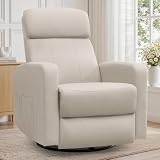
The best high end nursery gliders and rocking recliners are the Monte Design Como for refined manual reclining, the Babyletto Kiwi for powered reclining in a compact footprint, and the Monte Design Grano for a roomier, more traditional gliding chair.
These chairs are expensive for good reasons—better suspension, denser cushioning, cleaner upholstery options, and smoother mechanisms—but the right choice depends less on appearance than on doorway clearance, seat depth, recline noise, and how often the chair will be used overnight. The comparison below focuses on those ownership details rather than showroom styling.
As an Amazon Associate we earn from qualifying purchases at no extra cost to you.



Sections
- Quick comparison: the three strongest choices
- Head-to-head: Como versus Grano
- Where the Babyletto Kiwi wins
- Upholstery, cleaning, and durability
- Lumbar support and seating fit
- Decision matrix for real nursery situations
- Assembly, delivery, and noise realities
- Ownership costs and what wears first
- Final recommendation
Quick comparison: the three strongest choices
| Model | Approx. overall size | Seat characteristics | Motion and recline | Best fit |
|---|---|---|---|---|
| Monte Design Como Glider | About 32 W × 34 D × 40 H in. | Approx. 21 in. wide; moderately deep, supportive seat | 360-degree swivel, smooth gliding, manual reclining footrest | Premium nursery where quiet, compact movement matters |
| Monte Design Grano Glider | About 33 W × 37 D × 40 H in. | Approx. 21 in. wide; deeper, more lounge-oriented cushion | 360-degree swivel and gliding; manual reclining footrest | Taller adults or longer reading and feeding sessions |
| Babyletto Kiwi Electronic Recliner and Swivel Glider | About 29 W × 37 D × 41 H in. | Approx. 20 in. wide; medium-depth seat | Power recline, 270-degree swivel, integrated USB charging on many versions | One-hand operation and smaller rooms |
Dimensions can vary by upholstery and production revision, so measure the actual model before ordering. More important than a one-inch difference in overall width is the space required behind the chair when its back reclines.
Head-to-head: Como versus Grano
Choose the Como for a tighter nursery
The Como has a more upright, tailored posture and generally feels easier to place beside a crib or changing table. Its swivel base helps you turn toward a side table without dragging the chair across a rug. That is useful in a narrow room, but leave clearance around the base so the chair can rotate without striking furniture.
Its manual recline is simple and avoids a motor, power cord, and electrical control. The trade-off is that you must operate the footrest with your legs and body weight. If you expect frequent recline adjustments while holding a sleeping baby, a powered chair is more convenient.
Choose the Grano for a deeper, softer sit
The Grano is the better option for adults who dislike compact nursery chairs. Its deeper cushion and more generous proportions support a relaxed reading posture, although shorter users may find that their feet do not rest naturally on the floor. A lumbar cushion can correct that position, but adding one reduces the effective seat width.
The Grano’s exposed wood base gives it a furniture-like appearance and makes upholstery replacement or professional cleaning easier to plan than with some fully upholstered recliners. It is also visually larger, so it suits a medium or large nursery better than a narrow alcove.
Where the Babyletto Kiwi wins
The Kiwi is the practical choice when the main requirement is effortless reclining. Its electric mechanism lets you extend the footrest and return upright with a control, rather than leaning forward or pushing against a stiff footrest. The swivel range is substantial but not a full 360 degrees, which can be an advantage if you do not want the chair repeatedly turning away from a side table.
Its narrower body is useful in apartments and small bedrooms. However, the power cable needs a safe route along the wall, and the chair should not be placed where the cord can become a trip hazard. A motor also introduces a faint operating sound. It is normally less disruptive than a loud manual footrest snapping shut, but neither type should be assumed silent.
Upholstery, cleaning, and durability
Performance fabric is usually the safest nursery choice. Look for tightly woven polyester or a polyester blend with a documented abrasion rating, removable cushion covers where available, and a manufacturer-approved cleaning code. A high abrasion number does not make fabric stain-proof; it mainly indicates resistance to surface wear.
- Performance fabric: the best balance of durability, spill resistance, and low maintenance.
- Velvet: comfortable and attractive, but pressure marks and crushed pile show more readily.
- Bouclé: hides minor discoloration but can trap crumbs and snag on rough clothing or pet claws.
- Leather: easy to wipe and increasingly supple with age, but it can feel cold initially and may show scratches.
- Light upholstery: makes a small room look larger but reveals milk, formula, and denim transfer sooner.
For everyday care, vacuum seams and the gap beneath the seat weekly, blot spills rather than rubbing them, and avoid applying a household stain protector unless the upholstery manufacturer permits it. Do not remove cushion covers for machine washing unless the care label specifically says to do so; shrinkage can make a cover impossible to reinstall.
Lumbar support and seating fit
Nursery chairs are often judged by softness, but sustained comfort depends on how your pelvis and lower back are positioned. As a starting point, a seated adult should have the back of the knees clear of the cushion edge by roughly 1–2 inches, with feet supported when the chair is upright. A seat that is too deep encourages slouching; one that is too shallow can feel perched.
Use this simple fit calculation before buying:
Usable seat depth = published seat depth − the thickness of any back cushion.
For example, a 22-inch seat with a 4-inch back cushion gives approximately 18 inches of usable depth. If your comfortable seated depth is closer to 16 inches, the chair may work with a small lumbar cushion; if it is 19–20 inches, the chair may feel cramped.
Built-in lumbar shaping is preferable to relying on a loose pillow, because a pillow can shift during a recline cycle. Still, personal fit matters more than the presence of a named “ergonomic” feature. If you have persistent back discomfort, ask a qualified health professional for individualized advice.
Decision matrix for real nursery situations
| Your situation | Best direction | Why | Watch for |
|---|---|---|---|
| Nursery under 100 sq. ft. | Como or Kiwi | Narrower footprints and useful swivel movement | Door swing, wall clearance, and reclined depth |
| Daily overnight use | Kiwi or Grano | Power convenience or deeper long-session support | Motor sound, cord routing, and cushion compression |
| Taller adult or shared adult use | Grano | Roomier seat and more relaxed posture | Shorter users may need a footstool or lumbar cushion |
| Noise-sensitive sleeping space | Manual Como or Grano | No powered motor during adjustment | Check footrest latches and base contact on hard floors |
| Frequent spills or pets | Performance-fabric version | More forgiving surface and easier routine cleaning | Confirm removable covers and cleaning code |
Assembly, delivery, and noise realities
Most premium gliders arrive partially assembled, but “easy assembly” commonly means attaching the base, back, or power components—not carrying a lightweight box into the nursery. Measure the narrowest doorway, stair landing, and elevator opening. A chair listed as 30 inches wide may need a larger diagonal clearance when tilted through a doorway.
Assembly usually takes one adult about 20–45 minutes with basic tools, depending on the model and packaging. Tighten bolts only after the frame pieces are aligned, then recheck them after several weeks of use. A rocking or clicking sound often comes from a loose base fastener, a rug edge, or a floor protector rather than the mechanism itself.
On hard floors, use a low-friction protector approved for the chair’s base. Thick carpet can make gliding uneven and place extra load on the base. Keep fingers, toys, and blankets away from the reclining gap, and never let a child operate the mechanism unsupervised.
Ownership costs and what wears first
Expect premium nursery gliders and rocking recliners to occupy roughly the $900–$2,000 market range, with power recliners and upgraded upholstery toward the upper end. The meaningful cost is not only the purchase price. If a chair costs $1,400 and is used five times a week for five years, that is about 1,300 uses, or approximately $1.08 per use before cleaning and repairs. Daily use would lower that figure further.
The first wear points are normally the seat’s front edge, the footrest hinge or linkage, swivel bearings, and high-contact upholstery areas. Loose threads should be trimmed rather than pulled. If a motorized chair hesitates, stop using the control repeatedly; inspect the cord and follow the manufacturer’s service instructions instead of forcing the mechanism.
Final recommendation
Buy the Monte Design Como when quiet manual operation, polished design, and a smaller footprint are priorities. Choose the Monte Design Grano when a taller adult needs a deeper, more lounge-like chair. Select the Babyletto Kiwi when powered reclining and compact one-hand convenience outweigh the need for completely silent operation.
Whichever model you choose, confirm the seat dimensions with your own body measurements, map the fully reclined footprint on the nursery floor, and select upholstery based on cleaning instructions rather than color alone. Those checks are more likely to determine long-term satisfaction than decorative details or the chair’s showroom softness.