What's inside
As an Amazon Associate I earn from qualifying purchases. This post may contain affiliate links at no extra cost to you.
Sections
Best Budget Laser Level: Quick Picks for DIY Layouts
The best budget laser level for most indoor DIY work is a self-leveling green cross-line model with a stated accuracy near ±1/8 inch at 30 feet, a locking pendulum, and a standard 1/4-inch tripod thread. Choose a red model to save money in dim rooms, or a 360-degree model when you need a continuous line around a room rather than a cross on one wall.
Compare These Affordable Models
These established Bosch and Huepar models illustrate the main trade-offs in the budget-to-midrange category. Specifications can vary by kit or revision, so confirm the exact package before buying; prices are approximate U.S. market ranges, not fixed quotes.
As an Amazon Associate we earn from qualifying purchases at no extra cost to you.
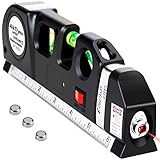
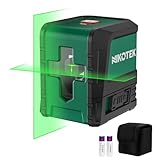


| Model | Lines and color | Stated accuracy | Range | Power and runtime | Mounting and best fit | Typical price range |
|---|---|---|---|---|---|---|
| Bosch GLL 30 | Red cross-line | About ±5/16 in. at 30 ft | Up to about 30 ft, depending on conditions | 2 AA batteries; runtime varies with use | 1/4-in. tripod mount; small, simple room layouts | About $40–$70 |
| Bosch GLL 50-20 | Red cross-line | About ±1/8 in. at 30 ft | Up to about 50 ft, depending on conditions | 2 AA batteries; runtime varies with use | Tripod-compatible; useful for shelves, cabinets, and trim | About $70–$110 |
| Huepar 901CG | Green cross-line | About ±1/9 in. at 33 ft | Up to about 100 ft in favorable conditions | AA-powered; check the specific kit for battery format and runtime | 1/4-in. mount; indoor work where line visibility matters | About $50–$90 |
| Huepar 603CG | Green 3 × 360° lines | About ±1/9 in. at 33 ft | Up to about 100 ft in favorable conditions | Rechargeable battery; runtime depends on lines switched on | 1/4-in. and 5/8-in. mounting options on many kits; full-room layouts | About $130–$200 |
Range figures are not interchangeable: manufacturers may quote visible range, detector range, or best-case indoor range. A detector can extend a laser’s usefulness in brighter or larger spaces, but only if the model supports one and the detector is included or bought separately. Accuracy is the more important figure for close indoor work.
Choose by Room, Task, and Frequency
| Your situation | What to prioritize | Good match |
|---|---|---|
| Occasional picture hanging or a short shelf run in a small room | Low cost, simple controls, red cross-line | Bosch GLL 30 or a comparable red self-leveling cross-line level |
| Cabinet installation or trim across a larger, well-lit room | Better stated accuracy, brighter green line, tripod mount | Bosch GLL 50-20 or Huepar 901CG |
| One-person layout across several walls | 360-degree coverage, adjustable height, stable mount | Huepar 603CG or a comparable 3 × 360° model |
| Frequent work, long runs, or bright conditions | Detector compatibility, locking pendulum, replaceable or dependable power | Choose a model with a compatible detector and check its outdoor or detector range |
Red or green?
Green lasers usually look easier to see in a bright interior, but that does not automatically make them more accurate. They often cost more and can use power faster, particularly when several lines are on. A red laser is generally a sensible value for evening work, smaller rooms, and shaded interiors. In direct sunlight, neither color should be assumed visible at long distances without a detector.
Cross-line or 360-degree?
A cross-line level projects a horizontal and vertical line onto the wall in front of it. It suits tiling, hanging cabinets, aligning shelves, and transferring a plumb line. A 360-degree horizontal line saves repositioning when leveling cabinets or marking a consistent height on multiple walls. The added coverage is useful, but a 3-plane model costs more and may be unnecessary if your projects stay on one wall.
What the Numbers Mean in a Real Room
Accuracy is commonly stated as a tolerance over a distance. At ±1/8 inch at 30 feet, the allowed deviation at the quoted distance is about 1/8 inch; it does not promise that every line will be exactly centered within that tolerance. For a 10-foot cabinet run, the same proportional tolerance works out to roughly 1/24 inch, or 0.04 inch, assuming the specification scales linearly and the tool is correctly calibrated. That is generally tighter than the gaps and adjustments encountered in many DIY installations.
Room size affects visibility and convenience more than the basic accuracy figure. In a small room, a 30-foot visible range is often enough. In a long open-plan area, a brighter line, detector support, or 360-degree coverage may matter more. Also check whether the laser can be positioned at the needed height: a low tripod may leave a line blocked by furniture or cabinets.
Setup That Prevents Misleading Lines
- Use a stable surface. Set the tool on a tripod, clamp, or solid shelf. A loose or springy mounting point can shift while you mark.
- Let it self-level. Place it within the model’s self-leveling range and wait for the line to settle. If the unit flashes or signals an error, reposition it rather than marking from a tilted beam.
- Lock the pendulum for transport. The lock protects the internal leveling mechanism while the tool is carried. Do not assume a soft case makes an unlocked unit safe.
- Mark from the same edge of the line. A laser line has width. Consistently using its center or the same edge avoids small placement differences across a project.
- Check calibration before precision work. Rotate the level or compare its line against a known reference on a stable wall. If the line shifts beyond the stated tolerance, consult the manufacturer’s calibration process or service guidance.
Battery, Mounting, and Durability Trade-Offs
Runtime depends on battery condition, temperature, and how many beams are active; a single headline runtime is therefore a poor predictor of a full day’s work. A basic cross-line unit using two AA batteries is easy to keep running with spares. Rechargeable models reduce disposable-battery use, but check whether the battery can be replaced and whether the kit includes a charger or USB cable. For a 360-degree laser, switch off planes you are not using to conserve power.
A 1/4-inch thread fits many photo tripods and common laser mounts. Some construction tripods use a 5/8-inch thread, so check the tool and tripod before purchase; an adapter may solve the mismatch, but it adds another part that can loosen. Magnetic brackets are handy on steel framing, while a clamp or adjustable platform is better when there is no suitable metal surface.
The first things to suffer are often the case, buttons, mount, or battery contacts—not the laser diode itself. Dust on the output window can blur the line, so clean it with a soft, dry cloth rather than an abrasive wipe. Keep the tool dry, avoid drops, and lock the pendulum before packing. A low price is worthwhile for occasional indoor use, but frequent transport across job sites makes a protective case and accessible service support more valuable.
Bottom Line
For the lowest-cost, occasional layout work, choose a red self-leveling cross-line level with a tripod thread. For brighter rooms and more frequent cabinet or trim work, a green cross-line model offers easier line visibility. If you regularly need a level line around several walls, pay extra for a 360-degree model; otherwise, that coverage is a feature you may rarely use. Before ordering, compare the exact kit’s accuracy, battery arrangement, mount thread, and detector compatibility—not just its advertised range.