What's inside
As an Amazon Associate I earn from qualifying purchases. This post may contain affiliate links at no extra cost to you.
Sections
Best Diving Masks for Scuba: The Right Pick Depends on Your Face and Dive
The best diving masks for scuba are the ones that seal comfortably on your face without relying on a tight strap; for most divers, that means starting with a conventional low-volume, two-lens mask and choosing among models such as the Scubapro Spectra, Cressi Big Eyes Evolution, TUSA Freedom HD, and Hollis M1 by fit and lens needs.
Mask dimensions and weight vary by size and production version, so the figures below are approximate model-level comparisons, not a guarantee of fit. Treat the table as a shortlist, then try the mask on your face before buying. A mask that leaks on land will not become a good fit underwater.
As an Amazon Associate we earn from qualifying purchases at no extra cost to you.
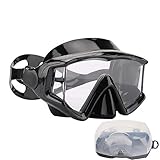
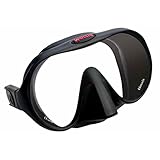


Quick comparison
| Mask | Design and lens | Approx. weight | Approx. price range | Best suited to |
|---|---|---|---|---|
| Scubapro Spectra | Two-lens; tempered glass; silicone skirt | About 200 g | $70–$120 | Divers seeking a conventional, compact mask |
| Cressi Big Eyes Evolution | Two-lens; angled lenses; silicone skirt | About 200 g | $60–$100 | Divers who value a broad downward view |
| TUSA Freedom HD | Single-lens; tempered glass; silicone skirt | About 250 g | $80–$130 | Divers who prefer an open central view |
| Hollis M1 | Single-lens; low-iron tempered glass; silicone skirt | About 250 g | $100–$160 | Divers prioritizing lens clarity and a wide-feeling view |
| Cressi F1 | Frameless single-lens; tempered glass; silicone skirt | About 180 g | $50–$90 | Travelers seeking a simple, fold-flat design |
Weights and prices are approximate and can vary by market, color, and version. None of these models has a purge valve. A purge valve is a separate feature found on some masks, not a measure of overall quality.
Choose by the problem you want to solve
- Most versatile starting point: Try the Scubapro Spectra or Cressi Big Eyes Evolution. Both use a familiar two-lens layout, which can make prescription inserts or replacement lenses easier to source for some versions. Confirm compatibility for the exact model and prescription before purchasing.
- You want less visual separation down the center: Try the single-lens TUSA Freedom HD or Hollis M1. A single lens may feel more open, but the shape of the skirt and your face determine the actual field of view.
- You want a compact travel mask: The frameless Cressi F1 folds flatter than many framed masks. Protect its lens in a case; packing it loose beside hard gear invites scratches or impact damage.
- You are considering a purge valve: Choose one only if you have a specific reason, such as preferring to clear small amounts of water through a valve at the nose. A purge does not eliminate the need to clear a flooded mask, and the valve adds a part that must stay clean and seal properly.
- You wear glasses: Look for a model with manufacturer-supported corrective lenses, or ask a dive shop about compatible prescription inserts. Do not assume any lens can be swapped just because the mask has two panes.
What matters more than the feature list
Fit and skirt seal
The silicone skirt must follow the contours around your nose, cheeks, and upper lip without folding, pinching, or leaving gaps. Facial hair crossing the sealing surface can cause leaks; so can a skirt that presses against the bridge of the nose. A soft skirt can feel comfortable, but softness alone does not guarantee a seal.
For a basic dry fit, place the mask on your face without using the strap, inhale gently through your nose, and let go. If it stays in place briefly, that is a useful first check—not proof that it will remain leak-free in the water. Move your face, smile, and check whether the skirt shifts. Try the mask with your regulator in place, since the mouthpiece can change how your upper lip sits.
Lens volume and field of view
Low internal volume makes it easier to clear water and equalize pressure inside the mask. Angled lenses can improve the view below you without making the mask physically large. A single-lens design removes the central divider, while two-lens models can sit closer to the eyes and may offer more lens options. Neither layout guarantees a wider view: the lens shape, frame, skirt, and distance from your eyes all matter.
Strap adjustment and comfort
Look for buckles that adjust easily while you are wearing the mask and do not press awkwardly against the temple. The strap should hold the mask in place, not clamp it to your face. Overtightening can deform the skirt and create leaks, and it can leave pressure marks during a long dive. A wide, split strap can distribute tension, while a neoprene cover may help with hair tangling but is an optional accessory, not a seal improvement.
How to make the final choice
- Try at least two shapes. Compare a compact two-lens mask with a single-lens or wide-view design if a shop has them available.
- Check the seal without the strap. Place the skirt evenly and inhale gently through your nose. Reject models that need strong suction to stay put or press uncomfortably on your nose.
- Check your view in the positions you use. Look down toward your chest and gauges, then side to side. A mask with a generous front view may still obstruct a useful downward angle.
- Confirm prescription and accessory compatibility. Ask for the exact model and version, not just the brand. Prescription lens availability and fit can differ between models.
- Set the strap only snugly. Once underwater, a little water in the mask is usually handled with a standard mask-clearing technique; a tighter strap is not the fix for a poor fit.
Ownership: prevent leaks and protect the seal
Before a first dive, remove any manufacturing residue using a lens-cleaning method approved by the mask maker or dive professional. New tempered-glass masks may fog until the inner lens is properly prepared; avoid abrasive cleaners and do not use a flame, which can damage the mask or create a safety hazard. Apply a small amount of mask defog before diving and rinse as directed.
After each dive, rinse the mask in fresh water, including the buckles and any purge components, and let it dry out of direct sunlight. Store it in a protective case rather than pressed under heavy gear. Over time, the skirt can become stiff, cloudy, or cracked, and straps and buckles can wear or break before the glass does. Replacement straps are often available, but skirt and buckle service depends on the model. Inspect these parts before a trip; a cracked skirt or unreliable buckle is a reason to replace or repair the mask rather than compensate by pulling the strap tight.
For divers with vision concerns, prescription selection, or unusual fit needs, a qualified dive shop or eye-care professional can help assess suitable options. Product features are general information, not a substitute for professional advice.