What's inside
- Best Milwaukee Reciprocating Saw for Demolition and Remodeling
- Milwaukee reciprocating saws compared
- Which one suits your work?
- Stroke length, speed, and control: what the specs mean
- Battery runtime: plan by workload, not a promised cut count
- Blades and setup by material
- Ownership realities and final pick
- Best Milwaukee Reciprocating Saw for Demolition and Remodeling
- Milwaukee reciprocating saws compared
- Which one suits your work?
- Stroke length, speed, and control: what the specs mean
- Battery runtime: plan by workload, not a promised cut count
- Blades and setup by material
- Ownership realities and final pick
As an Amazon Associate I earn from qualifying purchases. This post may contain affiliate links at no extra cost to you.
Sections
- Best Milwaukee Reciprocating Saw for Demolition and Remodeling
- Milwaukee reciprocating saws compared
- Which one suits your work?
- Stroke length, speed, and control: what the specs mean
- Battery runtime: plan by workload, not a promised cut count
- Blades and setup by material
- Ownership realities and final pick
Best Milwaukee Reciprocating Saw for Demolition and Remodeling
The Milwaukee M18 FUEL Super SAWZALL (2821-20) is the best all-around Milwaukee reciprocating saw for frequent demolition and remodeling; choose the compact M18 FUEL Hackzall (2719-20) for one-handed work and tight spaces, or the corded 6519-31 for sustained cutting without battery changes.
The right choice depends less on a headline speed number than on the material, access, and length of each cutting session. Stroke length affects how quickly the blade clears material; control and balance matter when cutting overhead, flush to a wall, or near pipes and wiring. The figures below are manufacturer specifications; actual runtime and cutting speed vary with blade, material, technique, and battery condition.
As an Amazon Associate we earn from qualifying purchases at no extra cost to you.

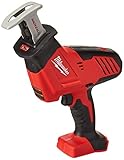


Milwaukee reciprocating saws compared
| Model | Power source | Stroke length | Speed | Published tool weight | Best fit |
|---|---|---|---|---|---|
| M18 FUEL Super SAWZALL (2821-20) | M18 battery | 1-1/4 in. | 0–3,000 SPM | About 7.4 lb | Frequent, demanding demolition |
| M18 FUEL SAWZALL (2721-20) | M18 battery | 1-1/8 in. | 0–3,000 SPM | About 7.1 lb | General remodeling and jobsite use |
| M18 FUEL Hackzall (2719-20) | M18 battery | 7/8 in. | 0–3,000 SPM | About 4.6 lb | One-handed cuts and restricted access |
| SAWZALL (6519-31) | Corded, 12 amp | 1-1/8 in. | 0–3,000 SPM | About 8.6 lb | Long sessions near a reliable outlet |
Weights are approximate bare-tool figures and can vary by configuration. A battery adds weight to cordless models; compare complete setups, not tool-only numbers. SPM means strokes per minute.
Which one suits your work?
- Regular structural demolition: Pick the Super SAWZALL if you often cut framing, nailed lumber, or mixed materials. Its 1-1/4-inch stroke moves the blade farther per cycle than the other cordless full-size option here, helping it work efficiently in suitable material. Its size and weight are the trade-off.
- Remodeling across varied materials: The M18 FUEL SAWZALL is a practical full-size choice for cutting wood, metal pipe, PVC, and fastener-filled assemblies. Its 1-1/8-inch stroke and variable-speed trigger make it versatile without stepping up to the Super SAWZALL.
- Cabinet, plumbing, or close-quarters work: The Hackzall is easier to maneuver and less tiring for many short cuts. The shorter stroke and compact form are not a substitute for a full-size saw when rapidly dismantling heavy framing.
- Long workdays with dependable power access: Choose the corded 6519-31 if you can manage the cord safely. It avoids battery swaps, but the cord can limit reach and create a trip or snag hazard in active demolition zones.
- Occasional household repairs: A compact cordless saw is easier to store and handle. If you already own M18 batteries, a bare tool may be more economical; otherwise compare the cost of a kit, including battery and charger.
Stroke length, speed, and control: what the specs mean
All four saws reach up to 3,000 SPM, but that does not make them equally fast in every cut. Stroke length describes how far the blade travels on each cycle. The Super SAWZALL’s 1-1/4-inch stroke can remove material quickly in open, appropriate cuts; the Hackzall’s 7/8-inch stroke favors compactness and control over aggressive stock removal. Blade choice and keeping the shoe planted against the work also make a substantial difference.
Variable-speed triggers let you start slowly, establish the cut, and increase speed as the blade tracks. That is useful on smooth pipe, thin sheet, or near a finished surface, where an abrupt start can make the blade skate. For demolition, use a blade designed for the material and tooth count: coarse wood blades suit fast cuts in lumber, while metal-cutting blades need finer teeth. Bi-metal blades are a useful general-purpose option for wood with nails, but they are still consumables.
Milwaukee’s full-size FUEL SAWZALL models include a counterbalance system intended to reduce vibration. Vibration control can improve comfort, but it does not eliminate fatigue, especially during overhead work. The Hackzall’s lighter, shorter body is easier to position in cramped areas, though one-handed use should be reserved for situations where the workpiece is secure and you can maintain control. Use two hands whenever the cut or tool position calls for them.
Battery runtime: plan by workload, not a promised cut count
There is no dependable universal number of cuts per charge: cutting a clean PVC pipe is very different from sawing through thick, nail-embedded framing. Blade sharpness, material thickness, pressure, and repeated starts all affect battery use. A larger-capacity M18 battery generally provides more work between charges, but it adds weight and can make overhead handling less comfortable.
For a short repair, a compact battery can keep the saw nimble. For a day of demolition, bring a charged spare and rotate batteries rather than waiting for a depleted one to recharge. If most work consists of occasional brief cuts and a cord is practical, the 6519-31 avoids runtime planning altogether.
Blades and setup by material
| Material or task | Practical blade choice | Setup note |
|---|---|---|
| Clean lumber | Coarse-tooth wood blade | Support the offcut so it cannot pinch the blade. |
| Wood with nails | Demolition or bi-metal blade rated for nails | Expect faster wear than in clean wood; check for hidden wiring and plumbing. |
| Metal pipe or sheet | Fine-tooth metal-cutting blade | Clamp or otherwise secure the work; reduce speed at the start. |
| PVC | Fine- or medium-tooth blade suited to plastic | Support the pipe near the cut to limit chatter and cracking. |
| Flush cuts | Flexible blade intended for flush cutting | Keep the shoe against the surface and check what lies behind it. |
Before cutting, remove the battery or unplug the saw while changing blades, then confirm the blade is locked in place. Use eye and hearing protection, and wear suitable respiratory protection when dust or debris calls for it. In demolition, verify both sides of the cut where possible: concealed electrical cables, pipes, and fasteners can damage the blade or create a serious hazard.
Ownership realities and final pick
On a reciprocating saw, blades are the main recurring consumable. Nail-filled lumber, abrasive materials, and using a blade that is too short or unsuitable can dull or break one quickly. Let the saw do the cutting instead of forcing it; excess pressure can slow the blade, increase vibration, and strain both the tool and battery. After dusty work, disconnect the power source and clear debris from the tool’s exterior and vents without pushing dirt deeper into the housing. Inspect the blade clamp and shoe periodically, and replace damaged blades promptly.
For most people doing recurring demolition and remodeling, the M18 FUEL Super SAWZALL (2821-20) is the strongest all-around pick because its full-size design and longer stroke suit demanding cuts. Choose the M18 FUEL SAWZALL (2721-20) if you want a capable full-size tool without prioritizing the longest stroke. The Hackzall (2719-20) is the better fit when reach, lighter handling, and compact storage matter most; the 6519-31 makes sense when uninterrupted corded operation outweighs portability.