What's inside
- Which Bosch Professional Laser Level Should You Choose?
- Spec Comparison: Contractor-Relevant Bosch Professional Models
- Decision Matrix: Match Your Work to the Right Kit
- Job-Site Durability, Visibility, and Accuracy: What Specs Do Not Tell You
- Ownership Realities: Battery Life, Cleaning, and Common Mistakes
- How to Set Up for Accurate Layout in 5 Steps
- FAQ
- Which Bosch Professional Laser Level Should You Choose?
- Spec Comparison: Contractor-Relevant Bosch Professional Models
- Decision Matrix: Match Your Work to the Right Kit
- Job-Site Durability, Visibility, and Accuracy: What Specs Do Not Tell You
- Ownership Realities: Battery Life, Cleaning, and Common Mistakes
- How to Set Up for Accurate Layout in 5 Steps
- FAQ
As an Amazon Associate I earn from qualifying purchases. This post may contain affiliate links at no extra cost to you.
The best Bosch Professional laser level for most contractors is the Bosch GLL 3-80 CG for full interior layout, the Bosch GCL100-80 C for combo point-and-line work that needs to transfer points floor-to-ceiling, and the Bosch GRL300HVG or GRL1000-20HVK for exterior grading and long-range rotary work — your choice comes down to visibility, range, and whether you need 360-degree planes or plumb points.
As an Amazon Associate we earn from qualifying purchases at no extra cost to you.


Sections
- Which Bosch Professional Laser Level Should You Choose?
- Spec Comparison: Contractor-Relevant Bosch Professional Models
- Decision Matrix: Match Your Work to the Right Kit
- Job-Site Durability, Visibility, and Accuracy: What Specs Do Not Tell You
- Ownership Realities: Battery Life, Cleaning, and Common Mistakes
- How to Set Up for Accurate Layout in 5 Steps
- FAQ
Which Bosch Professional Laser Level Should You Choose?
Contractors choose a Bosch Professional laser level based on the task, not just the max range on the box. Green beam models are 3-4x more visible than red in bright interiors, 3-plane 360-degree models cut layout time for square rooms, and combo cross-line/point lasers solve plumb and level in one setup. If you only do interior trim and tile, you do not need a rotary. If you pour footings, set batter boards, or run grade, you do.
Quick Picks by Job Site Situation
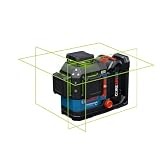
- Interior finish, cabinets, tile, framing layout: Bosch GLL 3-80 CG (3×360 green) — covers level, plumb and square from one position.
- Small remodels, electrical, plumbing, point transfer: Bosch GCL100-80 C (cross-line + 5 points) — best when you need plumb dots up and down plus lines.
- Residential site work, decks, foundations, grading: Bosch GRL300HVG (green rotary) or Bosch GRL1000-20HVK — visible beam plus receiver range to 1,000 ft diameter.
- Budget interior cross-line: Bosch GCL 2-160 or Bosch GLL 100 G — 2-plane or single 360-degree green line when you do not need full 3×360.
Spec Comparison: Contractor-Relevant Bosch Professional Models
Spec sheets hide what matters on site: accuracy over distance, real working range with and without receiver, leveling window, and dust/water protection. This table uses manufacturer-published specs for current Bosch Professional models contractors actually buy in 2026.
| Model | Beam Type / Planes | Accuracy | Working Range (without / with receiver) | Self-Leveling Range | IP Rating | Battery System / Runtime | Weight (without bracket) |
|---|---|---|---|---|---|---|---|
| Bosch GLL 3-80 CG | Green, 3 x 360° planes (horizontal + 2 vertical) | ±1/16 in. at 33 ft (±0.2 mm/m) | Up to 65 ft visible / 265 ft with LR7 receiver | ±4° | IP54 | 12V Li-ion (BA 12V 2.0Ah) / ~8 hrs (3 planes), ~16 hrs (1 plane) | 1.98 lb (0.90 kg) |
| Bosch GCL100-80 C | Red, cross lines + 5 points (plumb, level, 90°) | ±1/8 in. at 33 ft (±0.3 mm/m) lines; ±3/32 in. at 33 ft points | 65 ft lines / 100 ft points / 165 ft with LR6/LR8 receiver | ±4° | IP54 | 12V Li-ion / ~10 hrs lines + points | 1.32 lb (0.60 kg) |
| Bosch GCL 2-160 | Red, 2 lines (cross + vertical) + 2 plumb points | ±1/8 in. at 33 ft (±0.3 mm/m) | Up to 55 ft visible / 165 ft with receiver | ±4° | IP54 | 3x AA / ~15 hrs | 1.06 lb (0.48 kg) |
| Bosch GLL 100 G | Green, 1 x 360° horizontal + 2 cross vertical | ±1/8 in. at 33 ft (±0.3 mm/m) | Up to 65 ft visible / 165 ft with receiver | ±4° | IP54 | 12V Li-ion or AA adapter / ~12 hrs on 12V 2.0Ah | 1.54 lb (0.70 kg) |
| Bosch GRL300HVG | Green rotary (horizontal / vertical) | ±1/16 in. at 100 ft (±0.05 mm/m) | Up to 100 ft visible / 1,000 ft diameter with LR45 receiver | ±5° (electronic self-leveling) | IP56 | D-cell / NiMH pack / ~50 hrs | 4.0 lb (1.8 kg) |
Note: Bosch lists accuracy as ± mm/m. On a 30 ft wall, ±0.2 mm/m equals about ±1/4 in. over 30 ft if you project end-to-end. For finish work that needs 1/16 in. over 8 ft, all the models above are within tolerance when set up correctly, but only the GLL 3-80 CG and GRL300HVG hold ±1/16 in. at 33 ft and 100 ft respectively.
Decision Matrix: Match Your Work to the Right Kit
Do not buy range you will not use. Use this matrix to map frequency, space, and accessory needs before you bundle a kit.
| Your Situation | Priority Feature | Recommended Bosch Professional Model | Kit to Look For |
|---|---|---|---|
| Finish carpenter / kitchen & bath, 4-5 days/week indoors | Visibility + 3-plane coverage to avoid moving the laser | GLL 3-80 CG | 12V battery + RM 3 bracket + LR7 receiver + BT 150 tripod |
| General contractor doing layout, hanging doors, transferring points | Plumb points + lines in one tool | GCL100-80 C | 12V kit with RM 2 bracket + ceiling clip + LR8 receiver |
| Remodeler on tight budget, occasional use | Low cost, simple cross-line | GCL 2-160 or GLL 30 G | Basic pouch kit, add BM 1 wall mount separately |
| Exterior contractor, grading, foundations, site prep | Long range + slope/grade + receiver | GRL300HVG or GRL1000-20HVK | Rotary kit with tripod (BT 300 HD), grading rod (GR 8), receiver |
| Commercial superintendent, large open floors | Green 3×360 + extended receiver range | GLL 3-80 CG or GLL 3-300 | GLL 3-300 full kit with DK 10 bracket + LR7 + carrying case |
Job-Site Durability, Visibility, and Accuracy: What Specs Do Not Tell You
1. Durability and IP Ratings
All Bosch Professional cross-line models above are IP54 (dust protected, splash resistant). That handles drywall dust and light rain, but not direct hose-down or submersion. The rotary GRL300HVG is IP56, which handles stronger water jets and heavier dust — the right choice if the tool lives in a gang box on an open slab. The pendulum lock is the first line of defense: always lock the pendulum before transport. An unlocked pendulum after a truck ride is the most common cause of calibration drift contractors report.
What wears first: the glass windows over the diodes, the RM bracket magnets and fine-adjust threads, and the battery contacts. Wipe windows with a dry microfiber only — not a wet rag with grit — and blow dust from the housing vents weekly. Keep the RM 3 or RM 2 bracket in the case, not loose in a bucket where the 360-degree turret can get knocked out of alignment.
2. Visibility: Green vs. Red on a Real Site
Green diodes on the GLL 3-80 CG, GLL 100 G, and GRL300HVG are rated around 500-540 nm, which the human eye sees better than red at 635 nm. In a white drywall room at 20-30 ft, green is clearly visible without a receiver. Past 40-50 ft, near windows, or on sunlit concrete, you will need the receiver even with green. Red models like the GCL100-80 C and GCL 2-160 save money and are fine in dim interiors, but plan to use the LR6/LR8 receiver for any daylight work over 30 ft. Never look directly into the beam, and do not rely on visible beam alone for accuracy checks — use the receiver center mark.
3. Accuracy and Self-Leveling Window
Bosch Professional accuracy of ±0.2 to ±0.3 mm/m is typical for the category and good for layout, but it assumes the tool is within its ±4° self-leveling range and on a stable mount. If the base is beyond 4°, the laser will blink to warn it is not level — that is not a malfunction. On uneven slabs, use the BT 150 or BT 300 leveling tripod rather than shimming the tool itself, which can introduce twist. For critical runs, do the 180-degree check: mark a line at 15 ft, rotate the laser 180 degrees, and check deviation. If deviation exceeds spec, send it for calibration before you chase the wall.
4. Range and Receiver Compatibility
Working range without a receiver is line-of-sight visibility, not usable layout range. Effective layout range is with the receiver. Bosch cross-line receivers (LR6, LR7, LR8) are not universally interchangeable — the LR7 is designed for the GLL 3-80 CG/C and GLL 3-300, while the LR6/LR8 pair with the GCL series. Rotary receivers (LR45 for GRL300HVG) are different again. Buying a bare tool to save money then adding the wrong receiver is a common and expensive mistake. Choose the kit that includes the correct receiver for that model family.
5. Accessory Compatibility and Battery Platform
Bosch Professional 12V Li-ion is the shared platform across GLL and GCL models that use it — the BA 12V 2.0Ah and 3.0Ah batteries and GAL12V chargers swap between tools, which cuts kit cost if you already own Bosch 12V. AA-powered models (GCL 2-160) are cheaper upfront but cost more over time and cannot share chargers. Mounts matter as much as the laser: the RM 3 swivel mount gives 360-degree rotation with fine adjustment for the GLL 3-80 series, the RM 2 does the same for the GCL100-80 C, and the BM 1 universal mount clamps to ceiling grid. For ceilings over 10 ft, a telescoping pole (BT 350) holds position better than a lightweight tripod.
Ownership Realities: Battery Life, Cleaning, and Common Mistakes
Runtime calculation before you buy batteries: A GLL 3-80 CG on a 12V 2.0Ah battery runs about 8 hours with all three planes on, about 12-16 hours with one plane. On a 10-hour day laying out a 2,500 sq ft floor with all planes on, you need 1.25 charges. Calculation: 10 hrs ÷ 8 hrs per charge = 1.25 charges. One 2.0Ah will not last the day; carry two batteries or run one plane when you only need level. For the rotary GRL300HVG at ~50 hours on D-cells, one set lasts a week of intermittent exterior work.
Consumables and maintenance: No laser is maintenance-free. Pendulum calibration is recommended annually for daily-use tools, or immediately after a drop of more than 3 ft. Keep the case desiccant packet inside the case in humid climates. Clean battery contacts with a dry cotton swab monthly if you work in drywall dust — dust buildup creates intermittent power that mimics a failing diode.
Common mistakes contractors make:
- Leaving the pendulum unlocked during transport, which beats the damping mechanism.
- Using a red beam outdoors at noon and blaming the tool for being dim — it is physics, not defect.
- Mounting to a job-built stand that vibrates when workers walk by, causing the self-leveling to hunt and blink.
- Mixing incompatible receivers and rods — check the model-specific compatibility list on the box before adding accessories.
- Ignoring temperature: allow 15 minutes for the tool to acclimate when moving from a cold truck (below 40°F) to a heated interior before leveling, or condensation will fog the windows.
How to Set Up for Accurate Layout in 5 Steps
A correct setup takes three minutes and eliminates most callback errors.
- 1. Choose the anchor point: Place the laser where you can hit the most walls or grade stakes without moving. For 3×360 models, center of the room is ideal. For GCL point models, align the down-point over your benchmark.
- 2. Mount rigidly: Use the RM bracket on metal track or a tripod on concrete — not a 5-gallon bucket. Lock the tripod legs and verify the bracket is not flexing.
- 3. Level and verify: Switch on, let the pendulum settle 3-5 seconds, confirm no blinking. If blinking, re-level the tripod until steady.
- 4. Check with receiver at distance: Walk to the farthest wall or stake with the correct receiver and mark the center line, not the edge of the visible beam. This eliminates parallax error.
- 5. Lock settings and document: If the model has slope or lock mode (GRL series for grade), set it after leveling. Photograph benchmark alignment for the crew so the next shift does not shift the setup.
FAQ
Is a green beam worth the extra cost for interior work?
For daily interior layout, yes. Green visibility reduces time spent hunting the line and reduces receiver use under 40 ft. For occasional use in dim spaces, a red GCL model is sufficient and less expensive to replace if damaged.
Can I use any Bosch receiver with any Bosch laser?
No. Cross-line receivers (LR6/LR7/LR8) are line-laser specific and rotary receivers (LR45) are rotary specific. Match the receiver family printed on both the laser and receiver packaging. A mismatched pair will not detect the beam.
How often should a contractor recalibrate a Bosch Professional laser level?
Annually with daily use, or after any significant impact, vibration during transport with an unlocked pendulum, or when your 180-degree check shows deviation beyond the published ± mm/m spec. Authorized Bosch service centers perform calibration; field adjustment is not recommended.
What kit accessories pay for themselves first?
A second 12V battery, the correct RM bracket for your model, and the receiver designed for that laser. A telescoping pole or heavy tripod is next if you work on unfinished floors. Skip decorative laser glasses — they do not improve accuracy, only contrast, and are not laser safety glasses.