What's inside
- Craftsman 3500-Watt Generator: Is It Enough for Your Home or Jobsite?
- Start with Running Watts, Not the Headline Number
- Outlets: Match the Receptacles to the Job
- Runtime: Estimate It from the Load
- Noise and Portability: Where a Conventional Generator Fits
- Which Buyer Should Choose It?
- Ownership: Fuel, Oil, and Wear Points
- Bottom Line
- Craftsman 3500-Watt Generator: Is It Enough for Your Home or Jobsite?
- Start with Running Watts, Not the Headline Number
- Outlets: Match the Receptacles to the Job
- Runtime: Estimate It from the Load
- Noise and Portability: Where a Conventional Generator Fits
- Which Buyer Should Choose It?
- Ownership: Fuel, Oil, and Wear Points
- Bottom Line
As an Amazon Associate I earn from qualifying purchases. This post may contain affiliate links at no extra cost to you.
Sections
- Craftsman 3500-Watt Generator: Is It Enough for Your Home or Jobsite?
- Start with Running Watts, Not the Headline Number
- Outlets: Match the Receptacles to the Job
- Runtime: Estimate It from the Load
- Noise and Portability: Where a Conventional Generator Fits
- Which Buyer Should Choose It?
- Ownership: Fuel, Oil, and Wear Points
- Bottom Line
Craftsman 3500-Watt Generator: Is It Enough for Your Home or Jobsite?
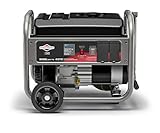
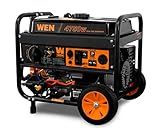
The Craftsman 3500-watt generator can suit light jobsite work and basic outage backup, but its usefulness depends on the exact model’s running watts, outlet layout, and fuel capacity—not the 3,500-watt figure alone. Treat 3,500 watts as a peak rating unless the generator’s data plate or manual explicitly identifies it as continuous running output.
Craftsman has sold generators in different configurations, and specifications can vary by model and production year. Check the model number on the frame and match it to the manual before buying or sizing loads. The figures below are a planning guide, not a substitute for that model-specific information.
As an Amazon Associate we earn from qualifying purchases at no extra cost to you.


Start with Running Watts, Not the Headline Number
Generators have to supply two kinds of power: the steady draw of equipment while it runs and the brief surge needed to start motors. A unit advertised at 3,500 starting watts might provide substantially less continuous power. If the model’s manual lists 3,000 running watts, for example, plan around 3,000—not 3,500—and leave headroom for startup surges.
For a simple capacity check, add the running watts of the loads you want on at the same time, then account separately for the largest motor’s startup demand. If that combined demand approaches the generator’s rated output, switch loads off before starting another motor. A table saw, air compressor, refrigerator, and window air conditioner can each draw more during startup than while running.
| Example load | Approximate running watts | What to check |
|---|---|---|
| LED lighting and phone charging | 50–200 W combined | Usually easy to accommodate; use sound chargers and undamaged cords. |
| Refrigerator | 100–800 W | Startup demand can be several times the running draw; check the appliance label or manual. |
| Typical circular saw | 1,200–1,800 W | Motor startup can push demand higher; avoid starting it while another large motor is running. |
| Portable air compressor | 1,000–2,000 W or more | Motor starting demand is the key constraint; confirm compressor and generator requirements. |
| Electric kettle or space heater | 1,000–1,500 W each | These are heavy continuous loads and leave less capacity for tools or refrigeration. |
These are broad examples, not guaranteed appliance ratings. Use equipment nameplates and manuals when calculating your actual load. Also check whether the generator has a separate continuous rating for each outlet or a limit on total output.
Outlets: Match the Receptacles to the Job
A generator’s wattage does not tell you what can plug into it. Look at the Craftsman model’s outlet panel for 120-volt household receptacles, any 120/240-volt outlet, circuit breakers, and whether outlets have GFCI protection. Some configurations may differ, so don’t assume a particular receptacle is included based on the brand or wattage class.
- For household appliances: Confirm the receptacle type and current rating match the appliance cord. A common 120-volt, 20-amp outlet is limited to 2,400 watts in theory, with practical limits governed by the generator, breaker, and continuous-load guidance.
- For 240-volt equipment: The generator needs a compatible 120/240-volt outlet and sufficient capacity on both legs. A 120-volt-only model cannot power 240-volt equipment.
- For a home transfer switch: Use a properly installed transfer switch or interlock and a compatible generator connection. Never connect a generator to a household wall outlet, which can backfeed power lines and endanger utility workers.
- For outdoor tools: Use outdoor-rated cords sized for the load and cord length. Long, undersized cords can cause voltage drop and tool performance problems.
Runtime: Estimate It from the Load
Runtime depends on tank capacity, engine efficiency, fuel condition, and how heavily the generator is loaded. A listing’s “up to” runtime usually describes light-load operation, not hours at full output. If the model’s manual states runtime at a specified load, use that figure as your baseline; otherwise, don’t infer exact runtime from the wattage rating alone.
Here’s a useful calculation when a model’s published runtime is available: if it runs for 10 hours on a full tank at 25% load, that is a reference point for light use—not a promise of 10 hours while powering a saw and compressor. At 25% of a 3,000-watt running rating, the load is 750 watts. A 1,500-watt heater alone is twice that load, so expect shorter operation.
For outage planning, estimate the average load rather than adding every appliance’s maximum rating. Refrigerators cycle on and off, while lights and chargers draw continuously. Run large loads in turns, keep the tank filled only when the engine is off and cool, and store fuel only in approved containers according to local rules and the manual.
Noise and Portability: Where a Conventional Generator Fits
A conventional open-frame generator in this output class is generally louder than an enclosed inverter generator. Exact sound levels vary with model, distance, load, and measurement method; check the manufacturer’s stated decibel rating and the conditions behind it. For residential backup, place the unit outside and well away from doors, windows, and air intakes. Never run it in a garage, shed, or other enclosed space, even with the door open: generator exhaust contains carbon monoxide.
Portability also depends on the actual model’s weight, wheel kit, handle design, and fuel level. Compare the listed dry weight with what you can safely lift or roll over your terrain. A wheeled frame helps on a driveway but may not make a heavy machine easy to move across steps, gravel, or a muddy site. If one person must carry the generator frequently, check its dimensions and weight before purchase rather than judging by the wattage class.
Which Buyer Should Choose It?
| Your situation | How this class of generator fits | Check before buying |
|---|---|---|
| Occasional outage backup for lights, chargers, and a refrigerator | Often a practical fit if the running capacity covers refrigerator startup plus the other loads. | Running watts, outlet protection, runtime at light load, and safe transfer method. |
| One or two corded tools at a time | Can work for moderate tools when startup surges are managed and loads are sequenced. | Tool startup draw, outlet amperage, cord gauge, and whether 240 V is needed. |
| Several large tools running together | Likely restrictive if their combined running draw or motor-start surges exceed the rated output. | Calculate simultaneous loads; consider a higher-output unit if the work requires them together. |
| Quiet use near neighbors or frequent overnight operation | An open-frame model may be a poor match where noise is a priority. | Compare published noise figures with an enclosed inverter generator and check local noise rules. |
| Frequent solo transport or remote-site carrying | May be cumbersome depending on frame weight and terrain. | Actual dry weight, loaded weight, wheel kit, handles, and access to the site. |
Ownership: Fuel, Oil, and Wear Points
For a portable gasoline generator, routine care matters as much as the initial specification. Follow the model manual for oil type, first oil change, service intervals, air-filter cleaning, and spark-plug inspection. Oil level, stale fuel, a clogged air filter, and neglected carburetor maintenance are common causes of hard starting or rough operation.
- Use fresh fuel of the grade specified in the manual. If storing fuel, follow the manufacturer’s guidance on stabilizer and storage duration.
- After use, let the engine cool before refueling, and keep fuel away from flames, sparks, and hot surfaces.
- Inspect the air filter more often in dusty woodworking or construction environments; sawdust can restrict airflow.
- Exercise and maintain the generator according to its manual, especially before storm season. Store it dry and protect it from dust without blocking ventilation.
- Stop using damaged cords, loose plugs, or a generator with a leaking fuel line, unusual electrical behavior, or a persistent warning condition.
These habits reduce avoidable trouble, but they do not increase the generator’s rated capacity. Keep the model manual with the machine so service instructions and operating limits are easy to verify.
Bottom Line
The Craftsman 3500-watt generator is worth considering if you need a portable source for modest, carefully managed loads—such as basic outage essentials or a limited number of jobsite tools. It is not automatically a 3,500-watt continuous power source, nor does that headline reveal its runtime, noise, outlet compatibility, or carrying weight. Before buying, verify the model-specific running watts, receptacles, fuel capacity and published runtime, sound rating, and loaded transport requirements. If your essential loads include multiple large motors, 240-volt equipment, or quiet overnight operation, compare a higher-capacity or quieter generator class instead.