What's inside
As an Amazon Associate I earn from qualifying purchases. This post may contain affiliate links at no extra cost to you.
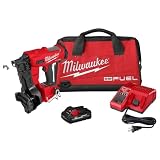
The Milwaukee M18 FUEL Coil Roofing Nailer (2745-20) is the most convincing case yet for leaving the compressor on the ground — it drives 3/4″ to 1-3/4″ roofing nails at up to 6 nails per second, matches pneumatic depth consistency across single and double shingle layers, and on steep pitches the absence of a hose is a genuine safety and speed advantage rather than a gimmick. It’s not the right tool for everyone — occasional repair work still favors a $200 pneumatic setup — but for crews and serious DIYers doing full roofs, the math works.
As an Amazon Associate we earn from qualifying purchases at no extra cost to you.

Sections
What the M18 FUEL Roofing Nailer Actually Is
Milwaukee launched this nailer as part of its M18 FUEL line, meaning brushless motor, REDLINK electronics, and compatibility with the entire M18 battery ecosystem. Instead of a combustion cell or a pre-charged air cylinder, it uses a sealed nitrogen spring mechanism — a flywheel-free design that delivers consistent driving energy shot after shot without ramp-up time.
Key specs:
| Spec | Milwaukee M18 FUEL 2745-20 |
|---|---|
| Nail type | Wire-collated coil roofing nails |
| Nail length range | 3/4″ to 1-3/4″ |
| Nail diameter / head | 0.120″ shank, full round head (typically 3/8″) |
| Coil capacity | Up to 120 nails |
| Firing speed | Up to 6 nails per second |
| Firing mode | Sequential actuation (single-fire) |
| Tool weight (bare) | Approx. 8.6 lbs (3.9 kg) |
| Battery | Any M18 pack; a 5.0Ah is the practical sweet spot |
| Nails per charge | Up to ~1,100 per M18 5.0Ah pack (manufacturer claim) |
| Typical price (bare tool) | Generally $350–$450 |
Two details matter more than the headline numbers. First, capacity: a standard coil is 120 nails, so the magazine holds a full coil — you’re reloading at natural coil boundaries, not mid-coil. Second, weight: at ~8.6 lbs bare and roughly 10 lbs with a 5.0Ah battery, it’s noticeably heavier than a pneumatic coil nailer (typically 5–6 lbs). That weight penalty is the real trade-off for going cordless, and it’s worth being honest about.
Depth Consistency: The Spec That Matters Most
A roofing nailer that over-drives cuts shingle mats; one that under-drives leaves proud heads that telegraph through the next course and lift shingles in wind. Consistency is where cordless nailers historically failed — early designs lost driving energy as batteries drained or mechanisms heated up.
The Milwaukee’s nitrogen spring sidesteps this. Because driving energy comes from a sealed mechanical system rather than battery voltage directly, depth stays uniform whether the pack is at 90% or 15%. Depth of drive is adjusted with a tool-free dial, and the setting holds — there’s no regulator to drift, no pressure drop from a 100-foot hose run.
Single-layer work: For new sheathing or a tear-off down to deck, one depth setting dialed in on a scrap shingle holds across the whole roof. Set the head just flush — not countersunk.
Second-layer / overlay work: When you’re nailing through two layers of architectural shingles (roughly 3/8″–1/2″ of extra material), bump the depth dial a notch or two. This is where pneumatic setups struggle — compressors cycling causes pressure sag mid-coil. The Milwaukee’s consistent stroke means the last nail of the day seats like the first, even through double material, provided you’re using 1-1/2″ or 1-3/4″ nails as required.
The Hose Question: Why Cordless Wins on Pitch
On a walkable 4/12 roof, a hose is an annoyance. On an 8/12 or steeper, it’s a hazard:
- Snag risk: A hose catches on ridge vents, plumbing stacks, and ladder hooks. Every snag means either climbing down to free it or yanking it — on a steep pitch, that yank can shift your stance.
- Drag weight: A full 100 ft of 3/8″ air hose plus couplers adds pounds of dead pull hanging off the tool, plus friction on the surface you’re standing on.
- Setup time: Hauling a compressor up to staging, running hose, and bleeding moisture takes 20–30 minutes before the first nail. The Milwaukee is genuinely grab-and-go — a meaningful difference on small jobs like flashing repairs, shed roofs, and punch-list work where pneumatic setup costs more time than the nailing itself.
The counterweight: you’re carrying roughly 3–4 extra pounds in hand all day. Users who hang the tool on a roof jack or hook between runs will notice this less than those who keep it in a pouch.
Runtime Math for Real Jobs
Milwaukee’s ~1,100-nail figure per 5.0Ah pack is optimistic but the right order of magnitude. Worked backward:
- Architectural shingles at 4 nails per shingle, ~65 shingles per square = ~260 nails per square
- A 1,100-nail charge covers roughly 4 squares of field shingles
- A typical 20-square roof needs ~5,200 nails ≈ 5 battery swaps
Practical implication: one crew member nailing continuously will outpace a single 5.0Ah pack on a charger. A second battery is effectively mandatory for all-day work, and a third is smart insurance. This is where existing M18 ownership changes the calculus — if your crew already runs M18 Sawzalls and impacts, spare packs are already on the truck.
Who Should Buy It: A Decision Matrix
| Your situation | Best fit | Why |
|---|---|---|
| Roofing crew, already on M18 platform | Milwaukee cordless | Shared batteries; hose-free safety; pays for itself in setup time |
| DIYer doing one full roof every few years | Budget pneumatic + compressor | Total setup under ~$350; weight doesn’t matter for a weekend job |
| Repair/punch-list work (flashing, blow-offs, small sections) | Milwaukee cordless | Setup time dominates these jobs; cordless wins every time |
| Steep pitches (8/12+) or multi-story access | Milwaukee cordless | Hose snag and compressor logistics outweigh the weight penalty |
| Crew standardized on another battery platform | That brand’s cordless nailer, or pneumatic | Buying into a second battery ecosystem rarely pencils out |
| Large commercial tear-offs, all-day production | Pneumatic | Lighter tool in hand, unlimited runtime, lower consumable cost |
Ownership Realities
What wears: The nosepiece and contact tip take the most abuse — the tip wears down and causes shallow drives before it fails outright; it’s a replaceable part. Driver blades are consumables over tens of thousands of nails. Keep a spare coil of wire-collated nails on hand — wire collation feeds more reliably than plastic-collated coils in cold weather.
Maintenance: No oiling, no hose draining, no tank to bleed — the whole appeal. Keep the magazine and feeder clean of nail-collation wire scraps, and don’t store it with the magazine loaded in freezing trucks.
Common mistakes: Driving with a near-empty coil causes dry-fire wear on the driver; swap coils when you’re down to a handful. And don’t drop the tool on its nose — the contact trip alignment is more delicate than a pneumatic head casting.
Frequently Asked Questions
Can it replace a pneumatic nailer entirely?
For residential roofing up to a few thousand square feet, yes — provided you have 2–3 batteries. For all-day commercial production, the weight penalty and battery logistics make pneumatic the better primary tool.
Does it fire rapidly enough for experienced roofers?
Sequential-only firing is the main functional trade-off — there’s no contact/bump mode, which Milwaukee chose deliberately given roofing’s high injury rate. At up to 6 nails per second with a deliberate trigger pull, it’s fast enough for nearly all pacing, but roofers trained on bump-firing pneumatics will notice the difference for the first day.
What nails does it need?
Standard wire-collated coil roofing nails: 0.120″ shank, 3/4″–1-3/4″ length, full round head. Any major brand coil fitting those specs works — no proprietary fastener lock-in.
Bottom line: If battery packs already live in your truck and your work involves steep pitches, repairs, or jobs where compressor setup eats the margin, the M18 FUEL roofing nailer is a clear buy. If you’re nailing a single roof as a one-off or run all-day production crews, pneumatic still earns its hose.