What's inside
As an Amazon Associate I earn from qualifying purchases. This post may contain affiliate links at no extra cost to you.
Sections
Our Top Picks


Choosing between the two
A tape measure is the better all-rounder for site work: it reaches across sheet goods, room dimensions and rough framing without needing to be unfolded. A folding rule is slower to extend but can be easier to control for short, precise measurements, especially when checking a recess, marking a shoulder or working close to a finished edge.
Neither tool makes a measurement accurate by itself. A loose hook, worn hinge, bowed rule or careless reading can spoil a cut. For detailed carpentry, buy the tool that suits the measurements you actually make, then check its condition and use the same reference edge consistently.
As an Amazon Associate we earn from qualifying purchases at no extra cost to you.

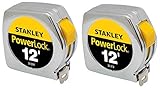


Quick comparison
| Feature | Tape measure | Folding rule |
|---|---|---|
| Best suited to | Long dimensions, site layout and one-person measuring | Short measurements, depth checks and controlled marking |
| Typical length | 3–8 m (10–26 ft), with longer options available | Usually 1 m or 2 m (about 3 ft or 6 ft) |
| Reading | Printed scale on a flexible blade | Printed scale on linked rigid sections |
| Main weakness | Blade can sag, twist or move at the hook | Hinges can loosen; rule takes longer to open and position |
| Storage | Compact case, often clips to a belt | Longer when folded; commonly carried in a pocket or tool belt |
Where a tape measure wins
For measuring a wall, laying out cabinet runs or checking the length of a board, a tape is quick and convenient. Its retracting blade stores neatly, and many tapes have a hook that can catch an outside edge or press against an inside corner. On a longer span, a tape is usually easier to use alone than a folding rule.
Blade stiffness matters if you need to extend the tape without support. The distance it can project before bending is called standout; it varies by model and blade width. A wider blade often stands out farther, but it can also be bulkier in a pocket. If you mostly measure at a bench, paying extra for exceptional standout may bring little benefit. A basic carpenter’s tape measure is generally enough for household trim and joinery.
Watch the hook when accuracy matters. Many tape hooks have a small amount of movement so the blade can measure from either the outside or inside face of the hook. That movement is intentional, but a bent hook or one that rattles excessively can give inconsistent results. Check a tape against a reliable rule over a short distance, and replace it if readings vary when you pull or push the hook.
Where a folding rule wins
A folding rule has a firm, straight section that is easy to place against an edge. That makes it useful for measuring short components, setting out repeated marks and checking the depth of a rebate or mortise. It will not sag across a short opening the way a flexible tape can, and it gives you a rigid edge to align with a workpiece.
The trade-off is handling. You must open enough sections, keep the joints straight and read the correct scale. Loose hinges can let sections kink or shift, so inspect the joints before relying on the rule. Dust and finish can also make a joint stiff. A sound woodworking folding rule is worth considering if you often do bench work or need a rigid gauge; an inexpensive one is fine for occasional use if its hinges lock straight and its graduations are clear.
Some rules include a sliding extension for inside measurements. It can help with cabinet openings, but it adds another part that can slip or wear. For a critical fit, measure the opening twice and check the part against it before cutting.
Accuracy and common mistakes
For both tools, start with the same datum: the same end, face or reference line. Do not switch between measuring from the hook and measuring from a case edge unless the tool is designed for that method. When transferring a measurement, make a fine pencil or knife mark, then measure again from that mark rather than estimating where a broad pencil line begins.
Long tape readings are vulnerable to sag. Support the blade at intervals, or have a second person hold the far end. A tape pulled diagonally across a board measures a longer distance than one held square. For inside dimensions, a tape’s case length may need to be added to the reading; use the printed case measurement only if it is accurate and you have checked it.
A folding rule can be misleading if a joint is not fully straight or if you read across a hinge instead of from a clear graduation. Avoid using a damaged section as a straightedge: a slight bend may not show until it creates a tapered mark. Neither tool replaces a square when you need to check 90 degrees.
What to buy
For a general carpentry kit, a tape around 5 m (16 ft) is a useful starting size. Choose one with legible markings and a hook that is not bent. A shorter 3 m (10 ft) tape is lighter and cheaper for furniture repair or trim work; it is a poor choice if you regularly measure full rooms or long boards. A 8 m (26 ft) tape is handy for larger site dimensions, but its heavier case is inconvenient for fine bench work.
If most of your work is detailed fitting, consider a folding rule alongside the tape rather than replacing it. A metric-only or imperial-only scale can reduce reading errors if you work consistently in one system. Dual scales are useful when plans and materials use different units, but make sure the markings are large enough to read at a glance.
A practical choice
Use the tape for distance and layout; use the folding rule when a rigid section makes a short measurement easier to control. For repeat cuts, make a stop or marking gauge instead of repeatedly reading either tool: fewer transfers mean fewer chances for a small error to accumulate. Before a precision cut, verify the measurement, check the tool’s hook or hinges, and test the fit on scrap when the material is valuable.