What's inside
As an Amazon Associate I earn from qualifying purchases. This post may contain affiliate links at no extra cost to you.
A housing, or dado, is only as strong and tidy as its floor. If the bottom has ridges or dips, a shelf or rail may rock, sit proud, or leave gaps at the shoulders. For a shallow housing, a sharp chisel is often all you need. For a wider or deeper one, a router plane makes it easier to bring the whole floor to a consistent depth.
As an Amazon Associate we earn from qualifying purchases at no extra cost to you.




Sections
Our Top Picks
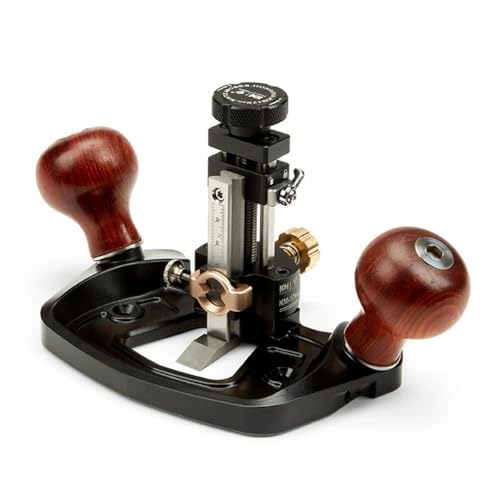 HONGDUI Router Plane Handheld Woodworking Tool Quick Adjust6.8 x 3.3 x 4 inches3.3 poundsCheck on Amazon



What “level” means in a housing
The goal is not necessarily a perfectly smooth surface. It is a floor that is flat enough for the mating part to seat without rocking, while keeping the housing at the intended depth and its shoulders intact. A 0.5 mm ridge can matter on a tight furniture joint; on a rough utility shelf, it may not.
Before removing wood, check the housing with a straightedge and a depth gauge or rule. Mark high spots lightly in pencil. If the cut is already deep enough in places, do not chase a uniform depth by lowering the entire floor: that can leave the joint loose at the shoulders or weaken the surrounding stock.
When a router plane is the better choice
A router plane uses a broad sole to ride on the surrounding surface while a cutter removes high areas below it. Set the blade to take a fine shaving, then work across the housing in overlapping passes. Because the sole bridges small hollows, it is easier to keep the floor at one depth than it is with a chisel held freehand.
It is particularly useful for housings wider than about 12–15 mm, long housings where the floor needs to be consistent, and joints that will be visible or fitted closely. A depth stop or a careful setting lets you work toward a measured floor rather than relying on feel. Take cuts of roughly 0.1–0.25 mm at a time near the final depth; heavy cuts can make the plane chatter or tear out at the ends.
The trade-off is setup and access. The tool needs enough room for its sole to bear on the surface around the cut. If the housing runs to an edge, or the workpiece is too narrow to support the sole, the plane may tip. A router plane also cannot fix a housing that is already too deep without adding material or changing the mating part.
For regular joinery work, a router plane is a useful dedicated tool. For one occasional housing, a chisel and a straightedge may be the more sensible buy.
When a chisel is enough
A sharp chisel can level a narrow or shallow housing quickly, especially one only a few millimetres deep. Pare with the bevel down, keep the back flat to the floor, and take thin shavings from the pencilled high spots. Work from both ends toward the middle when there is a risk of splitting the shoulders, and avoid levering against the side walls.
For a wider housing, divide the floor into strips and pare each strip, checking often with a straightedge. A chisel is less forgiving than a router plane: a small change in hand angle can dig a hollow, and a hollow is hard to correct without lowering the surrounding floor. Do not use a hammer for final leveling; mallet cuts are better reserved for removing waste before paring.
Use a chisel that fits the work comfortably, not one that barely fits between the walls. A 12 mm chisel is a practical size for many small housings, but the right width depends on the joint. If your chisels are dull, honing first is more effective than pressing harder. A bench chisel is enough for this job; there is no need to buy a specialty set just to level one housing.
Router plane or chisel?
| Factor | Router plane | Chisel |
|---|---|---|
| Depth consistency | Good when the sole is supported and the setting is controlled | Depends heavily on hand control and frequent checking |
| Best fit | Wide, long, or precision housings | Narrow, shallow, occasional work |
| Access limits | Needs room for the sole to ride on the surrounding surface | Can reach tight corners and edge housings |
| Main risk | Tipping, chatter, or cutting too deep with a coarse setting | Digging a hollow or bruising a shoulder |
| Cost and setup | Higher initial cost; requires blade setting and checking | Low if you already own a sharp chisel |
A reliable way to level the floor
First remove the bulk of any waste without cutting below the target depth. If you are making the housing from scratch, leave about 0.5 mm for final cleanup. Mark the target depth at both ends and check that the workpiece is clamped securely and cannot move.
With a router plane, set the cutter just proud of the sole, test on scrap if available, and take light passes. Start with the blade retracted enough that it cannot catch the shoulders. Make overlapping strokes along the length, then across the width if needed. Check with a straightedge in several directions, not just along the grain. Adjust the cutter in small increments rather than trying to remove the last half-millimetre at once.
With a chisel, pare only the marked high spots, keeping the back flat and the cutting edge square to the floor. Check the depth at the ends and middle after a few strokes. A narrow straightedge or a short piece of flat stock helps reveal a central hollow that a rule spanning the full housing may miss. A short straightedge is a useful check, but a known-flat scrap can do the same job for occasional work.
Common mistakes and how to avoid them
The most common error is cutting until the floor looks smooth instead of checking its depth. A smooth hollow is still a hollow. Another is taking a full-width cut right up to a shoulder, which can break out the edge, especially in brittle or reversing grain. Leave the last fraction near the ends for a light paring pass.
Do not assume a router plane will correct a sloped housing if its sole is resting on a sloped reference surface; it follows that surface. Likewise, do not force a dull chisel through the grain. If the wood tears ahead of the edge, stop, hone the tool, and change the direction or size of the cut.
Choose the tool for the joint, not for the idealized version of the job. A sharp chisel is a sound, inexpensive choice for a small housing and occasional repairs. A router plane earns its space when you make housings often, need repeatable depth, or want to level a broad floor with less risk of accidental hollows.