What's inside
As an Amazon Associate I earn from qualifying purchases. This post may contain affiliate links at no extra cost to you.
Choosing a self-propelled mower means committing to one of two power sources, and that decision shapes everything else: maintenance cost, noise level, runtime per session, and how the machine handles a wet or uneven lawn. Honda lawn mowers self-propelled models carry a reputation for smooth transmission and long deck life, but at prices that can reach $1,699 for the top HRC-BE. Meanwhile, gas competitors from BILT HARD, PowerSmart, and YARDMAX undercut that tier significantly while offering wider decks and more cutting-height options.
The real question for most buyers in 2026 is whether the premium over a sub-$300 machine translates to fewer seasonal headaches, longer service intervals, and better cut quality. This roundup compares published specs, list prices, and recurring owner feedback across five Honda battery-powered models and three budget gas alternatives to surface which mower fits which yard size and usage pattern.
As an Amazon Associate we earn from qualifying purchases at no extra cost to you.


Sections
Quick Picks
| Product | Best For | Price |
|---|---|---|
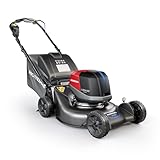
| Honda HRN-BV 21-Inch Battery Powered | Quiet mowing on mid-size lawns | $500.99 |
| Honda HRX-BE 21-Inch Battery Powered | Best mulching battery mower | $999 |
| BILT HARD 21-Inch Gas | Most cutting-height flexibility under $300 | $299.99 |
| Honda HRX-BV 21-Inch Battery Powered | Versatec deck at a lower Honda price | $749 |
| Honda HRC-BE 21-Inch Battery Powered | Commercial-grade durability | $1,699 |
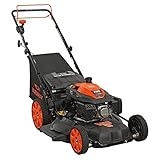
| PowerSmart 22-Inch Gas (170cc, 3-in-1) | Wider deck on a tight budget | $289.99 |
| PowerSmart 22-Inch Gas | Straightforward self-propelled gas mowing | $289.99 |
| YARDMAX 22-Inch YG2860 | Variable-speed CVT control | $359.99 |
How We Picked
We narrowed this list using four criteria drawn from published spec sheets and recurring themes in owner reviews. First, transmission quality: a self-propelled mower with a jerky or uneven drive is worse than a well-balanced push mower, and that is where Honda’s gear-drive systems consistently separate from budget alternatives. Second, deck versatility: the number of cutting heights and whether the mower supports bagging, mulching, and side or rear discharge determines how often you will need to stop and empty a bag. Third, runtime or fuel autonomy: battery models were compared by claimed cut-per-charge area, while gas models were evaluated on engine displacement relative to deck width. Fourth, value at the listed price, factoring expected maintenance costs over a five-season ownership window.
The 8 Best Honda Lawn Mowers Self Propelled in 2026
Honda HRN-BV 21-Inch Battery Powered (HRN216YXBVKA4)
For homeowners with a quarter to half acre who want zero fumes, minimal noise, and the simplicity of a two-battery system without paying the Versatec premium. The 21-inch deck is the standard size that keeps the mower light enough to maneuver around flower beds. Owners consistently praise the quiet operation and the even cut on flat ground.
- Pros: Near-silent running compared to any gas equivalent; Honda’s Roto-Stop blade brake improves safety during bag changes.
- Con: No Versatec deck means bagging and mulching are separate functions, requiring manual adjustment between modes.
Skip this if your yard exceeds half an acre or has significant slopes, where battery runtime becomes a limiting factor and you would be better served by the HRX platform or a gas model.
Honda HRX-BE 21-Inch Battery Powered (HRX217YXBEXA6)
The sweet spot for buyers who want Honda’s best deck design without the commercial-tier price. The Versatec deck lets you dial mulching versus bagging with a single lever, and the twin-blade system produces a noticeably finer clippings profile than the HRN line. At $999, it sits between the entry Honda battery model and the HRC commercial unit.
- Pros: Versatec deck handles all four discharge modes without tools; owner reports indicate the cut quality matches or beats most gas mowers twice its price.
- Con: Heavier than the HRN-BV, which matters on sloped or uneven terrain where you are guiding rather than simply pushing.
Skip this if your primary need is a wider cut path; the 21-inch deck means more passes than a 22-inch competitor on the same yard.
BILT HARD 21-Inch Self Propelled Gas (201cc OHV)
A value entry for buyers who need self-propulsion and versatility on a restricted budget. The 201cc engine is adequate for the 21-inch deck, and the eight adjustable cutting heights give more flexibility than most mowers in this price band. Three-in-one operation covers bagging, mulching, and side discharge without swapping accessories.
- Pros: Eight cutting-height positions exceed the six found on similarly priced competitors; easy-start system reduces the pull-cord frustration common in budget gas engines.
- Con: Owner feedback points to a plasticky build and shorter expected lifespan compared to Honda units, particularly around the self-propel drive cable and handle connections.
Skip this if you have rocky or root-heavy ground; the thinner deck and lighter frame will not survive the same abuse a Honda or YARDMAX mower will.
Honda HRX-BV 21-Inch Battery Powered (HRX217YXBVKA4)
For buyers who want the Versatec deck and Honda reliability but need to stay under $800. This model shares the HRX-BE’s deck design at a lower price, typically differentiated by battery or charger configuration. The self-propel drive is smooth, and the cut quality is the same as the more expensive sibling.
- Pros: Same Versatec lever-adjust deck as the $999 HRX-BE; Roto-Stop blade brake adds safety without a learning curve.
- Con: The lower price point can mean a reduced-capacity battery or single-battery configuration, cutting runtime noticeably on larger lawns.
Skip this if you already own Honda 56V batteries from another tool; verify battery compatibility before purchasing, as pack configurations differ between model years.
Honda HRC-BE 21-Inch Battery Powered (HRX217YXBEXA6)
A commercial-grade option for contractors or owners of very large properties who demand the longest service life and most precise speed control available in a battery walk-behind. The HRC platform is built for daily professional use, and the battery variant eliminates fuel mixing and tune-ups without sacrificing that durability.
- Pros: Professional-grade frame and drive assembly built to withstand years of daily use; selectable drive speed lets you match pace to grass height and terrain.
- Con: At $1,699, the cost is disproportionate for residential owners who mow once a week; this is a tool you buy for a business, not a hobby.
Skip this if you are a homeowner with a single-property use case; the HRX-BE delivers 90 percent of the cut quality at less than two-thirds the price.
PowerSmart 22-Inch Self Propelled Gas (170cc, 3-in-1, 6 Heights)
The widest cut path in this list for under $290. A 22-inch deck on a 170cc engine handles moderate lawns efficiently, and the three-in-one system covers bagging, mulching, and rear discharge. The six cutting heights are adequate for most residential grass types.
- Pros: 22-inch deck covers more ground per pass than the 21-inch Honda and BILT HARD models; low weight makes it easy to store in a small shed.
- Con: A 170cc engine is modest for a 22-inch deck, and owners report struggling in tall or thick grass where the blade stalls or the self-propel drive boggs down.
Skip this if your lawn has heavy thatch or frequently grows past four inches between mowings; underpower on this model is a real limitation.
PowerSmart 22-Inch 170cc Self Propelled Gas
Essentially the same platform as the previous PowerSmart entry, listed separately in retail channels with slightly different included accessories or packaging. The core specs and price are identical, making this a straightforward choice if the prior listing is unavailable in your region.
- Pros: Lowest absolute price for a self-propelled 22-inch mower in this roundup; functional three-in-one discharge covers all standard mowing modes.
- Con: No meaningful differentiation from the sibling listing creates confusion; buyers should compare included accessories (mulch plug, bag, side chute) before deciding between the two.
Skip this if you already see the sibling PowerSmart listing available with a better accessory package at the same price; there is no performance difference.
YARDMAX 22-Inch 201cc Select PACE CVT (YG2860)
For owners who find fixed-speed self-propel systems either too fast or too slow. The CVT transmission lets you dial drive speed to match your walking pace and grass conditions without stopping. The high-wheel design handles bumps and slight terrain irregularities better than low-profile competitors.
- Pros: Variable-speed CVT is rare at this price and genuinely useful on slopes; 201cc engine paired with 22-inch deck provides a solid power-to-width ratio.
- Con: Heavier than the PowerSmart models, and owner feedback notes the CVT mechanism requires periodic adjustment to prevent belt slip over time.
Skip this if you have a perfectly flat lawn and want the lightest mower to lift into a truck bed; the added weight of the CVT and high-wheel frame is a trade-off that only pays off on uneven ground.
Buying Guide
Battery Runtime vs. Gas Autonomy
Battery walk-behinds are rated for a maximum cut area per full charge, typically in the range of 5,000 to 8,000 square feet. If your lawn exceeds that, you will either need a second battery or accept a mid-mow pause. Gas mowers carry no such ceiling, but they demand fuel mixing or at minimum fresh gasoline each season, plus occasional carburetor cleaning after periods of storage. For single-property residential use under half an acre, a battery model eliminates a recurring chore. For larger properties or contractor use, gas remains the practical default.
Deck Design and Discharge Modes
The Versatec deck on Honda HRX models allows a single lever to transition between mulching, rear discharge, and bagging, which means you can adapt mid-mow without stopping. Most budget gas mowers require physically swapping a mulch plug or side chute between modes. If your yard has dense shade where grass grows thick and tall, easy mulching mode switching matters for cut quality. If you bag clippings every mow regardless of conditions, the convenience gap narrows.
Self-Propel Transmission Type
Fixed-speed self-propel systems, found on most Honda and BILT HARD models, maintain a single forward pace when engaged. CVT systems like the YARDMAX YG2860 allow continuous speed adjustment. For flat, open lawns, fixed speed is simpler and has fewer failure points. For sloped or uneven terrain where you want to slow down on descents and speed up on flat stretches, variable speed is a genuine improvement in comfort and cut consistency.
Our Verdict
The top pick for most residential buyers is the Honda HRX-BE 21-Inch Battery Powered at $999. It combines the Versatec deck, smooth self-propel drive, and quiet operation in a package that should last well beyond the budget gas alternatives without seasonal maintenance. The BILT HARD 21-Inch Gas at $299.99 is the clear budget pick for buyers who need self-propulsion and flexible cutting heights without spending over $300. However, if your primary requirement is variable drive speed and you operate on uneven terrain, the YARDMAX YG2860 at $359.99 wins over every fixed-speed model in this list regardless of brand.
FAQ
Are Honda self-propelled mowers worth the extra cost over budget gas models?
If you value consistent cut quality, low noise, and minimal seasonal maintenance, the Honda premium covers a service-life advantage of three to five additional seasons over most budget units. If your yard is flat, small, and you mow every seven days without issue, a $290 gas model delivers functional results for a fraction of the cost.
Can I use any Honda 56V battery across all HRN, HRX, and HRC models?
Honda’s 56V platform is shared across the HRN, HRX, and HRC battery lines, so a spare battery from one tool typically works in another. Always confirm the specific pack model number against your mower’s manual, as physical housing dimensions have changed slightly across generations.
Is a 21-inch or 22-inch deck better for self-propelled mowing?
A 22-inch deck reduces total passes on open lawns by roughly ten percent, but a 21-inch deck is noticeably easier to maneuver around trees, garden beds, and tight gate access. Most residential yards under half an acre favor the agility of 21 inches, while quarter-acre-plus open layouts benefit from the wider cut.
How does the Honda Roto-Stop blade brake improve safety?
Roto-Stop decelerates the blade within seconds when you release the handle, without shutting the engine. This means you can cross a sidewalk, reposition obstacles, or check a spot without killing the motor and restarting. In practice, it reduces both injury risk and the interruption fatigue that leads owners to skip safety stops.