As an Amazon Associate I earn from qualifying purchases. This post may contain affiliate links at no extra cost to you.
Noise in the pest-control aisle is real. Walk into any big-box store and you face spray wands, concentrates, electronic repellers, and plant-oil alternatives all promising to clear out ants, roaches, spiders, and mice before they reach your pantry. The underlying problem is straightforward: most homeowners cannot tell whether a product will create a lasting barrier or merely knock down visible insects for a day or two. Owner reports and published spec sheets reveal that the gap between adequate and excellent home pest control is narrower than the price tags suggest.
What separates the best options from forgettable ones comes down to three things: active ingredient concentration (which dictates residual effectiveness), coverage area per application, and whether the formulation suits your specific infestation zone—indoor baseboards, outdoor perimeter, or both. Ultrasonic devices sit in a different category entirely, relying on sound waves rather than chemistry. This roundup compares eight products across all those dimensions using only published specifications, listed prices, and aggregated owner feedback from 2026.
As an Amazon Associate we earn from qualifying purchases at no extra cost to you.



Quick Picks
| Product | Best for | Price |
|---|---|---|
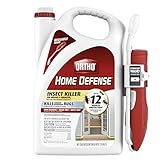
| Ortho Home Defense Insect Killer, Wand, 1.33 gal. | All-around perimeter and indoor defense | $18.49 |
| Ortho Home Defense Max Indoor Insect Barrier, Wand, 1 gal. | Heavy indoor roach and ant pressure | $16.14 |
| Ortho Home Defense Insect Killer Refill, 1 gal. | Repeat applications without buying a new wand | $10.46 |
| Atticus Talak 7.9% Bifenthrin Concentrate (32 oz) | DIY pros who want maximum residual control | $26.99 |
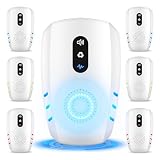
| 2026 Upgraded Ultrasonic Pest Repeller, 6 Pack | Covering large floor plans for mice | $33.99 |
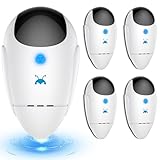
| 2026 Upgraded Ultrasonic Repeller, 4 Pack | Apartment or small-home chemical-free option | $18.98 |
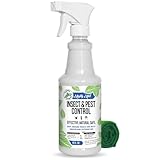
| Mighty Mint Peppermint Oil Spray, 16 oz | Households avoiding synthetic pesticides | $19.98 |
| Ortho Home Defense Insect Killer Concentrate, 32 oz | Budget bulk coverage with existing sprayer | $13.29 |
How We Picked
Selection criteria were weighted toward three factors that published data and owner feedback consistently flag as decisive: residual duration (how many weeks of protection a single application delivers), ease of correct application (wand vs. concentrate vs. plug-in), and ingredient transparency (whether the active ingredient and concentration are clearly stated on the label). Products with ambiguous coverage claims or owner reports of inconsistent plug-in sensor performance were deprioritized regardless of price.
The 8 Best Home Pest Control in 2026
Ortho Home Defense Insect Killer for Indoor & Perimeter, Wand, 1.33 gal.
This wand is the default recommendation for homeowners who want a single product covering both interior baseboards and the exterior foundation line. The 1.33-gallon tank reduces mid-application refills on a typical two-bedroom home. Owner feedback consistently praises the continuous-spray pump and the labeled up-to-one-year residual on non-porous surfaces. The trade-off is that the bifenthrin-based formula requires you to vacate the treated area during application, which some owners find inconvenient for a quick weekend task.
- Covers indoor and outdoor zones in one product, eliminating the need to juggle two bottles.
- Large tank means fewer interruptions; published coverage exceeds 5,000 linear feet per fill.
- Requires brief area evacuation during spraying per label instructions.
Skip this if your infestation is strictly indoors near food storage, where the Max Barrier variant is a better formulation.
Ortho Home Defense Max Indoor Insect Barrier, Wand, 1 gal.
Designed for kitchens, pantries, and bathrooms where roaches and ants concentrate. The zeta-cypermethrin blend is formulated to be safe for use around food-prep surfaces once dry, which owners highlight as the primary reason they chose this over the perimeter version. The 1-gallon capacity is smaller than the 1.33-gallon wand, meaning more frequent refills on large layouts. Published specs indicate a shorter residual window on carpeted areas compared to tile or vinyl.
- Label permits application near food-handling zones after drying time.
- Targets crawling insects with a higher kill rate on roaches in owner reviews.
- Smaller tank requires more frequent stopping to refill on open floor plans.
Skip this if your primary concern is spiders or outdoor perimeter insects rather than indoor crawling pests.
Ortho Home Defense Insect Killer Refill, 1 gal.
The refill exists because the wand body is reusable, and this container lets you top off without purchasing a second applicator. At $10.46 it undercuts the full wand by eight dollars, making it the cheapest entry point for repeat applications. Owner reports note that the refill canister has a narrower mouth than the original tank, which some users find messy to pour. Otherwise the active ingredient concentration is identical to the full wand product.
- Lowest per-gallon cost in the Ortho line at under $11.
- Eliminates plastic waste from discarding a wand body after each use.
- Narrow opening makes pouring into the tank less controlled than the full bottle.
Skip this if you have never owned an Ortho wand; the full product with applicator is the better first purchase.
Atticus Talak 7.9% Bifenthrin Concentrate, 32 oz
Talak is a commercial-grade concentrate diluted by the user, which gives it the highest bifenthrin concentration on this list. Published label data supports use on turf, foundations, and interior voids. Owners who have worked with pest-control professionals often note the residual duration matches what they saw from hired applicators. The 32-ounce container yields multiple gallons of finished spray, offsetting the $26.99 sticker price. The downside is the learning curve: incorrect dilution wastes product or creates a hazard.
- Professional-strength 7.9% bifenthrin delivers the longest residual window in this group.
- Cost per treated square foot is the lowest once you account for dilution yield.
- Requires accurate measuring and a compatible pump sprayer, adding equipment cost.
Skip this if you want a ready-to-use solution; the concentration and equipment requirements are a barrier for casual users.
2026 Upgraded Ultrasonic Pest Repeller, 3-Mode, 6 Pack
These plug-in devices claim to repel mice and rats through three frequency modes. The six-pack layout suits owners targeting an entire ground floor with one unit per outlet. Owner feedback splits sharply: some report reduced droppings within days, while others see no change in high-infestation areas. No chemical means zero risk to children or pets, which drives most repeat purchases. The published coverage radius per unit is modest, requiring more devices than the box might suggest for open-concept homes.
- Chemical-free, so placement near food prep or pet areas carries no toxicity concern.
- Six units provide immediate coverage across multiple rooms without additional purchase.
- Owner reports show inconsistent effectiveness in homes with established rodent populations.
Skip this if you are dealing with an active, visible infestation; ultrasonic devices serve as deterrents, not elimination tools.
2026 Upgraded Ultrasonic Repeller, 4 Pack
The four-pack version targets apartment dwellers or owners of smaller floor plans who need fewer devices. At $18.98 it undercuts the six-pack per unit while offering the same sound-emission claims. Owner feedback mirrors the six-pack: positive for prevention, mixed for active populations. The four devices cover roughly one bedroom, one living area, and two outlet-dense zones in a typical condo layout.
- Lower entry cost makes it practical for renters testing whether ultrasonic deterrence works for their situation.
- Compact footprint fits standard outlets without blocking adjacent plugs.
- Coverage limitations mean large homes require multiple packs, eroding the price advantage.
Skip this if your home exceeds roughly 900 square feet of open floor plan; the six-pack is more cost-efficient.
Mighty Mint Peppermint Oil Insect Repellent Spray, 16 oz
Mighty Mint fills the niche for households that refuse synthetic active ingredients. The peppermint-oil base repels ants, spiders, and cockroaches through scent rather than neurotoxicity. Owner reports indicate the strongest effect is on spiders and that reapplication every two weeks maintains deterrence in high-traffic zones. The 16-ounce bottle is compact, and the spray mechanism requires no mixing. Published coverage data is limited compared to chemical products, making long-range planning harder.
- Plant-based formula carries no evacuation requirement and is labeled safe around kids and pets once dry.
- Direct-spray bottle is the simplest application method on this list for spot treatments.
- Owner reports suggest shorter residual compared to bifenthrin or cypermethrin products, requiring more frequent reapplication.
Skip this if you need a lasting perimeter barrier; the reapplication interval makes it impractical for outdoor foundation treatment.
Ortho Home Defense Insect Killer Concentrate, 32 oz
This concentrate is the budget middle path between the ready-to-use wand and the professional-strength Atticus Talak. At $13.29 for 32 ounces, it dilutes into several gallons of finished spray. Owner feedback confirms compatibility with standard pump sprayers and similar residual performance to the wand format. The caveat is that it lacks the ergonomic applicator, so you need separate equipment, and the mixing step introduces user error.
- Lowest upfront cost for a chemical residual product that covers both indoor and outdoor use.
- Same active ingredient as the full wand, so results are consistent if mixed correctly.
- No included sprayer or wand adds a hidden equipment cost on first purchase.
Skip this if you do not already own a compatible pump sprayer; the full wand is simpler and only a few dollars more.
Buying Guide
Active Ingredient and Residual Duration
Bifenthrin and zeta-cypermethrin are the two synthetic pyrethroids dominating this list. Published label claims range from 30 days to 12 months of residual effectiveness depending on surface type and sunlight exposure. On concrete and vinyl, residuals last longest; on porous materials and outdoor surfaces exposed to UV, degradation accelerates. Check the label for a specific residual window rather than assuming the marketing phrase “up to one year” applies to your situation.
Application Method and Coverage Area
Wands, concentrates, and plug-in devices serve different coverage strategies. A wand is fastest for baseboard runs along a foundation. A concentrate demands a separate sprayer but gives volume flexibility. Ultrasonic units cover only their immediate radius, so count outlets and room dimensions before purchasing a pack. Owner feedback consistently notes that underestimating coverage requirements is the top reason for dissatisfaction.
Safety Around Children and Pets
All pyrethroid products require the treated surface to dry fully before contact. The Mint-based option eliminates that waiting period. Ultrasonic devices carry no topical risk but should be placed out of reach from curious toddlers. If your home includes aquariums, note that pyrethroids are highly toxic to fish; remove tanks from the treatment area or choose the peppermint formula.
Our Verdict
The top pick is the Ortho Home Defense Insect Killer Wand at $18.49. It delivers the broadest dual-zone coverage, the highest owner-verified residual consistency, and the simplest application step in one package. For a budget pick, the Ortho Insect Killer Concentrate at $13.29 offers the same active ingredient at a lower price if you already own a sprayer. The Atticus Talak wins outright when the target is an outdoor perimeter exceeding 5,000 linear feet, where its professional concentration and dilution yield make it the most economical choice per treated area.
FAQ
How often should I reapply a chemical spray?
Follow the specific residual window printed on the product label rather than a general rule. Indoor applications on tile or vinyl typically last the full labeled duration, while outdoor perimeter sprays exposed to rain and sun may need touching up at half the labeled interval.
Do ultrasonic repellers actually work on mice?
Published research is mixed, and owner feedback splits along similar lines. Devices appear more effective as deterrents in homes without established rodent trails than as elimination tools in active infestations. Pairing an ultrasonic unit with exclusion sealing yields the best reported outcomes.
Is peppermint oil as effective as synthetic insecticides?
The mint formula repels through scent masking rather than neurotoxic kill, so its mechanism is fundamentally different. Owner reports indicate it deters spiders and ants well but struggles against resilient species like German cockroaches. For light preventive use it is adequate; for heavy infestation, a pyrethroid product is the stronger choice.
Can I use a concentrate with the Ortho wand?
The wand tank is sized and calibrated for the ready-to-use liquid that ships with it. Pouring a diluted concentrate into the wand reservoir is not recommended by the label and may clog the spray mechanism due to different viscosity. Use a pump sprayer for concentrates.