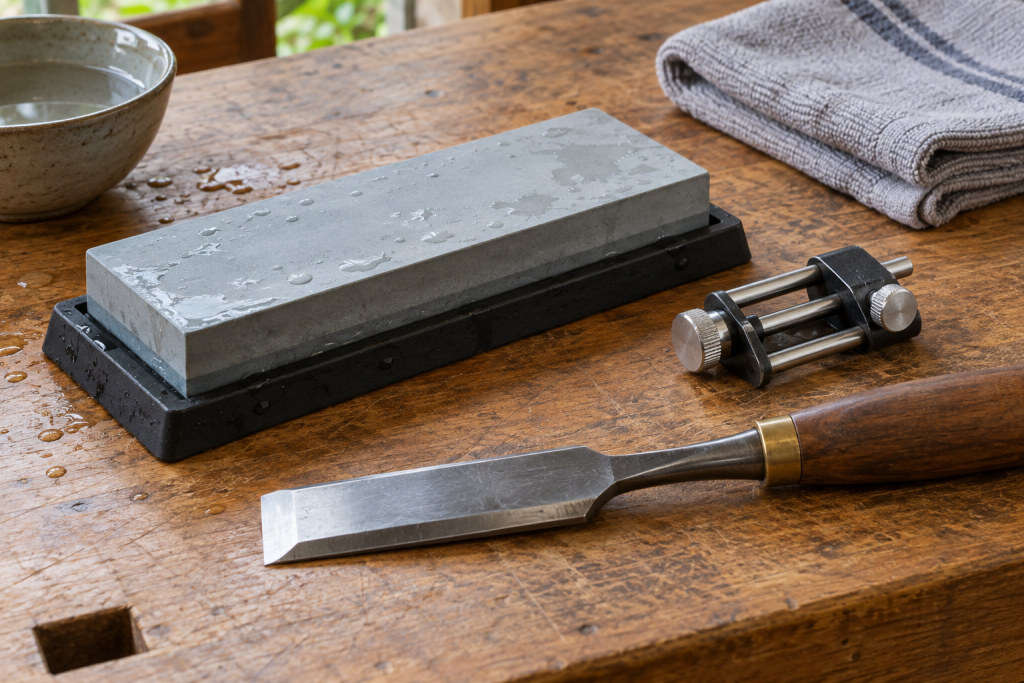
How to Flatten a Chisel Back Before Honing the Bevel
Why Flatten the Back of a Chisel? A chisel cuts cleanly only when its bevel and back meet in a […]
Why Flatten the Back of a Chisel? A chisel cuts cleanly only when its bevel and back meet in a […]
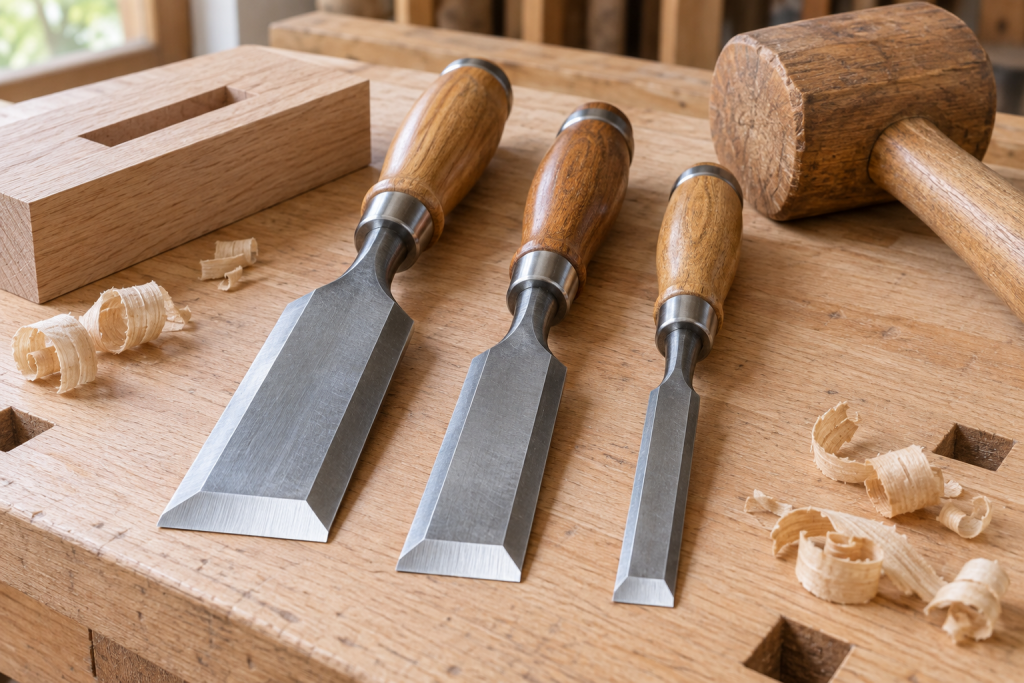
Why narrow chisels suit lock and latch pockets A lock case or latch needs a mortise with clean, square edges,
Undercutting a timber joint shoulder means removing a tiny amount of wood from the inside edge of a shoulder so
What you are dealing with A mushroomed chisel handle has spread beyond the ferrule at the striking end. Repeated blows,
Chisel handle shape matters most when the work involves hundreds of mallet blows rather than a few light paring cuts.
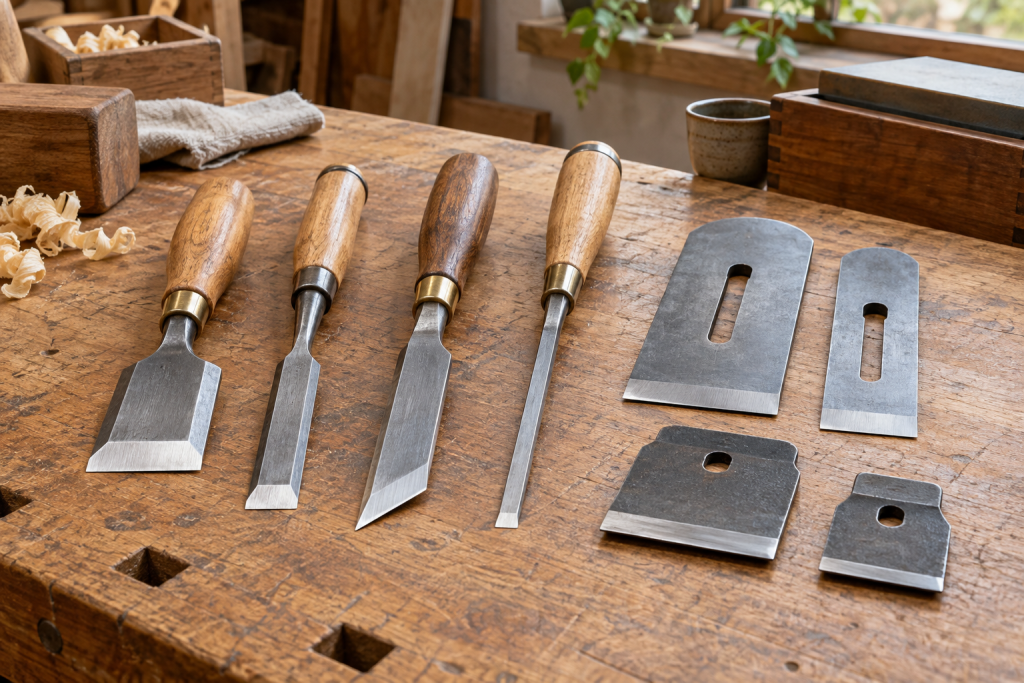
A mortise chisel is a stout, narrow chisel made for cutting the rectangular recesses—mortises—that receive matching tenons in timber joints.
A shallow mortise is unforgiving because there is little wood between the floor of the recess and the opposite face.
A housing joint (also called a dado or trench joint) is easy to cut in softwood, but easy to make
The square-edge problem A chisel can cut cleanly only if its bevel and back meet in a reliable edge. For
Why cross-grain cuts need a sharp chisel Cutting across the grain puts more pressure on the fibers than paring along