Waist Belt vs Suspenders for Heavy Carpentry Loads
Carrying 20 to 35 pounds of hand tools, fasteners, and layout gear all day changes how your body feels by […]
Carrying 20 to 35 pounds of hand tools, fasteners, and layout gear all day changes how your body feels by […]
Working from a ladder or small platform changes what makes a tool belt useful. On the ground, extra pockets and
If you carry hand tools all day, how you carry them matters more than which chisels you buy. A belt
How durability actually fails on a jobsite A tool belt doesn’t wear out from age. It wears out from abrasion,
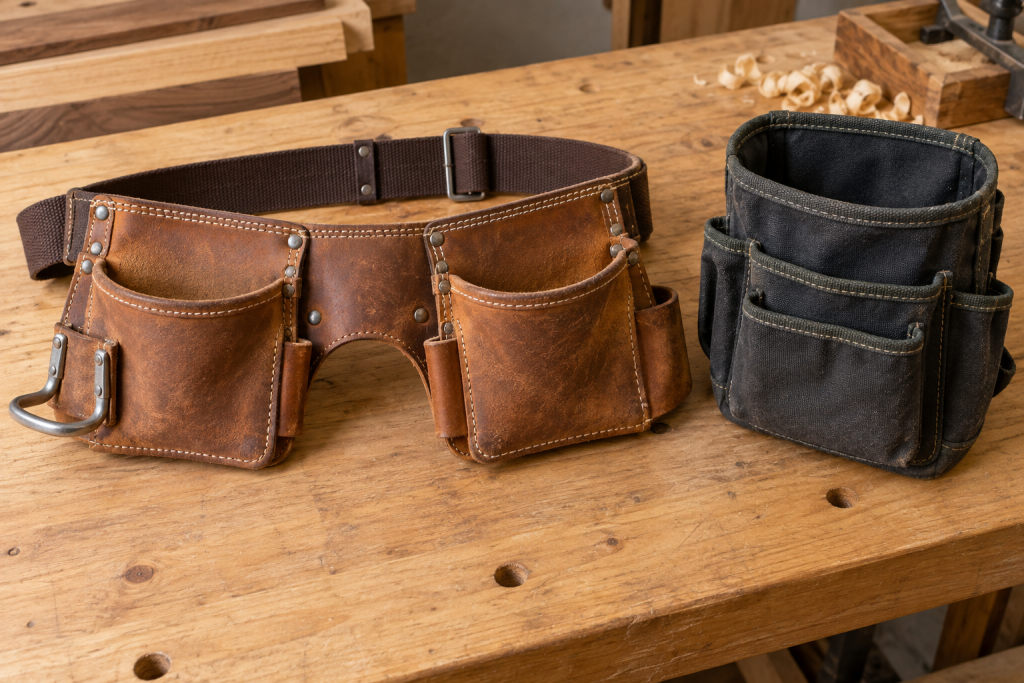
Trim carpentry doesn’t need a full framing rig. If you’re carrying a framing belt with two huge pouches, a cat’s
Why Hot Weather Changes Belt Choice In winter, you can get away with a heavy leather carpenter rig and not
A chisel is easy to damage in a tool belt. The cutting edge gets knocked against a hammer, buried in
Marking gauges, mortise gauges, marking knives, pencils, and small squares are easy to carry badly. Loose in a tool bag,
A fully loaded tool belt can weigh 20 to 35 pounds, and the belt is not the only thing carrying
A tool belt with a hammer loop and tape clip covers the two tools most carpenters reach for constantly. The