Mortise Gauge vs Wheel Gauge for Repeated Tenon Marking
What each gauge marks A mortise gauge has two marking pins: one is usually fixed, and the other moves to […]
What each gauge marks A mortise gauge has two marking pins: one is usually fixed, and the other moves to […]
What each tool does A combination square and a sliding bevel solve different setting-out problems. A combination square has a
A marking gauge and a cutting gauge both transfer a measured distance from an edge. The difference is at the
What you are checking A timber edge can look straight and still be out of square to the face. That
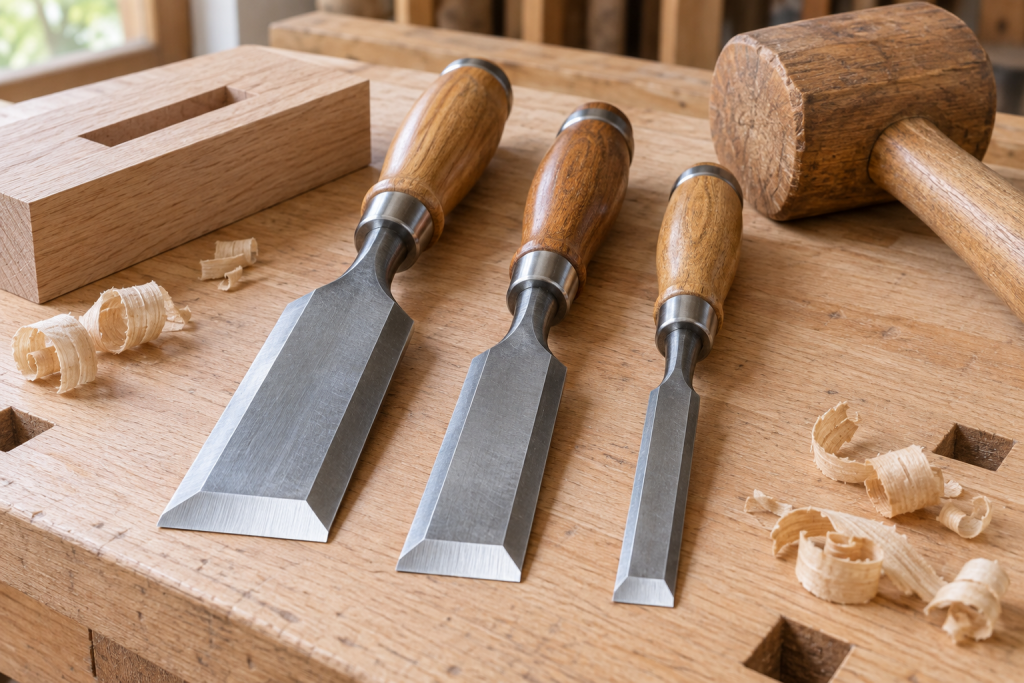
What makes a chisel narrow enough? For hinge and latch recesses, “narrow” usually means a blade about 6–12 mm (¼–½
Repairing an old door frame or sash calls for control more than brute force. You may need to pare out
What a housing joint asks of a chisel A housing, or dado, is a groove cut across the grain to
What wide chisels are for Wide chisels are useful when the job is removing or levelling a broad area of
Why a chisel skates on hardwood A chisel tends to skate when its edge is dull, the bevel is riding
Cutting a lock mortise is mostly controlled paring, not heavy chopping. For a typical interior door, the lock case is