What's inside
As an Amazon Associate I earn from qualifying purchases. This post may contain affiliate links at no extra cost to you.
When a child outgrows a harnessed car seat but still sits too low for a vehicle seat belt to fit properly, a booster seat fills the gap. The right one lifts the lap and shoulder belt into the correct position across the hips and collarbone, reducing injury risk in a crash. The wrong one lets the belt ride up on the belly or slip off the shoulder — the exact failure mode boosters exist to prevent.
Across booster seats for kids, the meaningful differences are narrower than the price tags suggest. Most backless models rely on the vehicle’s own seat belt to stay in place, while highback versions add head and side-impact support and often a LATCH connection to the car. What separates a good buy from a mediocre one comes down to weight and height ceilings, portability, ease of cleaning, and whether the belt guides actually help a smaller child get a proper fit without adult intervention. We compared published specifications, manufacturer claims, and verified owner feedback across eight widely available options to sort the standouts from the adequate.
As an Amazon Associate we earn from qualifying purchases at no extra cost to you.



Quick Picks
| Product | Best For | Price |
|---|---|---|
| Graco TurboBooster 2.0 (Denton) | Overall value | $34.99 |
| Cosco Topside (Leo) | Budget and weight savings | $22.99 |
| Graco TurboBooster 2.0 (Trisha) | Long-term use to age 10 | $34.99 |
| Graco TurboBooster 2.0 Highback (Declan) | Younger kids needing head support | $69.99 |
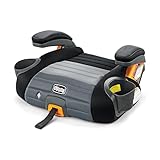
| Chicco GoFit ClearTex Plus | Premature seating with LATCH stability | $64.99 |
| Graco TurboBooster LX (Rio) | Big kids transitioning to seat belt only | $49.99 |
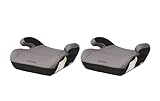
| Cosco Topside Pack of 2 | Two-car households or carpools | $39.98 |
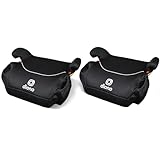
| Diono Solana Pack of 2 | Flyers and travel-heavy families | $54.89 |
How We Picked
We scored each model on four criteria drawn from specifications and recurring owner commentary: weight and height ceilings relative to price, real-world portability (weight, folding, carpool friendliness), belt-position effectiveness including dedicated guides or LATCH attachments, and durability or cleanability of the cover and plastic shell. Products that matched on specs but showed patterned complaints about cracking, belt slippage, or short service life were deprioritized.
The 8 Best Booster Seats For Kids in 2026
Graco TurboBooster 2.0 Backless (Denton)
This is the default recommendation for families who want a proven platform without paying a premium. It supports children from 40 to 100 pounds, includes two integrated cup holders, and uses Graco’s highback-to-backless transition philosophy — meaning it works with the vehicle belt alone once the child is tall enough. Owners praise the molded belt guides that keep the lap belt low and the shoulder belt centered, plus the quick-release buckle positioner. The main downside is that without a LATCH connection, it can shift on smooth car seats during quick transitions in and out of the vehicle. Skip this if your child is under 43 inches and you need a highback for head protection.
Cosco Topside Backless (Leo)
At under $25, this is the most affordable credible option on the list and one of the lightest backless boosters available. It covers the same 40-to-100-pound range as pricier rivals, uses a simple molded shell with minimal padding, and folds flat enough to slide into a backpack. Parents buying a third or fourth seat for carpools or rental cars appreciate the throwaway-friendly price. The trade-offs are a thinner foam pad that some kids find less comfortable on long trips and no LATCH or tether system, so it relies entirely on belt tension to stay put. Skip this if your child complains about hard seats or you need side-impact head support for a smaller frame.
Graco TurboBooster 2.0 Backless (Trisha)
Spec-identical to the Denton variant, this colorway earns its separate mention for the explicit age and height range Graco publishes: four to ten years old, up to 57 inches, 40 to 100 pounds. That height ceiling is the highest among the backless models here, which matters for tall ten-year-olds who need a booster longer than average. The belt-positioning system is unchanged from the Denton. Its practical appeal is longevity — one purchase that spans the entire booster window without a mid-size swap. Owners note the same non-LATCH caveat: the seat stays in place only when the vehicle belt is fastened over it. Skip this if you already own a TurboBooster 2.0 in another color and are looking for a different feature set.
Graco TurboBooster 2.0 Highback (Declan)
For children on the younger end of booster use or with low vehicle seat backs, the highback configuration provides head and torso side-impact support that no backless model can match. This Graco version uses the vehicle belt plus an adjustable headrest, and the back converts to a backless booster when the child outgrows it — effectively two seats in one purchase. Owners highlight the comfort of the padded seat back and the integrated belt guides that work even on cars with no headrest. The downsides are a higher price, greater bulk, and a heavier shell that makes carpool handoffs more awkward than a backless alternative. Skip this if your child is already at or above the mid-back height where a highback becomes unnecessary.
Chicco GoFit ClearTex Plus (Latch, 40-110 lbs)
This model addresses the chief complaint about backless boosters — shifting on smooth car seats — by incorporating a LATCH connector that anchors the booster directly to the vehicle. The weight range extends to 110 pounds, the widest here, which suits larger or older children who still need belt positioning. Chicco’s proprietary foam and a removable machine-washable cover round out the practical features. Owners rate the build quality above Graco equivalents, though the $64.99 price is nearly double the TurboBooster backless. The LATCH system is a genuine comfort win on bucket-style car seats. Skip this if your vehicle lacks LATCH anchors or if you primarily use boosters on bench seats where the connector cannot engage.
Graco TurboBooster LX Backless with Affix Latch (Rio)
The “LX” line is Graco’s upgrade tier: same belt-guiding philosophy as the TurboBooster 2.0 but with the Affix Latch system that secures the seat to the vehicle when unoccupied, eliminating the slide-into-place fumble. The 40-to-100-pound range matches the standard version, and the slimmer profile helps in three-across situations. Owners frequently mention the “big kid” transition appeal — kids feel grown-up using a belt-only booster with a subtle latch. The cover is machine-washable. The con is that at $49.99, the LATCH adds roughly $15 over the standard TurboBooster 2.0, a difference some parents find hard to justify for a one-position convenience. Skip this if you rarely move the booster between vehicles.
Cosco Topside Booster Pack of 2
Two seats for the price of one premium booster, and both meet the same 40-to-100-pound, 43.4-to-57-inch envelope. This pack suits households with two cars, frequent carpooling, or a younger child transitioning while an older sibling needs a second seat. The easy-clean cover and belt guide are shared specs with the single Cosco. The obvious limitation is that neither seat includes LATCH, head support, or advanced side-impact padding — they are purely functional lift platforms. Owners appreciate the low per-unit cost but note the thinner padding. Skip this if you need one premium seat rather than two basic ones, especially for a child under 43 inches.
Diono Solana Pack of 2 (Black, No Latch)
Diono’s brand is associated with heavier, feature-rich seats, so a no-latch, pack-of-two model at this price point is unusual. Each seat in the pack is lightweight, fits a wide height range, and includes machine-washable covers and cup holders. Owners buying for air travel, grandparents’ cars, or rotating between vehicles value the slim footprint. The absence of LATCH is the stated trade-off; Diono positions these for situations where the vehicle belt alone suffices and weight matters more than stability. The 40-to-110-pound ceiling matches the Chicco for older or larger kids. Skip this if your child frequently rides in cars with slippery seats and no headrest.
Buying Guide
Height and Weight Ceilings
Match the booster’s published range to your child’s current measurements, but buy for the ceiling, not the floor. A child at 42 inches with a seat rated to 57 inches has a longer usable life than one rated only to 48 inches. Backless boosters generally start at 40 pounds; if your child is below that, you need a highback with a harness or wait. Height is often the binding constraint because vehicle seat belts were designed for adult proportions — once a child reaches roughly 4 feet 9 inches, most state laws allow belt-only use.
Backless vs. Highback: Which Configuration Fits Your Child
A highback adds head and side-torso protection that matters most for younger boosters (ages 4-6, under 45 inches) and in vehicles with low or no headrests. Backless boosters are lighter, cheaper, and more carpool-friendly, but they provide zero head support. If your child already sits high enough that the vehicle headrest protects them, a backless model is sufficient and more portable. The best highback converts to a backless seat, extending its life and eliminating a second purchase.
Portability, LATCH, and Real-World Use
If the booster lives in one car, stability via LATCH is a comfort feature, not a safety necessity — the child’s seat belt holds the seat in place regardless. If the booster moves between vehicles, a folding backless seat under five pounds or a slim highback saves effort. LATCH on a backless booster prevents the seat from sliding off a bucket seat when loading a squirming child, which is a genuine convenience for parents of wiggly kids but does not change crash performance for a belted child.
Our Verdict
The overall top pick is the Graco TurboBooster 2.0 (Denton or Trisha) — proven belt guidance, wide weight range, integrated cup holders, and a price that leaves budget for a travel bag or second seat. The budget pick is the Cosco Topside single at $22.99, a no-frills platform that does exactly what a backless booster must: position the belt correctly at the lowest cost. The Chicco GoFit ClearTex Plus wins when LATCH stability matters — specifically on vehicles with deeply contoured or leather front seats where a non-latched booster slides out of position every time a child climbs in.
FAQ
How long does a child need a booster seat?
Most children use a booster from around age 4 until they reach 4 feet 9 inches and weigh between 80 and 100 pounds, roughly age 8 to 12. The seat belt must fit across the hips and shoulder without a booster before you retire it; height is a better guide than age alone.
Are backless booster seats safe without LATCH?
Yes. LATCH on a backless booster secures the empty seat to the vehicle for convenience; once the child is buckled in, the seat belt holds both child and booster in place regardless of LATCH availability. Crash protection is equivalent as long as the belt rides in the correct position on the body.
Can I use a booster seat on an airplane?
Most booster seats are not FAA-approved for aircraft use because they lack a harness and the seat belt on a plane already sits at adult height. For travel, the Diono Solana pack or Cosco Topside are light enough to gate-check or store in a bin, but the child would use the aircraft belt directly, not the booster, during the flight.
Is a highback booster worth the extra cost over backless?
For a child under 45 inches or riding in a vehicle with no headrest, the added head and torso protection justifies the premium. For an older, taller child whose head is already shielded by the vehicle headrest, a quality backless seat like the TurboBooster 2.0 performs identically for belt positioning and costs less.