What's inside
As an Amazon Associate I earn from qualifying purchases. This post may contain affiliate links at no extra cost to you.
A sliding bevel is the simplest tool for transferring an angle from an existing piece of timber to a saw, marking gauge, or second workpiece. It does not measure the angle in degrees. Instead, its stock sits against one surface while the blade follows the other, preserving the relationship between them. That is exactly what you need when fitting skirting, scribing a repair piece, copying a roof cut, or matching an old stair component.
The best bevel is not necessarily the most expensive one. The important features are a rigid stock, a blade that does not twist, and a locking mechanism that stays tight while you mark or saw. For general site and workshop use, a medium-size bevel with a 200–250 mm blade is the most useful choice.
As an Amazon Associate we earn from qualifying purchases at no extra cost to you.



Sections
Our Top Picks
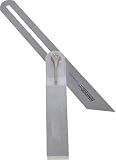
 Johnson Level & Tool 1913-1000 Professional Aluminum T-Bevel10 Inch0.75 x 3.75 x 13.13 inches0.02 poundsCheck on Amazon


What to Look For in a Sliding Bevel
The stock should have a straight, stable reference edge. Cast or forged metal stocks are usually more durable than thin stamped ones, though a good hardwood stock can work well and is less likely to damage finished timber. Check that the stock edge is flat and that the blade meets it without a visible gap when closed.
Blade stiffness matters more than blade length. A thin blade can flex as you press a pencil or knife against it, changing the transferred angle. Stainless steel resists rust and is suitable for most jobs. A hardened steel blade may hold a sharper edge and feel more rigid, but it needs occasional oiling if stored in a damp tool bag.
There are two common locking systems. A wing nut is cheap, easy to replace, and gives plenty of leverage, but it can catch on timber or loosen if not tightened firmly. A screw with a knurled knob is neater and often quicker to operate. Some professional bevels use a lever or cam lock; these are fast and convenient, but a poorly made cam can lose tension over time.
Look for a lock that can be operated with one hand while the bevel is held in position. If you have to shift your grip to tighten it, the blade may move before it is secured. That small movement can produce a gap of 1–2 mm at the end of a long cut, enough to show in a mitred joint.
Best Sliding Bevel Types by Job
| Type | Best use | Advantages | Limitations |
|---|---|---|---|
| Traditional hardwood and brass | Furniture and interior joinery | Comfortable, repairable, gentle on finished timber | Can swell, dent, or lose accuracy if poorly stored |
| All-metal bevel | Site work and repeated angle copying | Rigid, durable, unaffected by normal moisture | Heavier and more likely to mark delicate surfaces |
| Plastic or composite bevel | Occasional DIY work | Low cost, light, rustproof | Blade and stock can flex under pressure |
| Large framing bevel | Roofing, stair work, and wide boards | Long reference edge and easy visibility | Bulky for small joinery and tool belts |
A hardwood and brass sliding bevel is a sound choice for a cabinetmaker or someone copying angles on furniture. It gives good tactile control and will not scratch a polished board as readily as a rough casting. Choose one with a brass shoe or accurately machined stock, not merely decorative brass plating.
For a builder’s tool bag, an all-metal 200 mm sliding bevel is usually the safer purchase. It tolerates being dropped, left in a van, or used against rough timber. The cheaper option is fine when you only copy occasional angles, provided the blade locks without play and the stock is straight.
How to Copy an Existing Timber Angle
Clean dust and loose fibres from the reference timber first. Put the bevel stock firmly against the first face, then rotate the blade until it lies flush with the angled face. Do not align it by eye from above only; view the joint from both sides. A small gap on one side usually means the blade is twisted rather than correctly seated.
Hold the blade in place and tighten the lock. Keep the stock and blade pressed together while tightening, because a loose bevel can slide several degrees. Before removing it, make a pencil line across the blade and stock, or take a quick photograph of its orientation. This is useful if you need to reproduce the setting later.
Transfer the angle by placing the stock against the corresponding edge of the new piece. Mark with a sharp pencil for rough work or a knife for joinery. A marking knife should be held against the blade with light pressure; forcing it can push the bevel out of position. For a saw cut, extend the line across the face and down both edges so the cut can be started squarely.
When copying an angle around a corner, remember that the visible bevel setting may represent either the inside or outside angle. Test it on a scrap piece first. Cutting a 25-degree bevel when the job needs its complementary 65-degree cut is a common mistake, particularly when working from a roof or stair component.
Accuracy, Checking, and Common Failures
A sliding bevel transfers an angle but cannot tell you whether the original timber was accurate. Old skirting, roof members, and hand-cut stair parts may be slightly inconsistent. If the angle will be repeated many times, use the bevel for the first transfer, then check the result with a digital angle finder or a protractor. Digital tools are useful for recording the setting, but they do not replace a physical bevel when marking directly on timber.
The most frequent failure is lock slippage. Tighten the mechanism enough to hold the blade, but do not crush a wooden stock or strip a small thread. If the bevel moves, degrease the contact surfaces, inspect the screw, and replace worn washers. A blade that rocks sideways usually indicates a worn pivot or an oversized slot; no amount of tightening will make that consistently accurate.
Another failure is using the blade as a lever. Sliding bevel blades are for transferring and marking, not prying apart joints or scraping glue. Keep the tool in a pouch rather than loose with chisels and saws, and wipe metal parts dry after working in damp conditions. For most carpentry, a rigid 200–250 mm bevel with a positive lock offers the best balance of reach, portability, and accuracy.
Buying Advice
Spend more on the locking mechanism and stock accuracy than on a long blade or elaborate finish. A basic bevel costing less than a premium joinery model can be entirely adequate for fitting a one-off trim piece. Upgrade when you copy angles frequently, work on wide timber, or need the setting to survive repeated handling without shifting.